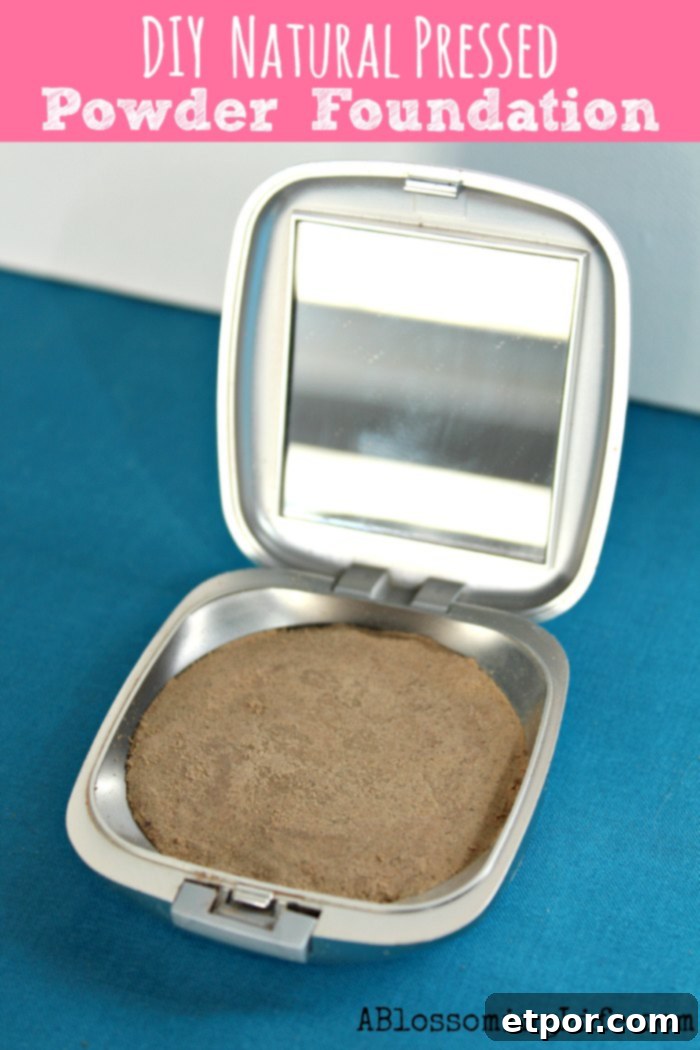
DIY Natural Pressed Powder Foundation: Craft Your Perfect Chemical-Free Compact
Are you searching for an effective, natural, and mess-free alternative to commercial foundations? This tutorial offers perhaps the simplest path to creating your very own DIY natural pressed powder foundation. While many of us appreciate the benefits of homemade loose powder foundation, the reality often involves a fair bit of cleanup. Loose powders can be prone to spills, making application a delicate operation and travel a risky endeavor for your makeup bag. Perhaps it’s the design of the container, or perhaps it’s simply the user (no judgment here!), but the mess factor is undeniable.
The solution, fortunately, is wonderfully simple: transform that loose powder into a compact, pressed form! The inspiration struck while examining a store-bought pressed powder foundation and noticing jojoba oil in its ingredient list. This “aha!” moment sparked the idea that if commercial brands could do it, so could we, using pure, natural ingredients. This comprehensive guide will walk you through every step, from custom-blending your perfect shade to pressing it into a convenient, travel-friendly compact. Say goodbye to harsh chemicals and messy spills, and embrace the ease and purity of a homemade pressed powder foundation.
Why Embrace DIY Natural Makeup, Especially Pressed Foundation?
In a world brimming with complex cosmetic formulations, choosing to create your own makeup is an empowering decision. A DIY natural pressed powder foundation offers a myriad of advantages that benefit both your skin and your lifestyle:
- Ultimate Ingredient Control: When you make your own foundation, you dictate every ingredient. This means avoiding potentially irritating chemicals, synthetic fragrances, parabens, and sulfates commonly found in store-bought products. It’s ideal for sensitive skin and those committed to a clean beauty regimen.
- Perfect Customization: The struggle to find a foundation that perfectly matches your skin tone is a common one. With a DIY approach, you can blend pigments until you achieve an absolutely flawless match, complementing your unique undertones precisely.
- Cost-Effectiveness: While there’s an initial investment in natural base ingredients, the long-term savings are substantial. Crafting your own foundation is significantly more economical than consistently purchasing high-quality natural or organic commercial brands.
- Eco-Friendly Beauty: Reduce your environmental footprint by reusing old compacts and sourcing ingredients in bulk. It’s a small, impactful step towards a more sustainable and waste-free beauty routine.
- Mess-Free Application & Travel: This is arguably the biggest appeal of a pressed foundation. It eliminates the mess associated with loose powders, making application cleaner and quicker. Furthermore, a solid compact is a dream for travel, preventing spills and keeping your makeup bag pristine.
- Skin Health Benefits: Many natural ingredients like clays and certain oils offer therapeutic benefits for the skin, helping to soothe, detoxify, and balance complexion over time.
Step One: Creating Your Personalized Loose Powder Foundation Base
Before we can achieve the convenience of a pressed compact, we must first master the art of blending a bespoke loose powder foundation. This initial step is paramount, as the quality and color match of your loose powder will dictate the success of your pressed foundation.
Essential Ingredients for Your Custom Powder Blend:
The beauty of this recipe lies in its adaptability. You’ll start with a neutral base and incrementally add natural pigments until you’ve formulated your perfect shade. The exact proportions are highly individualized, depending on your skin’s unique color depth and undertone.
- Arrowroot Powder (Like this one) or Cornstarch (Like this one): These form the bulk of your foundation. Both are exceptional for absorbing excess oil, minimizing shine, and providing a silky-smooth finish that gives a flawless look. Arrowroot powder often boasts a finer texture and a more luxurious feel on the skin.
- Cocoa Powder (Like this one): A natural pigment that deepens your foundation’s shade and imparts a beautiful warmth. Even for those with very fair complexions, a minuscule amount can prevent a stark, chalky appearance. Always start with a tiny pinch and increase as needed.
- Cinnamon (Like this one): Similar in function to cocoa powder, cinnamon adds warmth and can subtly darken the foundation. It also contributes a delightful natural aroma. Exercise caution and use very sparingly if you have sensitive skin, as it can be mildly irritating for some individuals.
- Ginger Powder: This ingredient is invaluable for those with natural yellow or olive undertones, as well as anyone looking to counteract redness. Ginger helps to brighten the complexion and achieve a more harmonious and vibrant match. Even a small amount can significantly impact the overall tone.
- French Green Clay (Like this one) (optional): An excellent choice for individuals whose skin exhibits more red pigments. The natural green hue of this clay expertly neutralizes redness, creating a more balanced and even skin tone. Use with extreme care; a minuscule speck is usually all that’s needed to avoid a greenish cast.
- Bentonite Clay (Like this kind) (optional): While not strictly necessary, bentonite clay provides additional skin benefits, including superior oil absorption and detoxification properties. If you incorporate this potent ingredient, it is imperative to use only non-metallic bowls and utensils, as metal can deactivate the clay’s beneficial minerals.
Detailed Directions for Blending Your Perfect Loose Powder:
Achieving your ideal foundation shade requires patience and meticulous blending. Do not rush this critical step!
- Prepare Your Base: In a small, clean, non-metallic bowl (essential if using bentonite clay), measure out approximately 1 tablespoon of your chosen arrowroot powder or cornstarch. This forms the foundational volume of your powder.
- Gradual Pigment Addition: Based on your skin’s natural depth and undertone, begin to incorporate very small amounts of the other pigmenting ingredients. For instance, if your skin is fair, start with barely a pinch of cocoa or cinnamon. If you have yellow undertones, a small dash of ginger will be beneficial. If redness is a primary concern, add a tiny speck of French green clay. Remember, it’s easier to add more than to take away.
- Thorough Mixing: Using a non-metallic spoon, a small spatula, or a mini whisk, thoroughly combine all the powders. Ensure there are no visible streaks, clumps, or unmixed pockets, striving for a uniform color and texture.
- Critical Skin Tone Testing: This is arguably the most vital step for a flawless match. Dip your clean finger or a small brush into the blended powder, then lightly rub a small amount onto the back of your hand or, ideally, along your jawline.
- Assess in Natural Light: Move to an area with abundant natural daylight, such as near a window or outdoors. Artificial lighting can significantly distort colors, making an accurate match difficult. Your ideal powder foundation should seamlessly blend into your skin, becoming virtually undetectable. It should not appear too light, too dark, or leave an unnatural cast.
- Adjust and Reiterate: If the shade isn’t perfect, adjust your mixture. If it’s too light, add another tiny amount of cocoa, cinnamon, or ginger. If it’s too dark, incorporate more arrowroot or cornstarch. If your skin still appears red, a fractional addition of French green clay can help. Continue this precise process of adding, mixing, and testing until you achieve your ultimate, undetectable shade. Perseverance will be rewarded!
- Store Your Loose Powder: Once you are completely satisfied with your custom blend, transfer any excess loose powder into a clean, airtight container or jar. This ensures it stays fresh for future use or for creating additional pressed compacts.
Step Two: Pressing Your Foundation – From Loose to Compact Perfection
With your perfectly matched loose powder foundation now complete, the next exciting phase is transforming it into a convenient, solid pressed compact. This binding process is what makes your foundation truly travel-friendly and easy to apply.
What Materials You Will Need:
- An Old Powder Foundation Container: Thoroughly cleaned and completely dry. Repurposing old compacts is not only eco-friendly but also satisfying. Alternatively, you can easily purchase empty compacts designed for loose powder online.
- 2-3 Tablespoons of Your Custom Natural Loose Powder Foundation: The exquisite blend you just spent time perfecting.
- Jojoba Oil or Almond Oil: These are highly recommended for their skin-nourishing qualities and non-comedogenic properties (meaning they won’t clog pores). Jojoba oil is particularly excellent as it closely mimics the skin’s natural sebum. Other light liquid oils like argan or grapeseed oil may also be suitable, but it’s always wise to perform a small test batch first.
- Small Bowl and Spoon: (Again, non-metallic if bentonite clay was used in your powder blend) for combining the ingredients.
- Optional Tools: A piece of paper towel or parchment paper, and a flat, sturdy object for pressing (e.g., the bottom of a measuring cup, a clean, flat glass, or a smooth, heavy stone).
Step-by-Step Directions for Pressing Your Foundation:
The secret to a successful pressed foundation lies in adding just enough oil to bind the powder without making it greasy or difficult to dry. Precision and a delicate hand are key.
- Prepare Your Powder: In your designated small mixing bowl, place 2 to 3 heaping tablespoons of your custom natural loose powder foundation.
- Gradual Oil Introduction: Begin by adding a very small amount of your chosen oil – start with approximately 1/8 teaspoon of jojoba or almond oil.
- Mix to Achieve Consistency: Using your spoon, vigorously stir the powder and oil together. You are aiming for a consistency similar to damp sand; it should just begin to clump and stick together when pressed, but it should not appear overtly wet, pasty, or sticky. For a blend of around 2 heaping tablespoons of powder, I typically find that 3/8 to 1/2 teaspoon of oil is sufficient, but this can vary depending on your specific powder blend and the humidity of your environment.
- Test the Consistency: Take a small pinch of the mixture and press it firmly between your thumb and forefinger. If it holds its shape and doesn’t easily crumble, you’ve hit the right balance. If it’s too crumbly, add another tiny drop (e.g., 1/16 teaspoon) of oil and mix thoroughly again. Conversely, if it feels too oily or resembles a paste, incorporate a small amount of extra loose powder to re-establish the correct balance.
- Transfer to Compact: Carefully spoon the damp powder mixture into your cleaned and dry foundation compact. Gently spread it out evenly across the pan.
- Firmly Press: This is the crucial step that forms your compact. Place a piece of paper towel or parchment paper over the powder in the compact. Using the bottom of a measuring cup, a clean, flat glass, or even your thumb wrapped in a clean cloth, press down on the powder as firmly and evenly as possible. Apply consistent and strong pressure across the entire surface to compress it tightly. The more robustly and uniformly you press, the more solid and resilient your finished pressed foundation will be. Repeat this pressing action several times, rotating the compact, to ensure maximum compaction.
- Allow to Dry and Set (Crucial Step): This phase is absolutely vital for the foundation to fully solidify and prevent future crumbling or cracking. Leave your opened compact in a warm, dry, and sunny spot for a minimum of 1 to 2 weeks. Direct sunlight can expedite the evaporation of any residual moisture from the oil. It is imperative not to skip or shorten this drying period, as premature use can lead to the foundation breaking apart or developing an undesirable texture.
Troubleshooting Common DIY Pressed Foundation Issues:
- Crumbly After Pressing/Drying: If your foundation crumbles easily even after drying, it likely lacked sufficient binding oil. Gently break up the affected area in the compact, add a minuscule drop of oil, mix it in very carefully, and then re-press the powder firmly.
- Too Oily or Sticky: If your foundation feels greasy to the touch or fails to dry properly, you may have used too much oil. You can try gently scraping off the very top, overly oily layer and extending the drying time. For more severe cases, you might need to break up the entire batch, mix in a small amount of additional loose powder to absorb the excess oil, and then re-press it.
- Cracked After Drying: Sometimes, despite a thorough drying period, small cracks can appear. To remedy this, lightly mist the surface of the foundation with a tiny amount of rubbing alcohol (which evaporates quickly) or a fine facial mist, and then gently re-press the cracked areas.
Applying Your Homemade Pressed Foundation
Once your DIY natural pressed powder foundation has completely dried and set into a firm compact, it’s ready for use! Apply it just as you would any commercial pressed powder:
- For Sheer to Medium Coverage with a Brush: For a lighter, more natural finish, gently swirl a soft foundation brush or a dedicated powder brush over the compact. Apply the product to your face using gentle, circular motions, blending outwards.
- For Medium to Full Coverage with a Sponge: For enhanced coverage or to target specific areas, use a makeup sponge (dry or slightly damp, depending on preference) to pick up the product. Pat it onto your skin, focusing on areas where you desire additional coverage or to build up layers.
The Undeniable Advantages of Your Homemade Pressed Foundation
I am genuinely thrilled with the performance and convenience of this pressed foundation. The difference it makes is profound – my countertop remains significantly cleaner compared to the inevitable spills that came with loose powder. Furthermore, it has become an absolute staple for travel; no more anxiety about powder explosions ruining the contents of my makeup bag! Beyond these practical benefits, there’s an immense sense of satisfaction and confidence that comes from knowing exactly what ingredients are in the makeup you apply to your skin, perfectly tailored to your individual needs.
Embarking on the journey of making your own beauty products is a truly empowering step towards a more natural, personalized, and mindful lifestyle. I wholeheartedly encourage you to give this DIY pressed powder foundation a try. You might just discover that it becomes your new, indispensable beauty essential.
We’d love to hear from you! What are your experiences with natural foundations, whether store-bought or lovingly homemade? Share your insights, tips, and any questions you might have in the comments section below!
This post contains affiliate links which help support A Blossoming Life at no extra cost to you.