The Ultimate Guide to Completely Declutter Your Home for a Simpler, More Joyful Life
Table of Contents
Toggle
Life can get incredibly busy, and before you know it, our homes often become reflections of our overflowing schedules – full of “stuff.” Recently, returning from a much-needed vacation, I found myself overwhelmed by the sheer volume of possessions we had accumulated. It hit me: “stuff” doesn’t truly bring lasting joy. While the initial thrill of a new purchase can be satisfying, that feeling often fades, leaving behind only clutter and the burden of managing it.
It’s an interesting paradox. My family and I make an effort to declutter a few times a year, which usually keeps things relatively tidy. In fact, we even hosted two successful yard sales this year, earning over $200 by selling items we no longer used or needed. This proactive approach helps us maintain a certain level of order, so much so that friends often joke about our toddler having very few toys. She certainly has toys and books, but we intentionally keep them to a minimum. Why invest in countless playthings when she’s often more captivated by the packaging or forbidden household items? We’ve found that simplicity works best for us, allowing her to enjoy a select few favorites without overwhelming our living space – and my sanity!
I’ve witnessed firsthand how quickly a living room can transform into a chaotic toy tornado when there are countless toys available. Frankly, that level of disarray is something I find incredibly difficult to manage. Perhaps my sweet toddler is still too young for such widespread recklessness, but I dread the day our home might reach that point. My hope is that by maintaining a minimalist approach to toys, we can largely prevent that scenario. A parent can dream, right?
Why Embrace Decluttering?
Beyond the immediate relief of a tidier space, decluttering offers a multitude of benefits that can profoundly impact your well-being. It’s not just about tidiness; it’s about creating an environment that supports a calmer, more productive, and joyful life. When you reduce the amount of physical clutter in your home, you often find a corresponding reduction in mental clutter. This leads to increased clarity, reduced stress, and an improved ability to focus on what truly matters.
- Mental Clarity and Reduced Stress: A cluttered environment can be a constant source of low-level stress and anxiety. Every item demands a tiny bit of your mental energy. By decluttering, you reduce visual noise, allowing your mind to relax and focus more effectively. You’ll spend less time searching for lost items and more time engaged in meaningful activities.
- Increased Space and Functionality: It sounds obvious, but getting rid of unnecessary items literally creates more physical space. This space can then be used for activities you enjoy, for better organization of the items you *do* keep, or simply to create a more open and breathable atmosphere. Rooms feel larger, and pathways become clearer.
- Easier Cleaning and Maintenance: Fewer items mean less to clean around, less to dust, and less to move when deep cleaning. This translates into significant time savings and a home that feels cleaner, more often, with less effort.
- Financial Benefits: Decluttering often reveals items you can sell, putting extra cash in your pocket. Furthermore, by understanding what you already own and use, you’re less likely to buy duplicates or impulse items you don’t truly need, leading to smarter spending habits in the future.
- Improved Focus and Productivity: When your environment is orderly, your mind tends to be more orderly too. This can lead to improved concentration for work, hobbies, or simply relaxing without distractions.
- A Sense of Control and Empowerment: Taking control of your possessions can be incredibly empowering. It reinforces the idea that you are in charge of your environment, rather than being controlled by it.
How To Effectively Declutter Your House
Embarking on a whole-house decluttering journey can seem daunting, but by breaking it down into manageable steps, it becomes much more achievable. Here’s a streamlined approach that helped me clear out our entire home with surprising ease.
Tackle One Room At A Time:
Resist the urge to tackle your entire house at once. This often leads to burnout and an even bigger mess. Instead, focus your energy on one designated area before moving to the next. This could be one room, one closet, or even just one drawer. The key is to complete that area entirely before starting another.
- Go Through Everything, Thoroughly: Leave no stone unturned. Open every drawer, cabinet, and box. Look under the bed, behind furniture, and inside every closet. Think of bookshelves, linen closets, pantry shelves, and those notorious “junk drawers.” Every single item needs to be seen and considered.
- Create a Realistic Schedule: Decluttering doesn’t have to be a race. Dedicate a specific amount of time each day or week to this task. Perhaps one room per day, or a few hours each weekend. Consistency is more important than speed. Find a rhythm that works for you and your family to avoid feeling overwhelmed.
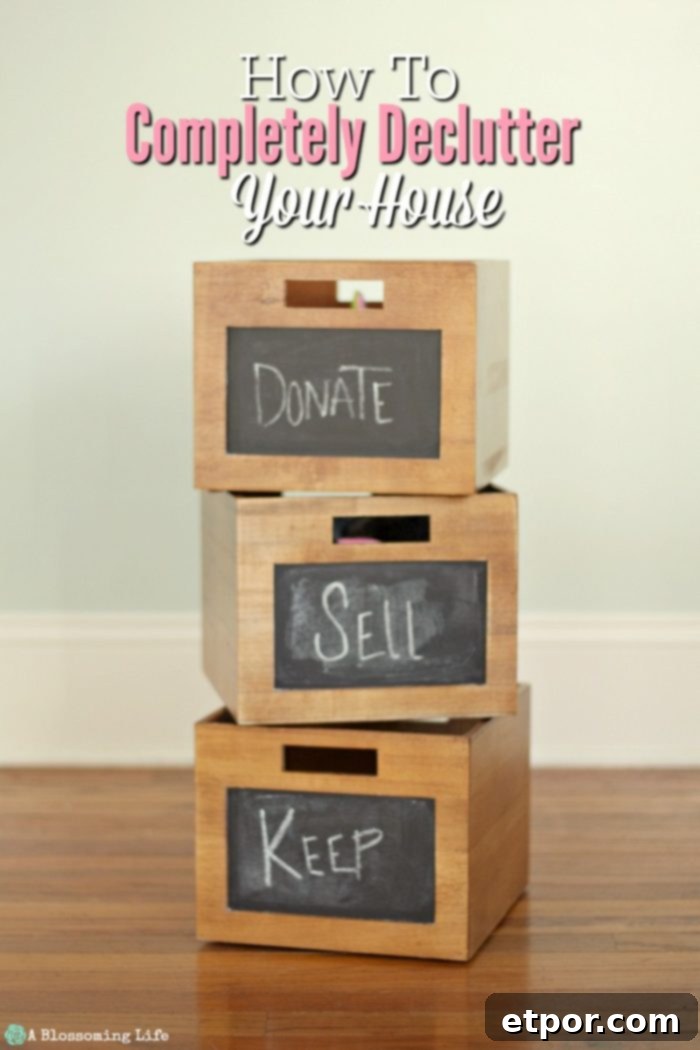
- Utilize the “Four Box Method”: As you go through items, have four designated boxes or areas ready:
- Keep: Items you genuinely love and use.
- Donate/Sell: Items in good condition that you no longer need.
- Trash/Recycle: Broken, expired, or truly unusable items.
- Relocate: Items that belong in another room.
This method helps streamline the decision-making and sorting process.
The Decision-Making Process:
This is often the most challenging part, but having clear criteria can make it much simpler. When you pick up an item, ask yourself these crucial questions:
- “Does this thing bring me joy?” Inspired by Marie Kondo, this question helps you connect with your items on an emotional level. If an item doesn’t elicit a positive feeling, it might be time to let it go.
- “Is it something I use on a daily, weekly, or monthly basis?” If you haven’t used an item in six months to a year, chances are you don’t truly need it. Be honest with yourself about its practical utility.
- “Would it be hard to live without it? Is it easily replaceable?” If an item is inexpensive and easy to replace, or you could borrow it if needed, you might not need to keep it taking up valuable space.
- What about Multiples? We often accumulate multiples of items we only need one or two of. For instance, we had three cutting boards but only ever used two regularly. The third one went into the yard sale pile. Review your kitchen gadgets, tools, and even clothing items for unnecessary duplicates.
- Books and Magazines: Are you ever going to reread all those books or magazines? Probably not. Consider donating them to a library or charity, passing them on to friends, or recycling old magazines. Digital alternatives can often fulfill the same purpose without physical clutter.
- Gift Bags and Miscellaneous Items: I realized I had hundreds of gift bags! Do I really need 500 gift bags? Absolutely not. A reasonable stack is sufficient. That dehydrator my husband won and I used only once? Despite its potential utility, if it’s not being used, it’s just clutter. Random decorative trinkets (tchotchkes) often fall into this category too; they don’t serve a clear purpose and only add to the visual noise.
- The “Unsure” Pile: For items you’re truly struggling with, create a small “unsure” pile. Store these items in a box and revisit them in a month or two. If you haven’t needed or thought about them during that time, you can confidently let them go. But be strict – don’t let this pile become another permanent storage area!
Breaking Emotional Attachments to Items:
This can be the most challenging aspect of decluttering. Many items hold sentimental value, making it hard to part with them. However, remembering that memories reside in your heart, not necessarily in physical objects, can help.
- Sentimental Items: Baby clothes, old gifts, inherited items – these can be tough. For baby clothes, consider keeping one or two truly special outfits, perhaps creating a framed collage or a memory box with other significant small items. You don’t need to keep every single onesie.
- Process the Loss: If you’re having a particularly difficult time letting go of an item, set it aside. Take a moment to acknowledge its significance and what it represents. Ask yourself if the memory is tied to the object or if the memory itself is enough. Often, you can keep the memory and release the item.
- Can it be Replaced? For items that aren’t heirlooms but still hold some sentimental weight, consider if it could be replaced eventually if you absolutely needed to. If the answer is yes, it might be easier to let go.
Decluttering With Children:
This requires a slightly different approach, as kids can develop intense attachments to their toys, especially when they sense they might be taken away. Involving them in the process, to an extent, can be beneficial.
- Involve Them Thoughtfully: Depending on their age and willingness, you might want your family’s help. For kids, it’s common for them to suddenly develop a deep passion for a toy they haven’t played with in months once they realize you’re planning to get rid of it.
- The “Choose Your Favorites” Strategy: A helpful technique is to tell them they get to keep a certain number of their favorite toys. Have them pick their absolute favorites (give them a clear limit, like 5 or 10 toys). Explain that the other toys will go to a family in need or to children who don’t have as many. This frames it as a positive act of giving rather than taking something away.
- Toy Rotation: Consider rotating toys. Store a portion of their toys out of sight and bring them out periodically. This keeps toys feeling “new” and helps you identify which ones they truly engage with over time.
What Items Are Worth Keeping?
The goal of decluttering isn’t to live in an empty house, but rather to surround yourself only with items that genuinely add value, beauty, or utility to your life. You absolutely can, and should, keep items you love. The key is to be extremely selective and intentional.
- Be Picky, But Keep What You Love: During my decluttering frenzy, I kept some decorative items I genuinely loved. For example, I have this adorable vintage thermos. It was almost put in the yard sale pile, but I realized I genuinely liked looking at it, and it sparked joy for me. It got to stay. Just be mindful not to let this exception become a rule for everything you own.
- True Family Heirlooms: These are irreplaceable. Items with deep family history or significant personal stories should definitely be kept. However, even with heirlooms, if you find yourself with an overwhelming number, consider if another family member would cherish some of the items. For instance, we will obviously hold onto the small wooden rocking chair from my husband’s childhood, especially since our daughter August loves sitting in it.
- The “Moving Test”: A powerful litmus test for whether to keep an item is to imagine you’re moving. Ask yourself: “If we had to move, would I want to pack it and unpack it? Would it genuinely fit into a small moving truck?” If the thought of packing an item fills you with dread, or if it doesn’t seem worth the effort and space it would take, then it’s likely a candidate for letting go. This thought process quickly helps differentiate between true essentials and superfluous possessions.
- Items with Clear Purpose and Regular Use: Keep things that serve a specific function in your daily life, are used regularly, and make your life easier or more enjoyable. This includes essential clothing, kitchen tools, personal hygiene products, and items related to your hobbies.
I must admit, during my last major purge, I might have gotten a little overzealous. I even attempted to get rid of my husband’s dresser! He very kindly asked where exactly he would then put all his clothes. Ugh, fine, we can keep that. It’s a good reminder that decluttering is a personal journey, and compromise (especially with family members) is often necessary.
The exciting upside to this entire process is that you can often sell your unused items and make some extra money. It’s a win-win: a tidier home and a little boost to your savings! Have you recently decluttered your house, or are you planning to embark on this journey soon? We would absolutely love to hear about your experiences, challenges, and successes!
Maintaining A Clutter-Free Home
Once you’ve invested the time and effort into decluttering your home, the next crucial step is to maintain that newfound order. It’s a continuous process, not a one-time event. Establishing habits and routines will help prevent clutter from creeping back in.
- The “One In, One Out” Rule: This simple principle can be incredibly effective. For every new item you bring into your home (whether it’s a piece of clothing, a book, or a kitchen gadget), commit to removing an existing, similar item. This ensures that your overall volume of possessions remains consistent.
- Daily Tidy-Up: Dedicate 10-15 minutes each day to a quick tidy-up. Put things back in their designated spots, clear surfaces, and prepare your home for the next day. This prevents small messes from snowballing into overwhelming clutter.
- Regular Mini-Decluttering Sessions: Schedule short, focused decluttering sessions periodically. This could be a “drawer of the week” challenge, or dedicating an hour each month to a specific category, like linens or pantry items. Consistent, small efforts are easier to sustain than infrequent, massive purges.
- Mindful Purchasing Habits: Before buying something new, pause and consider if you truly need it. Ask yourself the same questions you used during your major decluttering: Does it spark joy? Is it useful? Do I already own something similar? This conscious approach to consumption is key to preventing re-accumulation.
- Designated Homes for Everything: Ensure that every item in your home has a specific place where it belongs. When an item doesn’t have a “home,” it tends to float around and contribute to clutter. Label bins and drawers if it helps, especially in shared spaces.
- Manage Paper Clutter: Paper is a common culprit for clutter. Deal with mail immediately – sort, file, or shred. Digitize documents whenever possible to reduce the physical volume.
- Involve the Entire Household: For long-term success, everyone living in the home needs to be on board. Encourage family members to put away their belongings and participate in maintaining the organized space. Lead by example and make it a collective effort.
Embracing a decluttered lifestyle is a journey towards greater peace, efficiency, and a home that truly supports your best life. It’s about making conscious choices about what you allow into your space and, by extension, into your mind.
This post may contain affiliate links that help support A Blossoming Life at no extra cost to you.