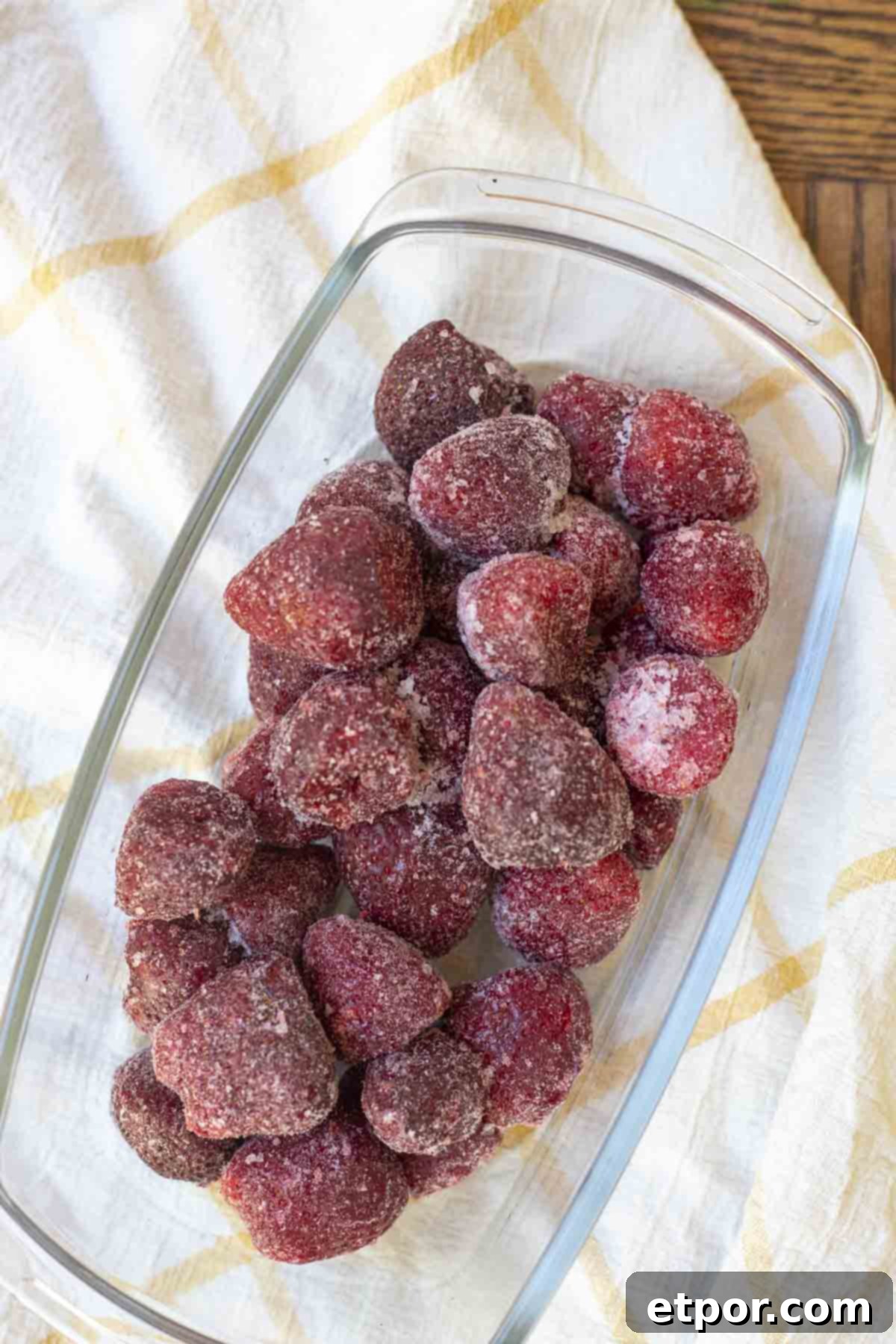
How to Freeze Strawberries: Your Ultimate Guide to Preserving Peak Freshness and Flavor
There’s nothing quite like the taste of a perfectly ripe, juicy strawberry at the height of its season. These sweet, vibrant red berries are a delightful treat, but their season is fleeting. While fresh strawberries are a summer staple, wouldn’t it be wonderful to enjoy their natural sweetness and vibrant flavor all year long? The good news is, with a few simple steps, you absolutely can! Freezing strawberries is an incredibly effective and easy way to capture their peak freshness, allowing you to savor summer’s bounty long after the warm weather fades.
This comprehensive guide will walk you through everything you need to know about freezing strawberries, ensuring you achieve the best results. From selecting the finest berries to the step-by-step freezing process and creative ways to use your frozen stash, we’ll cover it all. Say goodbye to food waste and hello to a freezer stocked with nature’s candy, ready to elevate your smoothies, desserts, and more. Get ready to transform your fresh strawberry harvest into a year-round delight!
Table of Contents
Toggle
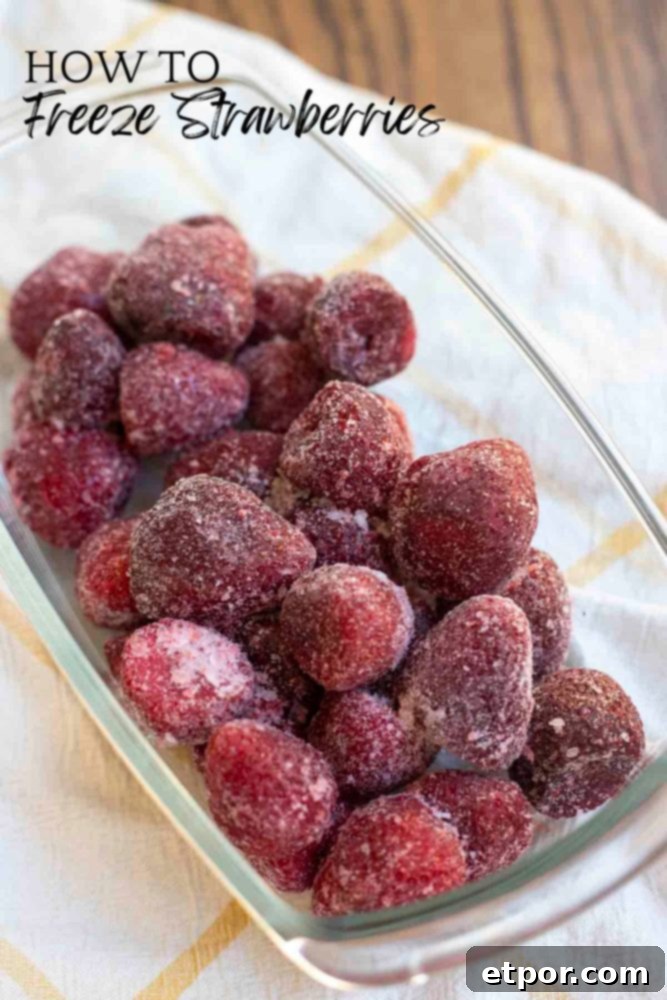
The peak season for fresh strawberries is a truly joyous time, typically spanning late spring through early summer, though ever-bearing varieties can provide berries throughout the warmer months. For many, strawberry picking is a beloved family tradition, a chance to connect with nature and indulge in the sweet rewards of the harvest. While my children eagerly participate (often with sticky faces and happy tummies), I confess to having a particular obsession with preserving these delightful berries.
Each year, we expand our strawberry patch, allowing runners to root and spread, yet it seems no amount of plants can satisfy the endless appetite of a child for these juicy gems. They’ll eat them until juice runs down their chins, resembling tiny, berry-stained vampires! But what if you could extend that joy? Imagine enjoying the vibrant taste of fresh, sweet strawberries even in the depths of winter. With proper freezing techniques, you can lock in that delicious flavor and enjoy them whenever a craving strikes.
Today, we’ll dive deep into the art of freezing strawberries for maximum freshness. This detailed guide will equip you with all the knowledge needed to successfully preserve their exquisite flavor and texture. From selecting the ripest berries to a step-by-step freezing method and practical tips for thawing and using them, you’ll become a strawberry-freezing expert. So, gather your red treasures and prepare to stock your freezer with a taste of summer!
The Delight of Freezing Strawberries
Freezing strawberries offers a multitude of benefits, making it a highly rewarding activity for any home cook. Here’s why you’ll absolutely love having a stash of frozen strawberries:
- Year-Round Enjoyment: The most obvious and perhaps greatest benefit is the ability to enjoy the delicious taste of peak-season strawberries throughout the entire year. Imagine adding a burst of summer flavor to your winter smoothies, oatmeal, or desserts. Frozen at their ripest, these berries retain their sweet, juicy essence for months, bringing a little sunshine to colder days.
- Unmatched Convenience: Having frozen fruit on hand is a true game-changer. No more last-minute dashes to the grocery store for expensive, often underripe, or past-their-prime berries. With a well-stocked freezer, you can effortlessly whip up a smoothie, create a vibrant parfait, or fold them into your morning yogurt whenever the mood strikes. They are pre-prepped and ready to go, saving you valuable time and effort.
- Significant Food Waste Reduction: It’s a common scenario: you buy a large carton of fresh strawberries, intending to use them all, only to find some have spoiled before you get the chance. Freezing is an excellent way to combat food waste. By preserving berries that you might not consume immediately, you extend their shelf life dramatically, preventing them from ending up in the compost bin and saving you money in the long run.
- Incredible Versatility: Frozen strawberries are incredibly adaptable for a wide range of culinary applications. They are fantastic for baking, allowing you to create pies, cobblers, crumbles, muffins, or quick breads even when fresh berries aren’t available. Beyond baking, they are essential for making thick, creamy smoothies, homemade popsicles, delicious syrups, and even homemade ice cream. Plus, a personal favorite: simply snacking on them frozen! Their slightly tart, icy crunch is surprisingly satisfying.
- Cost Savings: When strawberries are in season, they are often available in bulk at significantly lower prices. Freezing them during this time allows you to take advantage of these savings, ensuring you have an affordable supply of quality berries for months, instead of paying premium out-of-season prices.
Essential Tips for Freezing Success
To ensure your frozen strawberries maintain their best flavor, texture, and nutritional value, keep these crucial tips in mind:
- Start with the Best: Always use strawberries that are at their absolute peak of freshness and ripeness. Look for berries that are firm, vibrantly red, and fragrant. Avoid any that are mushy, discolored, or show signs of mold, as these will not freeze well and can affect the quality of your entire batch.
- Thorough Cleaning and Drying: Before freezing, meticulously wash your strawberries to remove any dirt, pesticides, or debris. Crucially, allow them to dry completely. Any residual moisture can lead to excessive ice crystal formation, which degrades the texture of the berries once thawed.
- Act Swiftly: For optimal flavor and texture preservation, freeze your strawberries as soon as possible after purchasing or harvesting them. The quicker they go from vine to freezer, the better their quality will be months later.
- Vary Your Freezing Styles: Consider freezing a mix of whole, sliced, or even chopped strawberries. This offers greater versatility when you’re ready to use them. Whole berries are perfect for smoothies or decorating, while sliced or chopped berries are ideal for baking or making sauces.
- Choose the Right Storage: Always use freezer-safe containers or bags designed to withstand freezing temperatures. Label each container or bag clearly with the date and contents. This practice helps you keep track of how long they’ve been stored and ensures you use them within their optimal timeframe. Removing as much air as possible from bags is also key to preventing freezer burn.
The links in this post contain affiliate links and I will receive a small commission if you make a purchase after clicking on my link. See the full disclosure here.
Sourcing Strawberries in Bulk
Freezing strawberries is most economical and satisfying when you can acquire them in larger quantities during their seasonal peak. Here are the best places to find them:
- Farmer’s Markets: Often a great source for fresh, local berries, sometimes at bulk prices towards the end of the market day or season.
- Local Farms: Many small farms sell directly to consumers. Look for farm stands or direct sales, especially in rural areas.
- U-Pick Farms: This is arguably the best option for bulk buying. Not only is it a fun activity for the family, but you can pick a large volume of fresh berries for a fraction of the grocery store price.
- Growing Them Yourself: If you have a garden, planting your own strawberry patch provides an abundant, fresh, and often organic supply.
- Grocery Store Sales: Keep an eye out for exceptional sales at your local grocery store, particularly when strawberries are in peak season. Sometimes you can find fantastic deals that make bulk freezing worthwhile.
Tools You’ll Need
Freezing strawberries is a straightforward process, requiring only a few basic kitchen tools:
- Cookie Sheets (Baking Trays): Essential for flash freezing berries in a single layer, preventing them from clumping together.
- Parchment Paper or Wax Paper: Lines your baking sheets, preventing berries from sticking and making transfer easier.
- Freezer-Safe Containers: This includes heavy-duty plastic freezer bags (like Ziploc freezer bags), rigid plastic containers (many people reuse cleaned lunch containers), or even glass containers with airtight lids. Choose containers that can withstand freezing temperatures and help prevent freezer burn.
- Cutting Board: For preparing the strawberries.
- Paring Knife or Huller: For removing the green tops (hulling) and any blemishes. A specialized strawberry huller can speed up this process considerably.
- Large Bowl: For washing the strawberries.
- Colander: For straining the washed berries.
- Clean Kitchen Towels or Paper Towels: Absolutely crucial for thoroughly drying the berries before freezing.
Selecting the Best Strawberries for Freezing
The quality of your frozen strawberries largely depends on the quality of the fresh berries you start with. To ensure maximum flavor and texture preservation, it’s vital to choose wisely:
- Ripeness is Key: Look for strawberries that are fully ripe but still firm. They should be a vibrant, uniform red color from top to bottom, with no white or green patches (which indicate underripeness). Avoid berries that are overly soft, bruised, or show any signs of mold, as these will yield poor results when frozen and thawed. Slightly overly ripe berries can still be frozen, but understand that their thawed texture will likely be very soft, making them best suited for smoothies or sauces where texture is less critical. However, their sweetness will be concentrated!
- Aroma Test: Give the strawberries a good sniff. Truly ripe strawberries will emit a sweet, fragrant aroma. If they have no discernible smell, or a sour scent, they are likely not at their peak flavor.
- Local and Organic Preference: Whenever possible, opt for locally grown strawberries, especially those from organic or no-spray farms. Local berries tend to be picked at peak ripeness and haven’t traveled far, meaning better flavor and fewer chemicals. Strawberries are frequently on the “Dirty Dozen” list for pesticide residue, so choosing organic or knowing your farmer is a smart move if possible.
- Firmness: Gently squeeze a berry. It should be firm to the touch, not squishy. This firmness indicates good structure that will hold up better during the freezing process.
Taking the time to select the best quality fresh strawberries will make a significant difference in how delicious and enjoyable your frozen fruit will be later. It’s the first and most important step in successful strawberry preservation.
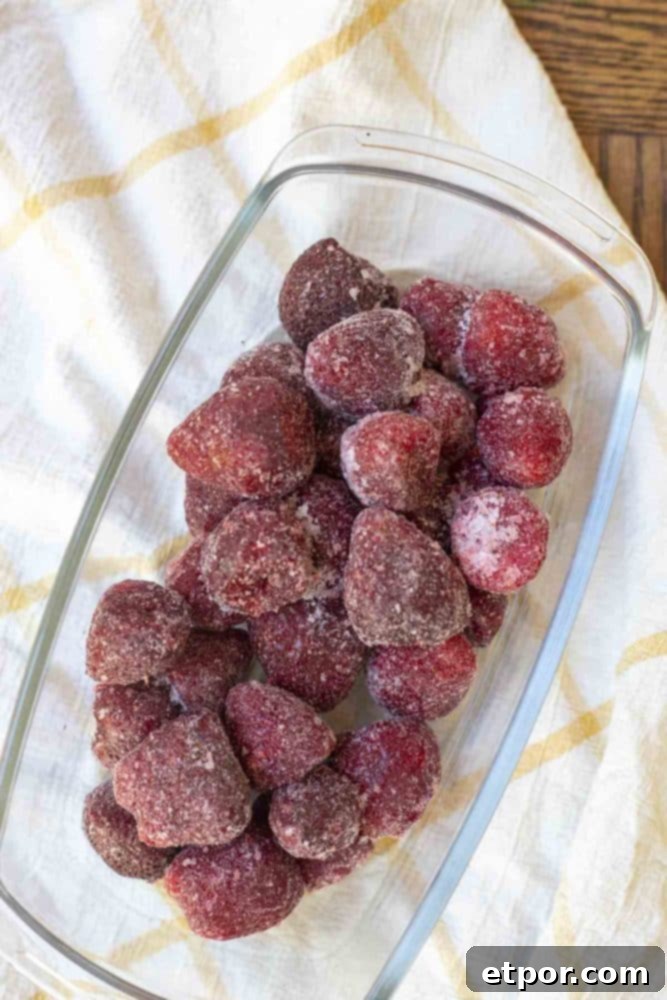
Step-by-Step Guide to Freezing Strawberries
Follow these detailed steps to perfectly freeze your strawberries, ensuring they retain their flavor and make for easy use later on.
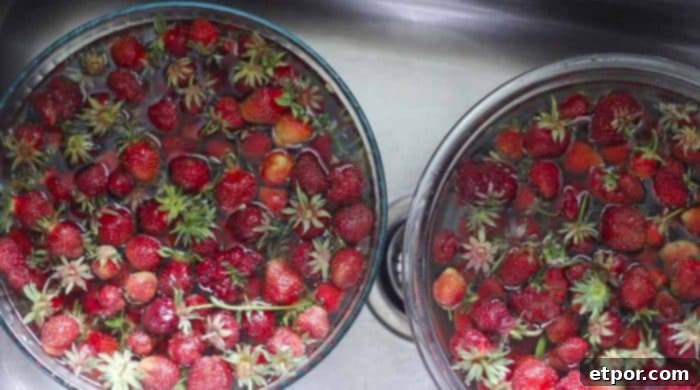
Step 1: Wash and Cleanse Your Strawberries
Begin by gently rinsing your fresh strawberries under cool running water. For a more thorough clean, especially if your berries aren’t organic, consider a quick soak. I prefer soaking them in a mixture of three parts cold water to one part white vinegar for a few minutes. This natural solution helps to remove dirt, tiny insects, and some pesticide residues without affecting the flavor of the berries.
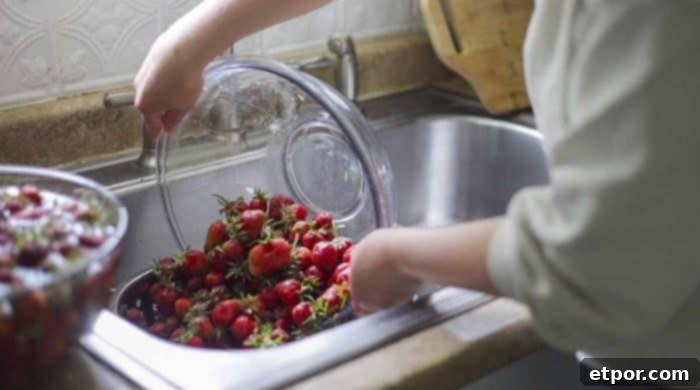
After soaking (if applicable), strain the berries in a colander, allowing the vinegar water to drain completely. Then, give them a final rinse with fresh, cold water to wash away any remaining vinegar solution.
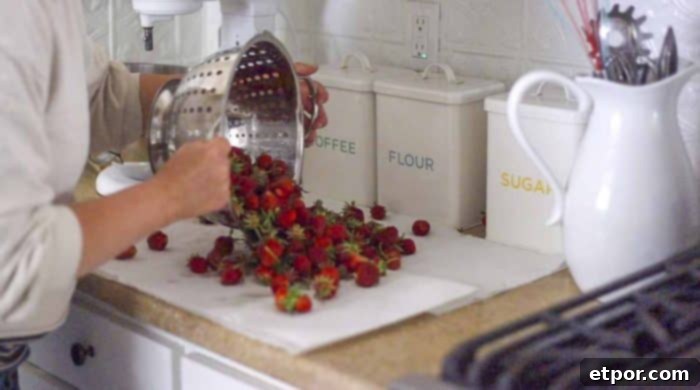
Step 2: Thoroughly Dry Your Berries
This step is absolutely critical for preventing ice crystals and maintaining good texture. Gently spread the washed strawberries in a single layer onto clean kitchen towels or several layers of paper towels. Ensure there’s space between each berry to allow for optimal air circulation. Let them air dry completely, which can take anywhere from 30 minutes to a few hours depending on humidity. You can also gently pat them dry with another towel. The goal is for them to be bone dry before moving to the next step.
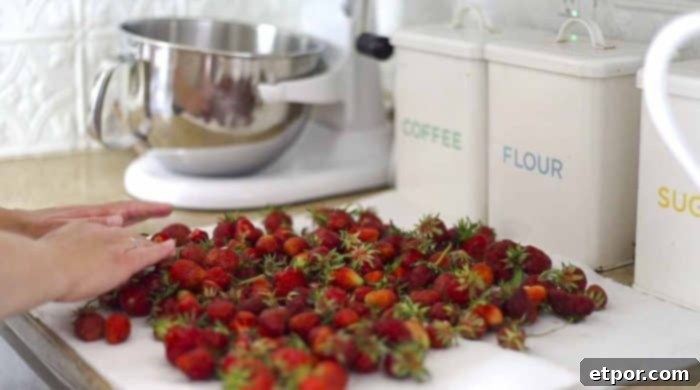
Step 3: Hull, Slice, and Arrange on a Baking Sheet
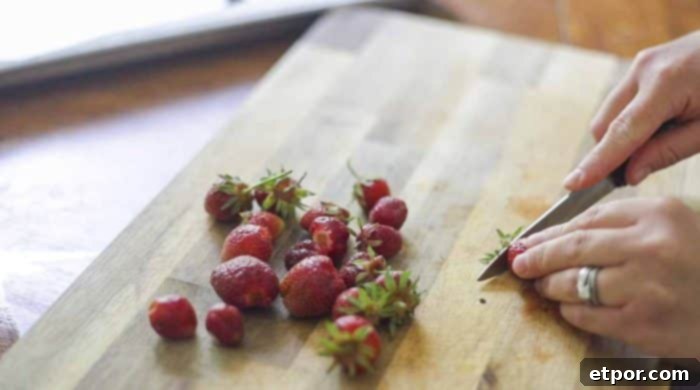
Once dry, use a small paring knife or a strawberry huller to carefully remove the green tops (calyx) and any tough white core. Also, trim away any bruised or damaged areas. At this stage, you can decide whether to freeze your strawberries whole, sliced, or chopped. Slicing them makes them easier to incorporate into many recipes and shortens freezing time. Regardless of your choice, aim for uniform pieces for even freezing.
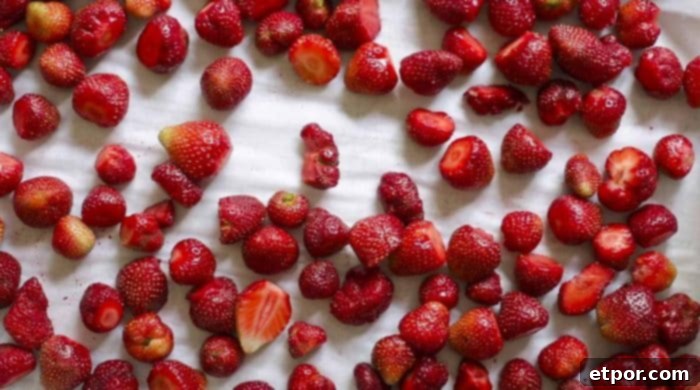
Line a baking sheet with parchment paper or wax paper. Arrange your prepared whole or sliced strawberries in a single layer on the lined sheet. It’s crucial that the strawberries do not touch each other. This step is called “flash freezing” or “tray freezing,” and it prevents the berries from clumping together into one large block, allowing them to freeze individually. This makes it incredibly easy to grab just the amount you need later.
Step 4: Flash Freeze for Individual Berries
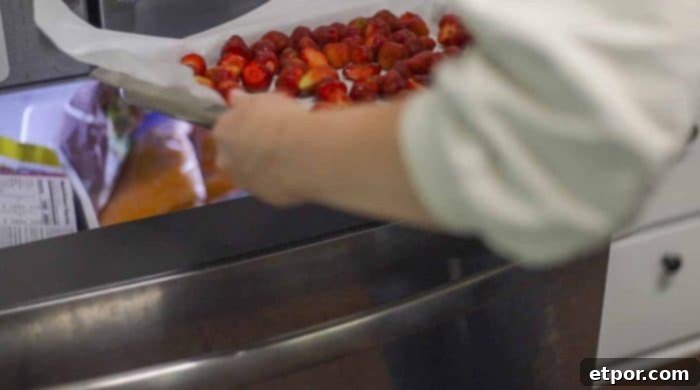
Carefully place the baking sheet into your freezer. Allow the strawberries to freeze for at least two to four hours, or until they are completely solid and can be easily picked up without sticking. The exact time will depend on the size of your berries and the temperature of your freezer. This individual freezing step is key to avoiding a giant, unusable block of frozen fruit.
Step 5: Transfer for Long-Term Storage
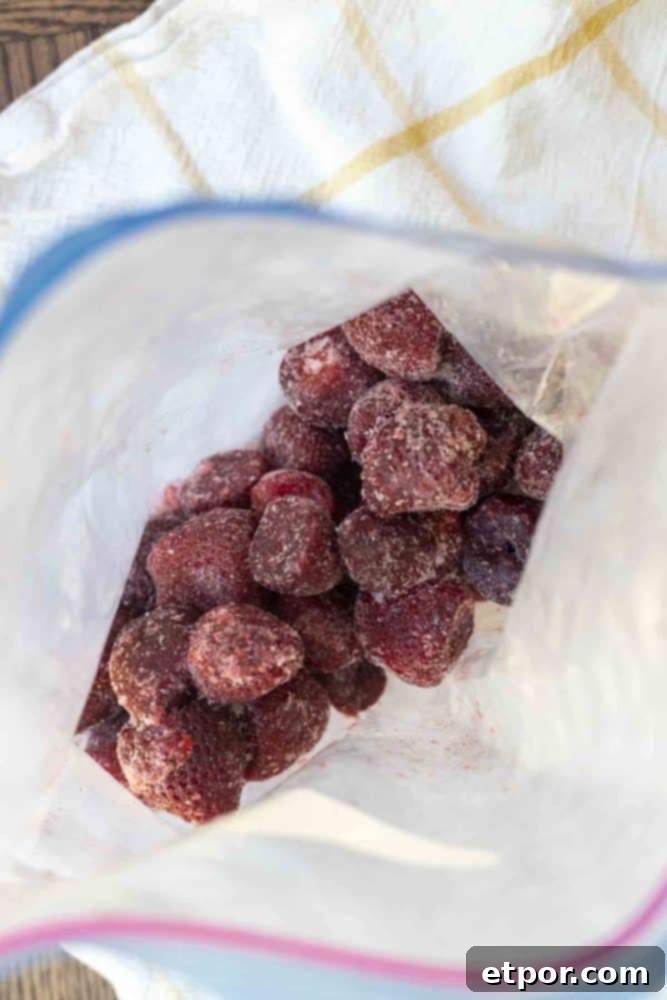
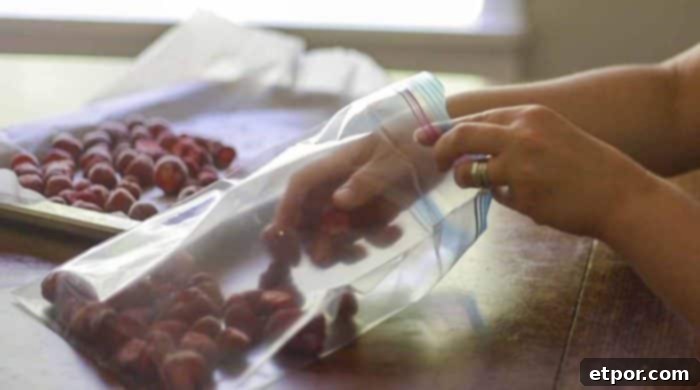
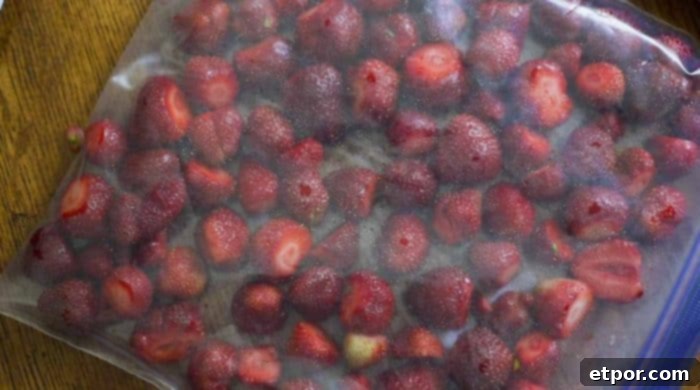
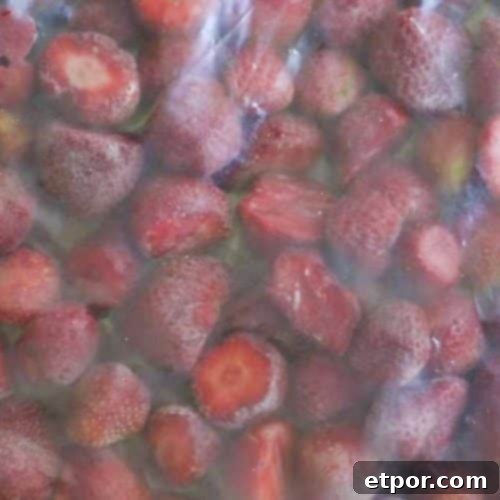
Once the strawberries are thoroughly frozen solid, remove them from the baking sheet. Transfer the individually frozen berries into freezer-safe containers or heavy-duty freezer bags. The goal here is to remove as much air as possible from the bags to prevent freezer burn, which can degrade the quality and flavor of the fruit. If using bags, squeeze out the air before sealing. For containers, ensure they are filled as much as possible to minimize air pockets.
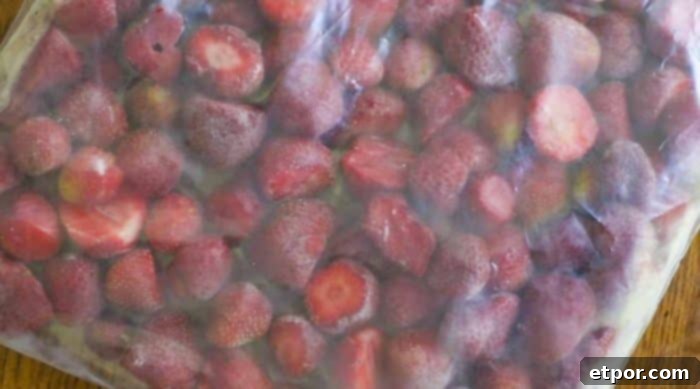
Finally, label each container or bag with the freezing date and contents (e.g., “Frozen Strawberries – June 2024”). This simple habit will help you keep track of your inventory and ensure you use the berries within their optimal storage period. Place the labeled containers back into the freezer, ideally towards the back where temperatures are most stable.
Advanced Freezing Techniques for Optimal Quality
While the flash-freeze method is generally preferred, there are a few other techniques you can consider based on your intended use for the strawberries and how much time you have. Each method has its own advantages and considerations for preserving maximum freshness.
Method 1: The Recommended Flash Freeze (Individually Frozen)
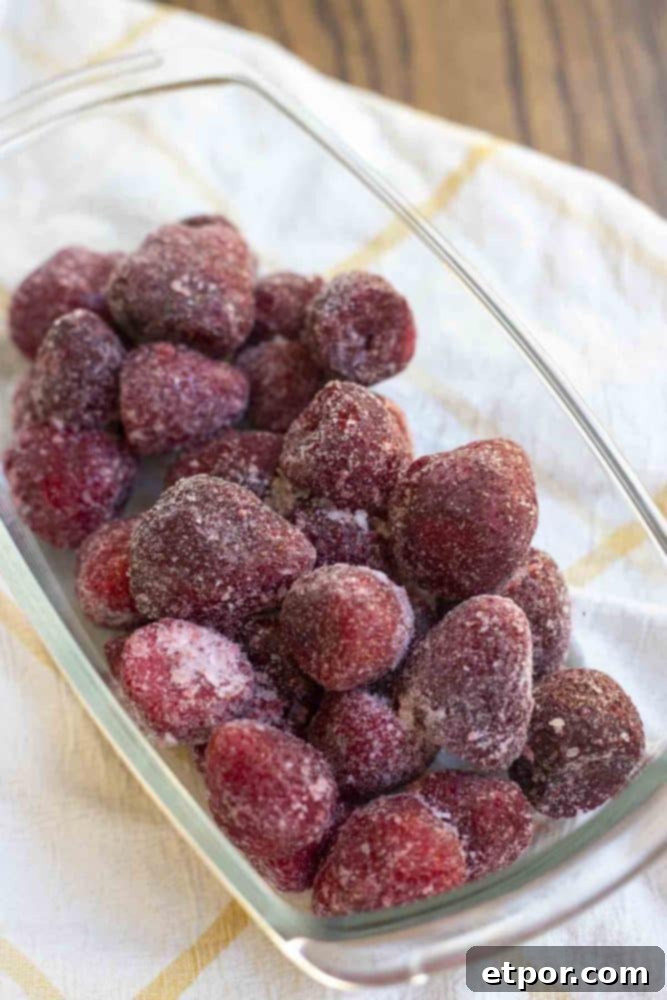
This is the gold standard method described in the steps above and is highly recommended for most uses. By freezing strawberries on a baking sheet in a single layer before transferring them to storage, you achieve individually frozen berries. This prevents them from clumping together, making it incredibly easy to pour out just the amount you need for a smoothie or recipe without having to chip away at a large block. It helps preserve their texture better for applications where individual berry integrity is important. While it adds an extra step and a bit more time initially, the convenience and quality payoff are well worth it.
Method 2: The Quick and Easy Approach
Sometimes, time is of the essence, or you’re simply planning to use your frozen strawberries in applications where texture isn’t paramount, such as purees or jams. For a quicker, less labor-intensive method, you can skip the flash-freezing step. After washing, drying, and hulling (and slicing, if desired), place the berries directly into freezer-safe bags. Fill the bags about halfway, then press out as much air as possible before sealing. Lay the bags flat in a single layer in your freezer until solid. While this method is faster, it will result in more ice crystals and the berries will likely freeze into a solid mass. This can make it harder to separate individual berries later, but it’s perfectly acceptable for many uses and gets the job done efficiently.
Method 3: Freezing in Syrup (for Enhanced Texture)
For applications where you want to maintain a softer texture and brighter color, such as for dessert toppings or pies, freezing strawberries in a sugar syrup can be an excellent option. The syrup helps to protect the strawberries’ delicate structure and flavor during the freezing process, and it can also help to prevent freezer burn by creating a protective barrier. To use this method, prepare your strawberries (wash, hull, slice) as usual. Then, make a light syrup by mixing equal parts sugar and water in a saucepan and heating gently until the sugar completely dissolves. Allow the syrup to cool completely. Pack the prepared strawberries tightly into freezer-safe containers and cover them with the cooled syrup, leaving about half an inch of headspace. Seal the containers tightly and freeze. Remember to label with the date and contents. The added sugar content will affect the final sweetness of the berries, so adjust recipes accordingly.
Regardless of the freezing technique you choose, remember that proper labeling and using freezer-safe containers are critical for tracking and maintaining quality. These simple practices ensure you can enjoy your perfectly preserved strawberries for months to come.
Maximizing the Shelf Life of Your Frozen Strawberries
Once your strawberries are perfectly frozen and labeled, understanding how to store them optimally is key to enjoying them at their best for as long as possible. Proper storage not only extends their shelf life but also helps prevent dreaded freezer burn, which can lead to dry, discolored, and flavorless berries.
- Optimal Freezer Temperature: The most important factor is maintaining a consistent freezer temperature of 0°F (-18°C) or lower. Fluctuations in temperature can cause ice crystals to form and reform, damaging the fruit’s cellular structure and leading to a mushier texture and freezer burn. Ensure your freezer is set to the correct temperature and functioning efficiently.
- Placement Matters: Avoid storing frozen strawberries (or any frozen food) in the door of the freezer. The temperature in the door fluctuates most frequently due to it being opened and closed. Instead, store them in the middle or back sections of the freezer, where the temperature is more stable and consistently cold.
- Airtight Containers are Essential: Always use high-quality, freezer-safe containers or bags. These are designed to minimize air exposure, which is the primary cause of freezer burn. If using freezer bags, press out as much air as possible before sealing. For rigid containers, ensure they are tightly sealed and consider placing a piece of plastic wrap directly on top of the berries before sealing the lid for an extra layer of protection.
- Shelf Life Guidelines: While frozen strawberries can technically last up to a year or even longer, their quality (flavor and texture) begins to diminish after about six to eight months. For the best culinary results, aim to use your frozen strawberries within this six to eight-month timeframe. Beyond that, they might still be safe to eat but could have a noticeably different texture or less vibrant flavor, making them best suited for pureed applications.
- Avoid Overloading: Don’t overload your freezer. A packed freezer works more efficiently, but too much fresh produce added at once can temporarily raise the freezer’s temperature, impacting the quality of already frozen items and slowing down the freezing process for new additions.
Properly Thawing Frozen Strawberries
When you’re ready to use your frozen strawberries, proper thawing is crucial to preserving their flavor and texture as much as possible. It’s important to remember that frozen and thawed strawberries will never have the exact same firm texture as fresh ones; they will be softer. However, with the right thawing method, you can still enjoy them in many delicious ways.
- The Best Method: Refrigerator Thawing: The slow and gradual approach is always best. Transfer the desired amount of frozen strawberries from the freezer to a bowl (to catch any liquid) and place them in the refrigerator. Allow them to thaw overnight, or for about 6-8 hours. This slow thawing process helps to minimize cellular damage, retaining more of their natural sweetness and firmness, although they will still be softer than fresh. This method is ideal for uses where you want to maintain as much of their structure as possible, like for fruit tarts or as a topping.
- Quicker Thawing Options: If you need your strawberries sooner, you have a couple of alternatives:
- Room Temperature: Place the frozen strawberries in a bowl on your countertop and let them thaw at room temperature for a few hours. This is faster but can result in slightly softer berries and isn’t ideal for food safety if left out too long.
- Cold Water Bath: For an even quicker thaw, place the frozen strawberries in a sealed plastic bag (ensure it’s airtight to prevent water from entering). Submerge the bag in a bowl of cold water. Change the water every 30 minutes until the berries are thawed. This method works relatively quickly and keeps the berries cold.
- Avoid the Microwave: While tempting for speed, avoid thawing strawberries in the microwave. The uneven heating can cause them to cook in some spots and remain frozen in others, leading to a very mushy texture and a significant loss of flavor. It’s best reserved for scenarios where you immediately blend them into a smoothie from frozen.
- Using Thawed Berries: Once thawed, store your strawberries in the refrigerator and plan to use them within a day or two for optimal freshness and safety. Any liquid released during thawing is packed with flavor, so don’t discard it – it’s perfect for smoothies, sauces, or incorporating into your recipes.
Now that you know how to perfectly thaw your frozen strawberries, let’s explore some incredibly delicious ways to use them in your culinary adventures!
Delicious Ways to Use Your Frozen Strawberry Stash
Frozen strawberries are a versatile ingredient that can add a burst of flavor and nutrition to countless dishes. While their texture will be softer than fresh berries once thawed, this rarely impacts the deliciousness of your creations. Here are some fantastic ways to incorporate your preserved strawberries into your daily meals and treats:
- Smoothies and Shakes: This is arguably the most popular use for frozen strawberries. Their icy temperature eliminates the need for extra ice, creating thick, frosty, and wonderfully flavorful smoothies. Combine them with bananas, yogurt, milk (dairy or non-dairy), and a touch of honey or maple syrup for a quick and healthy breakfast or snack.
- Yogurt and Oatmeal Toppings: Toss a handful of frozen (or partially thawed) strawberries into your morning yogurt or warm oatmeal. They will gently thaw and release their juices, creating a naturally sweet and colorful addition.
- Baked Goods: Frozen strawberries are perfect for baking! Incorporate them into:
- Crisps and Crumbles: Like this delicious Healthy GF Strawberry Crisp.
- Muffins and Scones: Fold them into the batter for juicy pockets of fruit.
- Cakes and Quick Breads: Add them to pound cakes or banana bread for an extra layer of flavor.
- Pies and Tarts: They work wonderfully in pie fillings, providing a vibrant taste and color.
- Savory Pairings: Don’t limit yourself to sweet dishes! Frozen strawberries can add a unique sweet-tart element to savory recipes:
- Salads: Thawed and sliced strawberries can brighten up a green salad with balsamic vinaigrette and goat cheese.
- Topping for Meats: A quick strawberry sauce can be a fantastic accompaniment to grilled chicken, pork, or even fish.
- Refreshing Drinks:
- Cocktails and Mocktails: Muddle thawed strawberries for a vibrant puree in margaritas, mojitos, or non-alcoholic spritzers.
- Infused Water: Add frozen strawberries directly to water for a naturally flavored, refreshing drink.
- Frozen Treats:
- Popsicles: Blend frozen strawberries with a touch of sweetener and water or yogurt to make homemade Strawberries and Cream Popsicles.
- Homemade Ice Cream or Sorbet: They are a key ingredient for rich, fruity ice creams or light, refreshing sorbets.
- Jams, Preserves, and Sauces: Frozen fruit is excellent for canning! If you find yourself too busy during harvest season to make jam, simply freeze your berries. Later, you can easily turn them into homemade strawberry jam, preserves, or a delicious strawberry sauce to pour over pancakes, waffles, or ice cream.
- Strawberry Shortcakes: A classic dessert that benefits beautifully from a quick strawberry sauce made from thawed berries.
- Overnight Oats: Stir in some frozen strawberries into your overnight oats for a delicious, gradually thawing fruity breakfast. Like these Chocolate Covered Strawberry Overnight Oats.
The possibilities truly are endless. Don’t be afraid to experiment and discover your new favorite way to enjoy the taste of summer throughout the year with your frozen strawberry bounty!
Frequently Asked Questions About Freezing Strawberries
Can I freeze strawberries with their stems on?
While you certainly can freeze strawberries with their stems (calyx) still attached, it’s generally recommended to remove them before freezing. Removing the green tops beforehand saves you time and effort when you’re ready to use the strawberries later, as you won’t have to thaw them just to de-stem them. It also makes for a cleaner, more enjoyable eating experience, especially for smoothies or baking.
Is it possible to freeze strawberries without adding sugar?
Absolutely! You can freeze whole or sliced strawberries without any added sugar. Freezing them plain will not affect their ability to freeze or their general texture post-thaw significantly compared to fresh. Many people prefer to freeze them without sugar for health reasons or to have more control over the sweetness in their final recipes. While adding sugar (either sprinkled over the berries or in a syrup) can help maintain their color and slightly improve thawed texture, it is by no means required for successful freezing.
Are plastic freezer bags suitable for storing frozen strawberries?
Yes, heavy-duty plastic freezer bags (like Ziploc freezer bags) work very well for storing frozen strawberries. They are flexible, take up less space, and are generally effective at keeping air out. The key is to press out as much air as possible before sealing the bag to prevent freezer burn. You can also use a straw to suck out residual air, or a vacuum sealer for the best results. For added protection, double-bagging can be beneficial.
How long can I keep strawberries frozen before they lose quality?
Properly stored frozen strawberries can last in the freezer for up to 1 year. However, for the best possible quality in terms of flavor, color, and texture, it is highly recommended to use them within 6 to 8 months. Beyond this timeframe, they might still be safe to eat, but their texture might become mushier, and their flavor less vibrant, making them more suitable for blended applications like smoothies or purees.
Can I freeze strawberries that are already cut into pieces?
Yes, absolutely! Freezing pre-cut strawberries is a fantastic time-saver. Whether they are sliced or chopped, ensure they are thoroughly washed and dried, then spread them in a single layer on a parchment-lined baking sheet for flash freezing. This step is especially important for cut berries to prevent them from clumping together into one large, difficult-to-manage block. Once individually frozen, transfer them to an airtight freezer-safe container for long-term storage.
Explore More Ways to Preserve Your Harvest
If you’ve enjoyed learning how to freeze strawberries, you’ll be delighted to discover other simple and rewarding methods to preserve your garden’s bounty or seasonal finds. Extend the freshness of other fruits and vegetables with these helpful guides:
- How To Freeze Blueberries: A similar, easy method for preserving another favorite berry.
- How To Freeze Zucchini: Perfect for managing an abundance of summer squash.
- Homemade Refrigerator Dill Pickles: A quick and easy way to enjoy crisp, tangy pickles without traditional canning.
- Blueberry Chia Jam: A healthier, no-cook jam option that’s simple to make.
- How to Freeze Kale – 2 Easy Ways: Ensure you always have nutritious greens on hand.
Recipe: How To Freeze Strawberries
Print
Pin
Rate
SaveSaved!
Save This Recipe to Your Inbox!
We’ll get it sent to your inbox! Plus, get new recipes from us every week.
Equipment Needed
-
Cutting board
-
Paring Knife or Strawberry Huller
-
Freezer-safe containers or bags
-
Baking sheet
-
Parchment paper or wax paper
-
Large bowl
-
Colander
-
Clean kitchen towels or paper towels
Ingredients for Freezing Strawberries
- 1-10 lbs fresh, ripe strawberries
- White Vinegar (optional, for washing)
Detailed Instructions
-
Wash Strawberries: Rinse berries under cold water. For a deeper clean, soak them in a mixture of 3 parts water to 1 part white vinegar for a few minutes in a large bowl. Strain the berries in a colander, then rinse thoroughly with cold water to remove any vinegar residue.
-
Thoroughly Dry: Gently spread the washed strawberries onto clean kitchen towels or paper towels in a single layer, ensuring space for air circulation. Allow them to air dry completely until no moisture remains. This step is crucial for preventing ice crystals.
-
Hull & Slice: Remove the green tops (hulling) and any bruised or damaged areas using a paring knife or huller. Slice the strawberries if desired (e.g., in halves or quarters), or keep them whole.
-
Arrange on Baking Sheet: Line a baking sheet with parchment paper. Arrange the whole or sliced berries in a single layer, making sure they do not touch each other. This prevents them from freezing into a solid block.
-
Flash Freeze: Place the baking sheet in the freezer for at least two to four hours, or until the strawberries are completely frozen solid.
-
Transfer to Storage: Once frozen, quickly transfer the individual strawberries from the baking sheet into a freezer-safe container or heavy-duty freezer bag. Remove as much air as possible from the bag before sealing.
-
Label & Store: Label the container with the date and contents. Place back into the freezer, ideally in a stable, cold section, for long-term storage.
Important Notes for Best Results
- Always start with ripe, firm strawberries at their peak freshness for the best flavor and texture after freezing.
- Ensuring the strawberries are completely dry before freezing is the most critical step to minimize ice crystal formation and preserve texture.
- Freeze berries as soon as possible after purchasing or harvesting to lock in flavor and nutrients.
- Consider freezing a mix of whole, sliced, or chopped berries to provide versatility for various recipes.
- Use airtight, freezer-safe containers or bags and remove as much air as possible to prevent freezer burn.
- For optimal quality, consume frozen strawberries within 6-8 months, although they remain safe for up to a year.