Crafting Your Perfect Cup: The Ultimate Guide to Homemade Dairy-Free Coffee Creamer
There’s something uniquely comforting about that first warm, aromatic cup of coffee in the morning. For many, it’s more than just a beverage; it’s a cherished ritual, a moment of peace before the day’s demands begin. That delicious coffee isn’t just about the caffeine boost; it’s about setting the tone, a comforting cue that it’s time to embrace the day with renewed energy and focus. Sometimes, when the afternoon slump hits, another half-cup is all it takes to reignite that motivation.
While the energizing effects of caffeine are undeniable, studies consistently highlight the various health benefits associated with coffee consumption. From its rich antioxidant profile to potential links with reduced risks of certain diseases, coffee has earned its place as a healthy habit for many. (You can explore more about coffee’s health benefits in this insightful article from Harvard Health).
However, for coffee lovers, the experience isn’t complete without the perfect creamer. Unfortunately, many store-bought options are loaded with artificial ingredients, excessive sugars, and unhealthy fats. This often leaves us craving a healthier, more natural alternative that doesn’t compromise on flavor or creaminess. That’s where homemade coffee creamer truly shines, offering a customizable and wholesome solution to elevate your daily brew.
Why Choose Homemade Coffee Creamer?
Opting for a homemade coffee creamer offers numerous advantages over its commercial counterparts. Firstly, it gives you complete control over the ingredients. You can avoid artificial flavors, colors, preservatives, and high-fructose corn syrup that are common in store-bought creamers. This means a cleaner, healthier start to your day.
Secondly, it’s incredibly versatile. Whether you prefer a dairy-free lifestyle, need to manage sugar intake, or simply love experimenting with flavors, homemade creamer allows for endless customization. You can adjust the sweetness, richness, and flavor profile to perfectly match your preferences and dietary needs. Plus, it’s often more cost-effective in the long run, saving you money on those specialty coffee shop drinks or expensive organic creamers.
Our Favorite Recipe: Delicious, Dairy-Free, and Naturally Sweetened
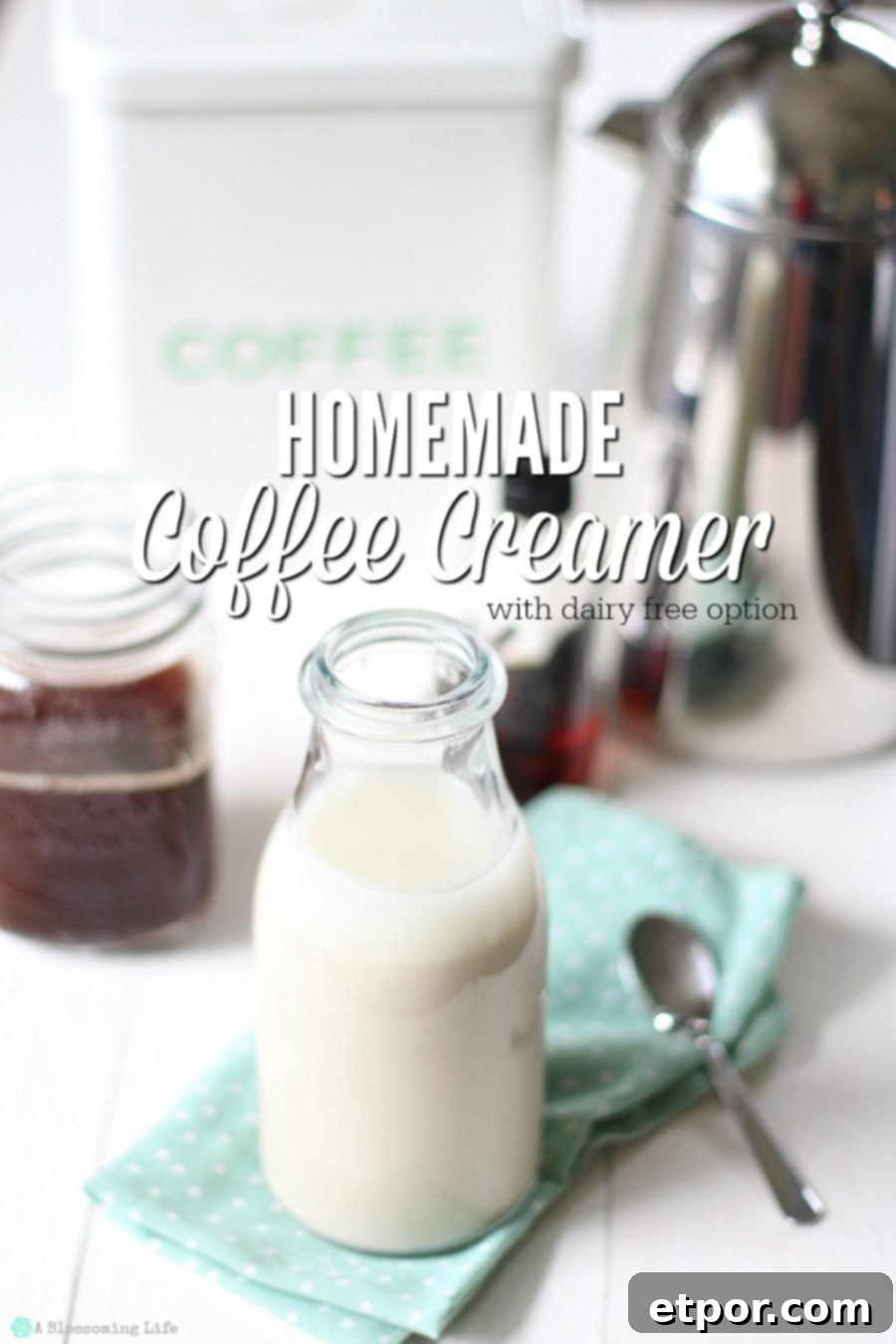
Today, we’re excited to share our absolute favorite homemade coffee creamer recipe. What makes it truly special is its adaptability: you can effortlessly make it dairy-free or with traditional dairy, depending on your dietary choices. It’s naturally sweetened with honey, but if you prefer your coffee unsweetened (like I often do), you can easily omit it. For those who tolerate dairy, you can substitute the coconut milk with cream or half & half for a classic rich flavor. This flexibility ensures everyone can enjoy a luscious, healthy addition to their cup of joe.
Our Journey to Dairy-Free Living
Our family’s decision to embrace a dairy-free lifestyle wasn’t a trend; it was a necessary health choice that brought significant improvements to our well-being. My husband, for instance, has Ulcerative Colitis, and dairy products consistently exacerbated his symptoms. Eliminating dairy from his diet made a remarkable difference in managing his condition and improving his quality of life. You can read more about his journey to being symptom-free here.
For me, dairy intake was directly linked to recurring arthritis flare-ups and stubborn acne. It was a clear indicator that my body struggled to process it. By removing dairy, I experienced reduced inflammation, clearer skin, and overall better health. Even our baby girl reacts to dairy; on the rare occasions when I might accidentally “slip” and have a slice of pizza or another dairy-laden treat, she experiences increased spit-up. It became evident that for our family’s collective health and comfort, avoiding dairy was the best path forward. We all feel considerably better without it.
Many individuals unknowingly suffer from various forms of dairy intolerance or sensitivity. While lactose intolerance, characterized by difficulty digesting the sugar in milk, is common, some people react to the proteins in dairy (casein and whey), which can trigger inflammatory responses throughout the body. Symptoms can range from digestive upset like bloating, gas, and stomach pain to skin issues such as eczema and acne, or even joint pain and fatigue. Exploring dairy alternatives like coconut milk, almond milk, or oat milk can be a game-changer for those seeking to alleviate these symptoms and improve their overall health.
The following are affiliate links. We are a participant in the Amazon Services LLC Associates Program, an affiliate advertising program designed to provide a means for us to earn fees by linking to Amazon.com and affiliated sites.