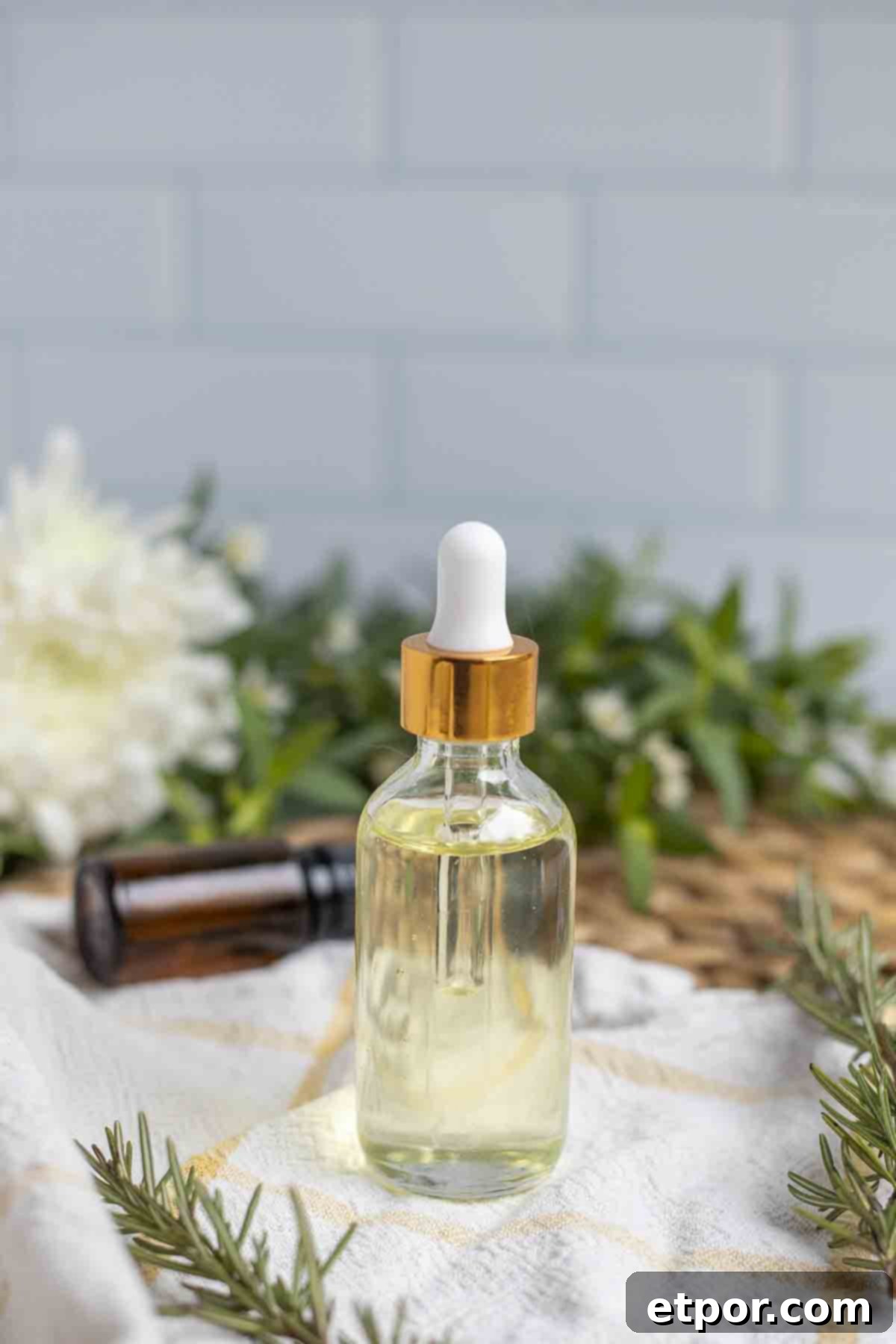
DIY Rosemary Oil for Hair Growth: Your Comprehensive Guide to Thicker, Healthier Locks
Are you yearning for thicker, more vibrant hair and a healthier scalp? Discover the transformative power of homemade rosemary oil, a natural remedy that can help stimulate hair growth and significantly reduce hair loss. This comprehensive guide provides an easy-to-follow recipe, insightful tips, and all the information you need to unlock rosemary’s full potential for your hair.
Table of Contents
Toggle
Hair loss, thinning, and a dull mane are common concerns many people face. Whether it’s due to stress, hormonal changes, or simply the natural aging process, seeking effective and natural solutions is a priority for many. This article introduces you to the wonders of rosemary oil, a time-honored remedy that has gained significant popularity for its remarkable ability to foster hair growth and enhance overall hair and scalp health.
As a personal anecdote, with my sweet baby recently turning a month old, I’m already anticipating the inevitable postpartum hair loss. Each pregnancy has brought different experiences, and I distinctly remember after my first, the amount of hair I lost was quite significant, leading to noticeable bald patches. While some postpartum hair loss is unavoidable, I’m actively taking steps this time to promote scalp health, minimize loss, and encourage regrowth with natural remedies like this rosemary oil.
This simple yet powerful homemade remedy can transform your hair from lackluster to luxuriant. Follow along as we delve into an easy-to-follow recipe for crafting your very own rosemary oil, complete with optimal application techniques to maximize results.
Why You’ll Love This DIY Rosemary Oil Recipe
This homemade rosemary oil recipe isn’t just effective; it’s also incredibly convenient and versatile:
- Effortless to Make: With just two primary ingredients, you can easily prepare this nourishing oil at home, saving you money and ensuring quality control. The process is straightforward, whether you choose fresh rosemary or essential oil.
- Suitable for All Hair Types: Regardless of your hair’s texture—be it fine, thick, curly, straight, oily, or dry—this recipe is designed to provide comprehensive benefits. It works by addressing scalp health, which is the foundation for healthy hair, making it a universal solution.
- Deeply Nourishing: This blend is packed with essential fatty acids, vitamins, and minerals that deeply moisturize and soothe both the hair strands and the scalp. It helps combat dryness, reduce an itchy scalp, and leaves your hair feeling soft, supple, and revitalized.
Benefits of Rosemary Oil for Hair and Scalp
Rosemary (Rosmarinus officinalis) is not just a fragrant herb; it’s a powerhouse for hair health, traditionally used for centuries to stimulate hair follicles and improve scalp conditions. Modern research continues to support these ancient uses:
- Stimulates Hair Growth and Reduces Hair Loss: One of the most celebrated benefits of rosemary oil is its ability to promote hair growth and actively prevent hair loss. The key lies in its active compounds, which are known to improve blood circulation in the scalp. This enhanced blood flow ensures that hair follicles receive a rich supply of essential nutrients and oxygen, crucial for optimal growth. Increased circulation not only encourages new hair to sprout but also strengthens existing hair follicles, making them less prone to breakage and shedding.
- Combats Dandruff and Soothes Dry, Itchy Scalp: Rosemary oil boasts potent antimicrobial, antifungal, and anti-inflammatory properties. These attributes make it an excellent natural remedy for combating common scalp conditions such as dandruff and dry, itchy skin. By alleviating irritation and normalizing oil production, it helps create a healthier, more balanced scalp environment. Many users, including myself, have experienced significant relief from flaky, irritated scalps after incorporating rosemary oil into their routine (source).
- Potential for Preventing Premature Graying: While more scientific evidence is needed to conclusively prove this, some proponents suggest that rosemary oil may help delay the premature graying of hair. This belief is often attributed to its rich antioxidant properties, which help protect hair follicles from oxidative stress caused by free radicals. Oxidative stress is a known factor in cellular aging, including the cells responsible for hair pigmentation.
- Improves Hair Thickness and Texture: Beyond growth stimulation, rosemary oil can significantly enhance hair thickness and overall texture. It’s rich in vital nutrients such as vitamins A, C, and E, alongside minerals like iron and calcium. These components work together to nourish the hair shaft from within, strengthening individual strands. The result is often thicker, more voluminous hair that feels healthier, looks shinier, and is easier to manage and style.
- Stress-Relieving Properties: The aromatic qualities of rosemary are known for their calming and stress-relieving effects. The soothing scent can help alleviate stress and tension, creating a more relaxed state of mind. Given that stress can be a significant contributor to hair loss, incorporating a stress-reducing element into your hair care routine can indirectly foster a more beneficial environment for healthy hair growth (source).
The following are affiliate links. We are a participant in the Amazon Services LLC Associates Program, an affiliate advertising program designed to provide a means for us to earn fees by linking to Amazon.com and affiliated sites.
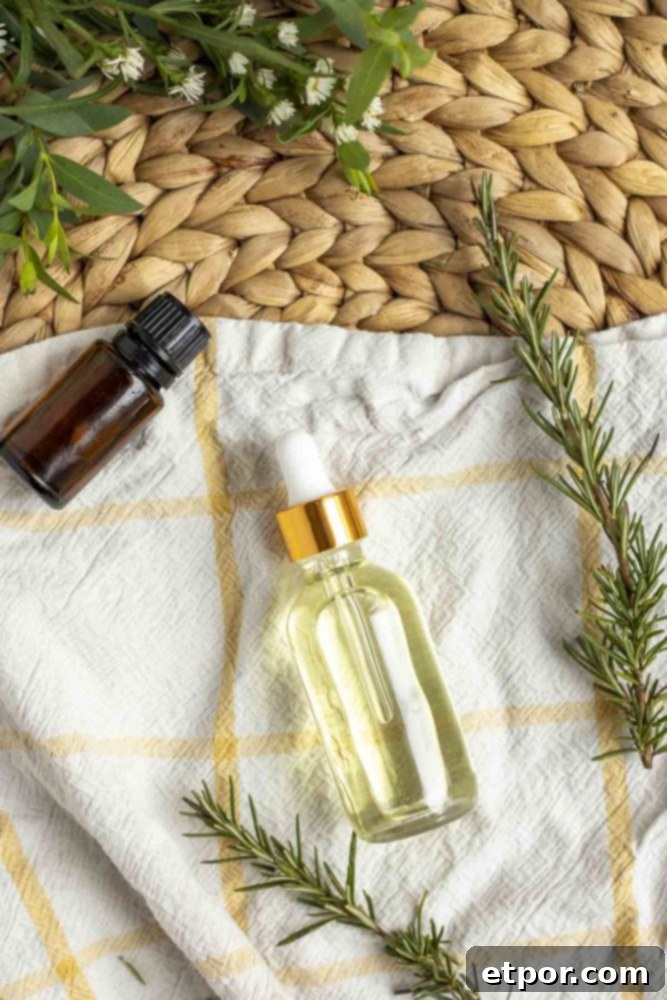
Essential Ingredients and Tools
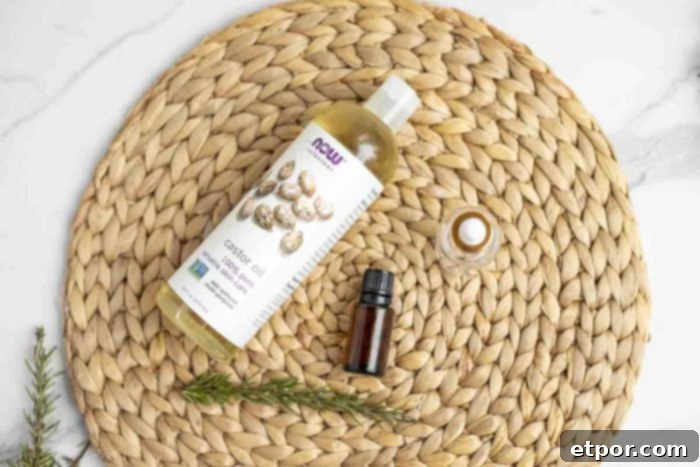
Rosemary: Fresh vs. Essential Oil
- Fresh Rosemary Sprigs: If opting for fresh rosemary, select high-quality sprigs to ensure maximum potency. You can either harvest them from your garden or purchase them from a local herb supplier. Fresh rosemary offers a more traditional and aromatic infusion.
- Rosemary Essential Oil: For a quicker and more convenient method, pure rosemary essential oil is an excellent alternative. Ensure it’s therapeutic grade for best results. This method bypasses the infusion process, making it ideal for those short on time.
- Dried Rosemary: Also a viable option, dried rosemary can be infused into a carrier oil similar to fresh sprigs, providing a concentrated herbal benefit.
Choosing the Right Carrier Oil
Carrier oils are vital as they dilute the concentrated rosemary and facilitate its delivery to your scalp. They also offer their own unique nourishing properties:
- Olive Oil: A widely accessible and moisturizing oil, rich in vitamins A, D, E, and K, and antioxidants. It helps protect keratin in hair and seals in moisture.
- Coconut Oil: Known for its ability to penetrate the hair shaft, reducing protein loss. It’s deeply moisturizing and helps to repair damaged hair.
- Avocado Oil: Packed with biotin, vitamins A, B-5, and E, and monounsaturated fats, it’s excellent for moisturizing, strengthening, and promoting growth.
- Castor Oil: A thick, nutrient-dense oil known for its high ricinoleic acid content, which can improve blood circulation to the scalp and is often praised for encouraging hair thickness and growth.
- Jojoba Oil: Structurally similar to the scalp’s natural sebum, making it highly compatible and non-comedogenic. It helps balance oil production and moisturize follicles without clogging.
Feel free to choose the carrier oil that best suits your hair type and concerns, or even create a blend! While carrier oils don’t directly “grow” hair, their anti-inflammatory, moisturizing, and nourishing properties create an optimal environment for a healthy scalp, which is fundamental for robust hair growth.
Optional Enhancing Essential Oils
Consider adding a few drops of other essential oils to amplify the fragrance and therapeutic benefits of your rosemary oil:
- Lavender Oil: Promotes hair growth, calms the scalp, and offers a soothing aroma.
- Peppermint Oil: Stimulates blood circulation to the scalp, creating a tingling sensation and potentially boosting hair growth.
- Tea Tree Oil: Excellent for addressing oily or flaky scalps due to its powerful antimicrobial and antifungal properties.
Tools You’ll Need
- Glass Jar (e.g., Mason Jar) or Bottle: For storage. A dark-colored glass container is highly recommended as it protects the oil from light exposure, preserving its potency and extending its shelf life.
- Small Saucepan (for fresh rosemary method): For gently heating the carrier oil and rosemary.
- Fine-Mesh Sieve or Cheesecloth: Essential for straining the infused oil to remove the rosemary leaves.
With these simple ingredients and tools, you’re now ready to embark on the journey of creating your very own DIY rosemary oil for hair growth. Let’s dive into the step-by-step process.
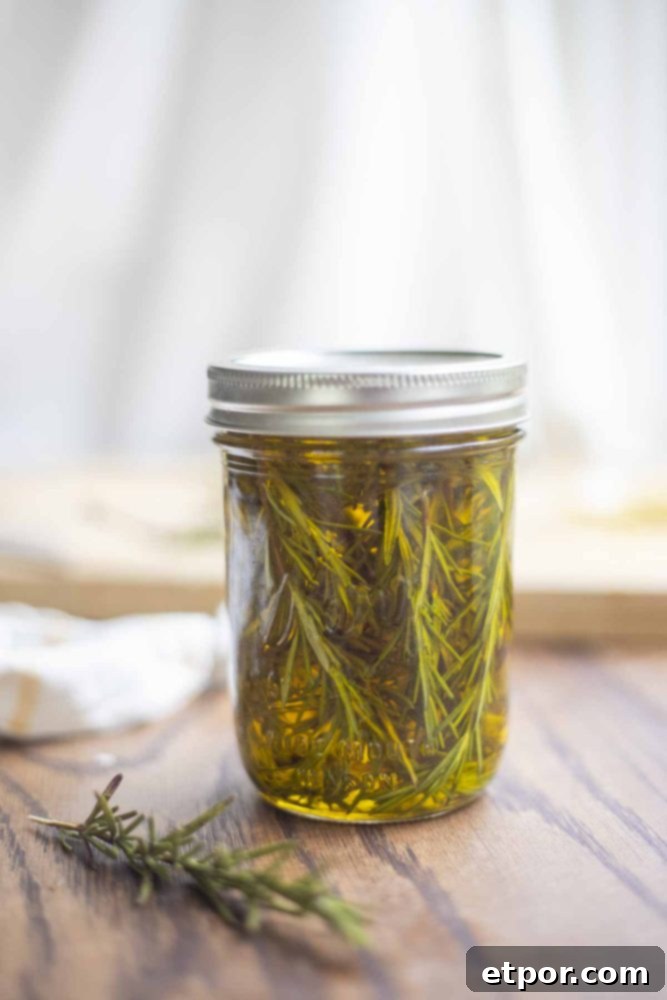
How to Make Rosemary Oil for Hair Growth
Method 1: Fresh Rosemary Infusion (Heat Method or Solar Infusion)
This method allows the beneficial compounds from fresh rosemary to slowly infuse into your chosen carrier oil.
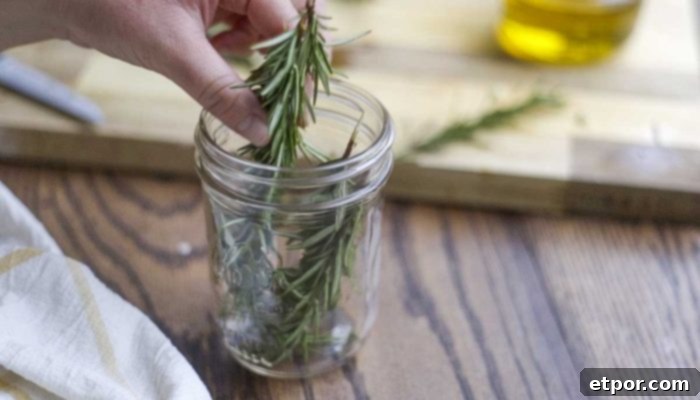
- Prepare the Rosemary: Gather about two to three large handfuls of fresh rosemary sprigs. Wash them thoroughly under cool water to remove any dirt or debris.
- Dry Completely: This step is crucial. Allow the rosemary to air dry completely for at least a few hours, or gently pat it dry with a clean towel. Any moisture remaining on the sprigs will introduce water into your oil, which can lead to mold growth and spoil the entire batch.
- Chop Rosemary (Optional): Remove the rosemary leaves from the woody stems. Coarsely chop the leaves to help release their aromatic oils and active compounds more effectively during infusion.
- Heat Infusion Method (Faster):
- In a small saucepan, gently heat your chosen carrier oil (e.g., olive, coconut, or jojoba oil) over very low heat. The oil should become warm but not hot or boiling.
- Add the chopped rosemary leaves to the warm oil and stir gently to ensure they are fully immersed.
- Allow the mixture to simmer on low heat for about 1.5 to 2 hours. Stir occasionally to prevent the rosemary from sticking to the bottom of the pan and ensure even infusion. Keep the heat as low as possible; you want to infuse, not cook, the rosemary.
- Remove the saucepan from the heat and let the rosemary-infused oil cool completely to room temperature.
- Solar Infusion Method (Slower, Gentler):
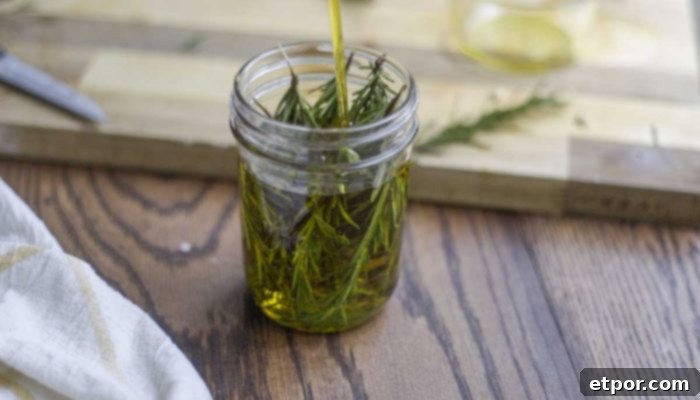
- Alternatively, for a gentler infusion, place the dried, chopped rosemary leaves into a clean, dry glass jar.
- Pour your carrier oil over the rosemary, ensuring the herbs are fully submerged.
- Seal the jar tightly and place it in a warm, sunny spot (like a windowsill) for 2 to 4 weeks. Shake the jar gently every day or two to encourage infusion. This method is slower but can preserve more heat-sensitive compounds.
- Strain the Oil: Once the infusion period is complete (either by heat or solar method) and the oil is cool, strain the oil through a fine-mesh sieve or cheesecloth into a clean, dark glass jar or bottle. This separates the oil from the spent rosemary leaves.
- Store: Discard the leftover rosemary leaves. Seal the container tightly and store the infused rosemary oil in a cool, dark place to maintain its potency and extend its shelf life.
Method 2: Rosemary Essential Oil Blend (Quick Method)
This is the fastest way to prepare rosemary oil for hair growth, leveraging the concentrated power of essential oil.
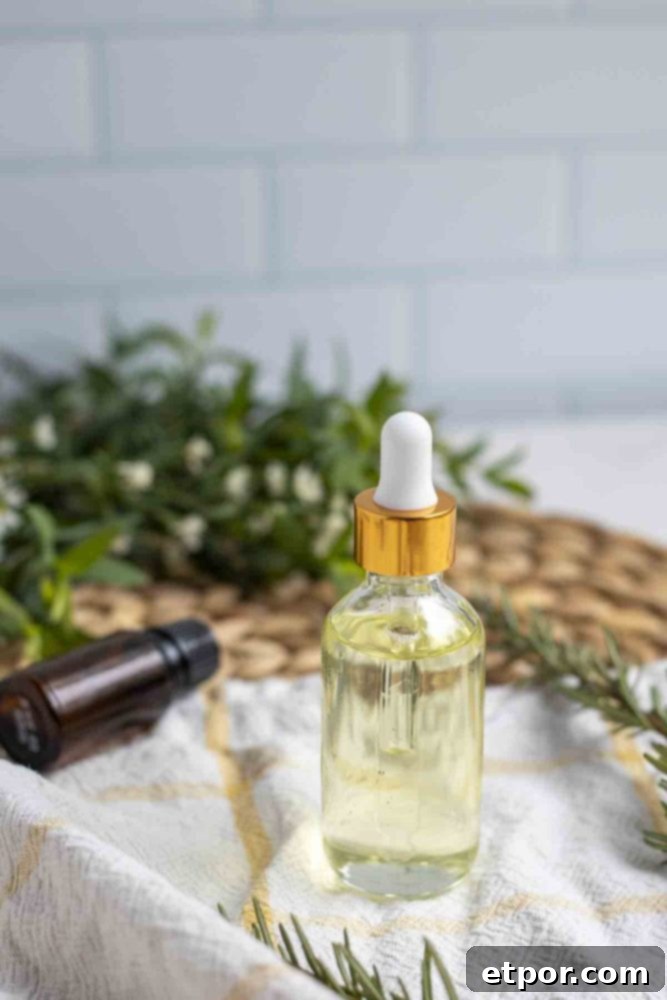
- Prepare Your Container: Choose a clean, dark glass dropper bottle or jar for easy application and storage.
- Add Carrier Oil: Fill your chosen container with your preferred carrier oil (e.g., castor oil, jojoba oil, or a blend of your favorites).
- Add Rosemary Essential Oil: For a safe and effective 3% dilution, add 18 drops of pure rosemary essential oil per ounce (30ml) of carrier oil. For example, if you’re using a 2 oz bottle, you’d add approximately 36 drops.
- Add Other Essential Oils (Optional): If desired, you can also add a few drops of other beneficial essential oils like lavender or peppermint oil at this stage, maintaining a safe total dilution.
- Mix and Use: Secure the lid and gently shake the bottle to thoroughly combine the oils. Your rosemary essential oil blend is now ready for immediate use.
Tips for Using and Applying Rosemary Oil

To maximize the benefits of your homemade rosemary oil, proper application and consistent use are key:
- Pre-Shampoo Treatment: This is the most effective way to use rosemary oil. Before showering, use the dropper to apply a small amount of the pure rosemary oil directly to your scalp. A little goes a long way. Use your fingertips to gently massage the oil into your scalp in small, circular motions for 5-10 minutes. This not only ensures even distribution but also stimulates blood circulation, enhancing nutrient delivery to the hair follicles.
- Leave-In Time: For best results, allow the rosemary oil to sit on your scalp for at least 30 minutes before washing. For a more intensive, deep conditioning treatment, you can leave it on overnight. If leaving it overnight, consider covering your hair with a shower cap or a soft towel to prevent oil transfer to your pillow and to encourage deeper absorption.
- Target Dry Ends: While primarily a scalp treatment, you can also apply a small amount to the ends of your hair if they are particularly dry or damaged. This provides extra moisture and nourishment, helping to prevent split ends and breakage.
- Wash Thoroughly: After the desired leave-in time, rinse your hair well with your usual shampoo, focusing on cleansing the scalp to remove any oil residue. Follow up with conditioner as normal. You may need to shampoo twice if you’ve applied a generous amount of oil.
- Patch Test First: Before applying the oil generously to your scalp, it’s always wise to perform a patch test. Apply a tiny amount of the oil to a discreet area on your scalp (e.g., behind your ear) and wait 24 hours to check for any allergic reactions, redness, itching, or sensitivity.
- Integrate into Routine: For continuous benefits, make rosemary oil a regular part of your hair care routine. Aim to use it at least two to three times a week. Consistency is crucial, as hair growth and health improvement take time. Patience is paramount – don’t expect overnight miracles, but be diligent, and you’ll likely see results over several weeks or months.
- Add to Shampoo/Conditioner: For a lighter application, you can add 2-3 drops of rosemary essential oil (not the infused carrier oil) directly into your shampoo or conditioner each time you wash your hair. Mix it in your palm before applying.
Other Natural Remedies to Promote Healthy Hair Growth
Beyond rosemary oil, several other home remedies can be easily incorporated into your hair care regimen to further support healthy hair growth and combat hair loss:
- Rosemary Water: An excellent, lighter alternative or complement to rosemary oil. Rosemary water can be prepared by boiling fresh rosemary sprigs in water, then straining and letting it cool. This herbal infusion can be sprayed directly onto the scalp daily as a leave-in tonic or used as a final rinse in the shower after shampooing and conditioning. It provides similar circulation-boosting benefits without the oiliness.
- Nourishing Hair Masks:
- Egg Mask: Eggs are a fantastic source of protein, biotin, and other essential nutrients vital for nourishing hair follicles and stimulating growth. To make an egg mask, simply whisk one or two eggs (depending on hair length) in a bowl. Apply the mixture generously to your scalp and hair, ensuring full coverage. Leave it on for about 20-30 minutes before rinsing thoroughly with cold water. Cold water helps prevent the egg from cooking and makes it easier to wash out. Follow with your regular shampoo and conditioner.
- Aloe Vera Mask: Aloe vera gel is known for its soothing and healing properties. It can help reduce scalp inflammation, promote cell regeneration, and balance pH levels. Mix fresh aloe vera gel with a spoonful of carrier oil (like coconut or olive oil) and apply it to your scalp. Leave for 30 minutes before washing.
- Regular Scalp Massages with Essential Oils: Massaging your scalp is not only incredibly relaxing but also highly beneficial for hair growth. It significantly increases blood flow to the hair follicles, delivering more oxygen and nutrients. You can amplify these benefits by using specific essential oils known for their hair-stimulating properties. Dilute a few drops of essential oils such as lavender, peppermint, or cedarwood oil with a carrier oil like coconut or jojoba oil, and gently massage into your scalp for 5-10 minutes several times a week before washing your hair.
- Balanced Diet Rich in Hair-Healthy Nutrients: External treatments work best when supported by internal nourishment. Ensuring a balanced diet rich in specific vitamins and minerals is crucial for healthy hair growth. Focus on incorporating foods rich in:
- Vitamins A, C, and E: Found in sweet potatoes, citrus fruits, spinach, and avocados.
- Biotin: Present in eggs, nuts, seeds, and sweet potatoes.
- Iron: Abundant in leafy greens, lentils, and red meat.
- Zinc: Found in pumpkin seeds, lentils, and meat.
- Collagen-Rich Foods or Supplements: Collagen is a vital protein that forms the structure of hair. Consuming collagen-rich foods like homemade bone broth or taking a supplement like collagen peptides can help strengthen hair strands, improve elasticity, and promote thicker, more resilient hair.
Frequently Asked Questions (FAQ)
The optimal frequency for using rosemary oil depends on your individual hair type, scalp sensitivity, and specific needs. For most individuals, applying the oil as a pre-shampoo treatment two to three times a week is generally sufficient and effective. However, if you have a very dry scalp or are experiencing significant hair loss, you might consider more frequent applications, observing how your hair and scalp respond. If you notice any signs of excessive dryness, irritation, or greasiness, it’s advisable to reduce the frequency of use. Listen to your hair and adjust accordingly.
Absolutely! Mixing rosemary essential oil with other beneficial essential oils can create a powerful, synergistic blend tailored to your specific hair care needs. Popular choices include lavender oil for its soothing and growth-promoting properties, peppermint oil for stimulating circulation and a refreshing sensation, and cedarwood oil for balancing scalp oil production and reducing hair loss. When combining essential oils, always ensure they are properly diluted in a carrier oil to prevent skin irritation. Experiment with different combinations and ratios to find the perfect blend that complements your hair and scalp.
Patience and consistency are paramount when using natural remedies for hair growth. While some individuals may begin to notice subtle improvements such as reduced shedding or increased shine after a few weeks of consistent use, significant results like noticeable hair growth or increased thickness typically require a longer commitment, often ranging from three to six months. Hair growth is a gradual biological process, and individual results can vary based on factors like genetics, underlying health conditions, and consistency of application. It’s essential to integrate rosemary oil into a long-term hair care routine to experience its full benefits.
Leaving rosemary oil on your scalp overnight can offer profound benefits for some individuals, allowing the oil’s nourishing properties to deeply penetrate and work their magic on hair follicles and the scalp. This can be particularly beneficial for those with very dry hair or severe hair loss. However, it’s important to consider your hair type and scalp sensitivity. If you have an oily scalp or are prone to product buildup, leaving it on overnight might lead to excessive greasiness or discomfort. Sensitive scalps might also react to prolonged exposure. If you choose to leave it overnight, always cover your hair with a shower cap or towel, and ensure you rinse thoroughly in the morning. If you experience any irritation, reduce the duration or switch to rinsing after a few hours.
The shelf life of homemade rosemary hair oil largely depends on the type of carrier oil used and storage conditions. Generally, if stored in a cool, dark place (preferably in a dark glass bottle to prevent oxidation), an oil infused with fresh rosemary can last approximately 2 months. If you store it in the refrigerator, its shelf life can extend up to 5-6 months. For essential oil blends, the shelf life is typically determined by the carrier oil, which can range from 6 months to a year or more for stable oils like jojoba or olive oil. Always check for changes in scent or appearance as indicators of spoilage.
To create a potent rosemary castor oil blend for hair growth, simply mix 1 tablespoon of pure castor oil with 5-10 drops of high-quality rosemary essential oil. This ratio provides approximately a 1.5% to 3% dilution, which is safe and effective for topical application. Castor oil is known for its thick consistency and ricinoleic acid content, believed to enhance blood flow and thicken hair, making it an excellent base for rosemary essential oil. Apply this mixture directly to your scalp and massage gently. You can adjust the amount based on your needs, ensuring the essential oil is always adequately diluted.
Safety Considerations
Rosemary oil is generally considered safe for topical use when properly diluted. However, as with any natural product, individual reactions can vary. It’s always crucial to perform a patch test on a small, inconspicuous area of your skin 24 hours before applying it extensively to your scalp to check for any adverse reactions, such as redness, itching, or irritation. Discontinue use if any sensitivity occurs.
Additionally, if you have any underlying medical conditions, are pregnant, or breastfeeding, it is essential to consult with a healthcare professional or a qualified aromatherapist before incorporating rosemary oil or any new essential oil into your hair care routine. Essential oils are potent and may interact with certain medications or conditions.
Discover More Natural Remedies
If you enjoyed learning about homemade rosemary oil for hair growth, explore these other natural remedies for enhancing your well-being:
- DIY Scalp Scrub: Exfoliate and revitalize your scalp for optimal hair health.
- Green Tea Face Mask: A detoxifying and soothing treatment for clear skin.
- Easy Foot Scrub: Rejuvenate tired feet with this simple exfoliating recipe.
- DIY Face Toner: Create a natural toner for a balanced and refreshed complexion.
- Garlic Salve: A traditional remedy for various skin ailments.
If you try this recipe and love it, I would appreciate you coming back and giving it 5 stars. Please and thank you!
Rosemary Oil For Hair
Print
Pin
Rate
SaveSaved!
Save This Recipe
We’ll get it sent to your inbox! Plus, get new recipes from us every week.
Equipment
-
Fine Mesh Strainer or Cheesecloth
-
Dark Glass Jar or Bottle (for storage)
-
Small Saucepan (for fresh rosemary heat infusion, optional)
Ingredients
- 2 oz carrier oil (e.g., castor, olive, jojoba, or argan oil)
- 36 drops rosemary essential oil OR 2-3 large handfuls of fresh rosemary sprigs
Instructions
Method 1: Rosemary Oil with Fresh Rosemary (Infusion)
-
Wash 2-3 large handfuls of fresh rosemary sprigs thoroughly and allow them to air dry completely. Ensure no moisture remains to prevent mold.
-
Remove leaves from stems and coarsely chop them to release their aromatic oils.
-
Heat Infusion: In a small saucepan, gently heat 2 oz of your chosen carrier oil over very low heat until warm (not boiling). Add the chopped rosemary leaves, ensuring they are fully immersed. Simmer on low for 1.5-2 hours, stirring occasionally. Let cool completely.
-
Solar Infusion (Alternative): Place chopped rosemary in a jar, cover with carrier oil, seal, and let infuse in a sunny spot for 2-4 weeks, shaking daily.
-
Once infused and cooled, strain the oil through a fine-mesh sieve or cheesecloth into a clean, dark glass jar or bottle. Discard the rosemary leaves.
-
Seal the container tightly and store in a cool, dark place.
Method 2: Rosemary Oil with Essential Oils (Quick Blend)
-
To a clean, dark glass bottle, add 2 oz of your chosen carrier oil.
-
Add 36 drops of rosemary essential oil (for a 3% dilution). You can also add a few drops of other essential oils like lavender or peppermint if desired.
-
Secure the lid and gently shake to mix. Your rosemary oil is ready.
To Use (Both Methods):
-
Before showering, apply the rosemary oil directly to your scalp. Massage gently in small circles for 5-10 minutes.
-
Allow the oil to sit for at least 30 minutes, or for a deep treatment, leave it overnight (cover hair with a shower cap). You can also apply a small amount to dry hair ends for extra moisture.
-
Wash well with shampoo (you might need two lathers) and follow up with conditioner. Use 2-3 times per week for best results.
Notes
The heat infusion method is faster, but the solar infusion method is gentler and can preserve more delicate compounds. Choose the method that best suits your time and preference.