
Discover the Soothing Benefits of Homemade Rosemary Tea: An Easy, Flavorful Herbal Recipe
There’s a special comfort in a warm cup of herbal tea, and this homemade rosemary tea recipe delivers just that, with surprising ease. Crafted from just two simple ingredients, this calming beverage is more than just a delicious drink; it’s a centuries-old tradition packed with potential health benefits. From enhancing focus to soothing digestion, rosemary tea offers a natural way to nourish your body and mind.
Table of Contents
Toggle
As spring breathes new life into the garden, it’s a joy to witness the vibrant return of various plants. Asparagus spears tentatively emerge, echinacea unfurls its purple leaves, chamomile blossoms into lush bushes, and calendula begins its gentle awakening. Yet, amidst this new growth, one evergreen herb stands resilient and abundant throughout the year: rosemary.
My rosemary bush thrives even when other plants are just stirring from their dormant state. Its constant availability makes it a perfect candidate for exploring diverse culinary and medicinal applications. This month, I’m dedicated to showcasing the incredible versatility of rosemary, starting with this delightful herbal tea. If you share my enthusiasm for this aromatic herb, stay tuned for more innovative ways to incorporate it into your daily life.
Rosemary (Rosmarinus officinalis) is a hardy, fragrant herb with a rich history. Beyond its widespread use in gourmet cooking, it has been revered for centuries for its therapeutic properties. Ancient Greeks recognized rosemary as a symbol of fidelity, love, and remembrance, and its use as a natural remedy dates back thousands of years. Today, this distinctive herb continues to captivate, especially for its calming and invigorating effects when brewed into a soothing cup of tea.
Embrace the warmth and flavor of nature with this simple, delightful rosemary tea recipe. It’s an inviting way to enjoy the essence of this potent herb.
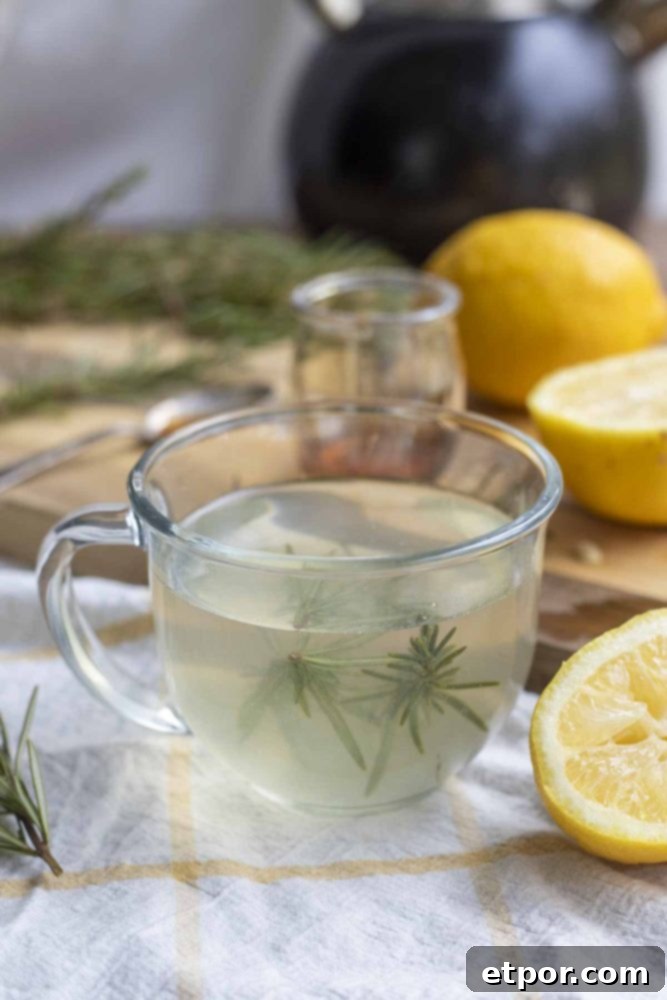
Why You’ll Love This Rosemary Tea Recipe
- Naturally Calming & Stress-Reducing: There’s an inherent sense of tranquility that comes with sipping a warm cup of rosemary tea. Its aromatic properties are known to promote relaxation, ease tension, and may even contribute to improved mental clarity and focus. It’s a perfect beverage for unwinding after a long day or setting a peaceful mood.
- Exquisitely Delicious Rosemary Flavor: This homemade rosemary tea recipe truly showcases the robust and invigorating flavor of fresh rosemary. The tea offers a distinctive taste that is both earthy and slightly piney, creating a uniquely aromatic experience that will delight your senses and make it one of your new favorite herbal infusions.
- Effortlessly Easy to Make: Simplicity is key! You only need two basic ingredients – fresh or dried rosemary and water – along with a minimal amount of time to prepare this fantastic beverage. It’s an accessible and rewarding recipe for any tea enthusiast, regardless of their culinary experience.
The links in this post contain affiliate links, meaning I may receive a small commission if you make a purchase after clicking on my link. See the full disclosure here.
The Remarkable Health Benefits of Rosemary Tea
Rosemary is more than just a fragrant herb; it’s a powerhouse of beneficial compounds. When brewed into a tea, these compounds become easily accessible, offering a range of potential health advantages. Always remember to consult with your doctor before incorporating new herbal remedies into your routine, especially if you are pregnant, nursing, have existing health conditions, or are taking medications.
- Potent Anti-inflammatory and Antioxidant Properties: Rosemary is an excellent source of anti-inflammatory compounds and potent antioxidants like rosmarinic acid and carnosic acid. These compounds are crucial for combating oxidative stress and inflammation in the body. By reducing free radicals, rosemary tea may help support a healthy immune system, improve blood circulation, and protect cells from damage. (source)
- Supports Memory and Cognitive Function: The stimulating aroma and bioactive compounds in rosemary have been linked to improved brain health. Studies have shown that even the scent of rosemary oil can enhance concentration and cognitive performance in as little as 4-10 minutes. Oral consumption of Rosmarinus officinalis L. extracts has also been observed to reduce anxiety and depression, improve sleep quality, and boost memory in college students. (source, source)
- Boosts Hair Growth (Topical Application): While primarily a topical benefit, the bioactive compounds found in rosemary are well-regarded for their ability to stimulate hair follicles, promoting healthier and stronger hair growth. Using cooled rosemary tea as a hair rinse can be a natural way to leverage this benefit.
- Exhibits Antibacterial and Antifungal Qualities: Rosemary extracts possess natural antibacterial, antifungal, and even insecticidal properties. This makes rosemary a valuable natural preservative in foods and a potential aid in fighting off various pathogens when consumed.
- May Help Regulate Blood Sugar Levels: Research indicates that specific compounds in rosemary, such as carnosic acid and rosmarinic acid, may exert insulin-like effects, potentially contributing to lower blood sugar levels. While studies on rosemary tea itself are ongoing, these active components show promise in metabolic health.
- Aids in Healthy Digestion: Rosemary tea can be beneficial for digestive health. It may help balance the beneficial bacteria in the gut, support overall digestive system function, and reduce inflammation within the gastrointestinal tract, thereby alleviating common digestive discomforts.

Expert Tips for Brewing the Perfect Rosemary Tea
- Customize the Flavor Profile: Rosemary’s flavor can be quite intense. To balance and enhance it, I highly recommend incorporating optional additions. A squeeze of fresh lemon, a swirl of honey, or slices of ginger can introduce complementary notes that elevate the overall taste experience and make the tea even more palatable.
- Fresh vs. Dried Rosemary: While I prefer the vibrant aroma and flavor of fresh rosemary leaves, dried rosemary works perfectly well. As a general rule, use 1 teaspoon of dried rosemary for every sprig of fresh rosemary called for in a recipe to achieve a similar strength.
- Enjoy Hot or Cold: This versatile herbal tea is delightful served hot, providing warmth and comfort. However, it’s equally refreshing as an iced tea during warmer months. Simply brew a larger batch, let it cool, and serve over ice with a lemon slice for a cool, invigorating drink.
- Creative Use for Leftover Tea – Hair Rinse: Don’t let any extra brewed rosemary tea go to waste! Once cooled, it makes an excellent natural hair rinse. After shampooing and conditioning, pour the tea over your hair and scalp, allowing it to sit for a few minutes. You can either rinse it out for a subtle effect or leave it in for maximum benefit, as rosemary is known to stimulate hair growth and add shine.
- Adjust Steeping Time for Strength: The longer you steep or simmer the rosemary, the stronger and more potent the flavor and beneficial compounds will be. Experiment with steeping times to find your preferred strength.

Simple Ingredients for Your Homemade Rosemary Tea
Crafting this herbal infusion requires minimal ingredients, making it an accessible and wholesome beverage for anyone to enjoy.
- Water: The foundation of any good tea. I always recommend using filtered water for the purest taste, but standard tap water will also suffice.
- Rosemary: The star of our show. Whether you use fresh sprigs from your garden or dried leaves from your spice rack, the therapeutic properties and delightful flavor of rosemary will shine through. Fresh rosemary typically offers a more vibrant and aromatic experience.
Optional Enhancements and Flavor Boosters
While rosemary tea is delicious on its own, adding a few extra ingredients can further elevate its taste and health benefits. Introduce dried or fresh herbs during the steeping process, and add liquids or sweeteners afterward.
- Sliced Ginger: Adds a delightful spicy kick and is known for its digestive and anti-inflammatory properties.
- Fresh Lemon Juice: A squeeze of lemon brightens the flavor, adds a touch of acidity, and boosts Vitamin C content.
- Cloves: Imparts a warm, aromatic spice that pairs beautifully with rosemary, offering additional antioxidant benefits.
- Mint Leaves: A few fresh mint leaves can make for a wonderfully invigorating and refreshing cup of tea, especially if you’re looking for an energizing lift.
- Green Tea Bag: For an extra boost of antioxidants and a touch of caffeine, steep one bag of green tea along with your rosemary. This combination creates a powerful elixir for mental clarity.
- Honey or Maple Syrup: If you prefer a sweeter tea, a drizzle of honey or maple syrup can provide a natural sweetness. Honey also offers soothing properties, making it excellent for a sore throat.
Essential Tools for Making Rosemary Tea
You likely have most of these items already in your kitchen, making this recipe incredibly convenient.
- Tea kettle or Saucepan: For heating your water. A kettle is convenient for boiling, while a saucepan is ideal for simmering.
- Mug: Your favorite vessel for enjoying your freshly brewed tea.
- Tea Strainer or Small Fine Mesh Strainer: Essential for separating the rosemary leaves from the infused tea, especially if you are using loose dried rosemary or small fresh leaves.
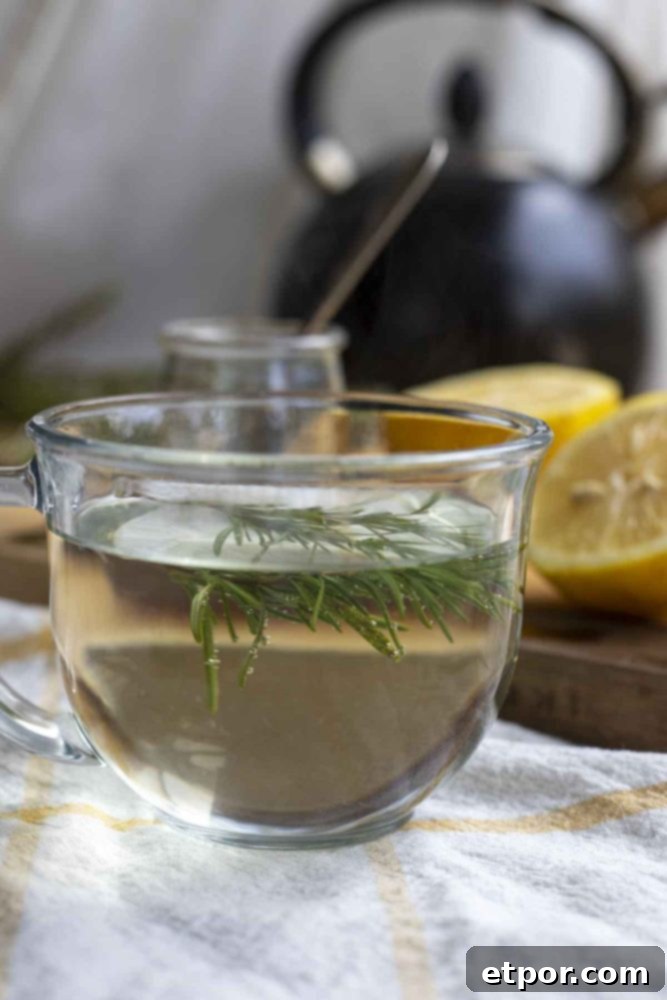
How to Prepare Rosemary Tea – Two Easy Methods
There are two primary methods to make rosemary tea, each offering a slightly different flavor intensity. Both are incredibly simple to execute, allowing you to enjoy this aromatic brew in minutes.
Method 1: The Simmered Potency Approach (For a Stronger Brew)
This method extracts a more robust and concentrated rosemary flavor, perfect for those who enjoy a potent herbal infusion.
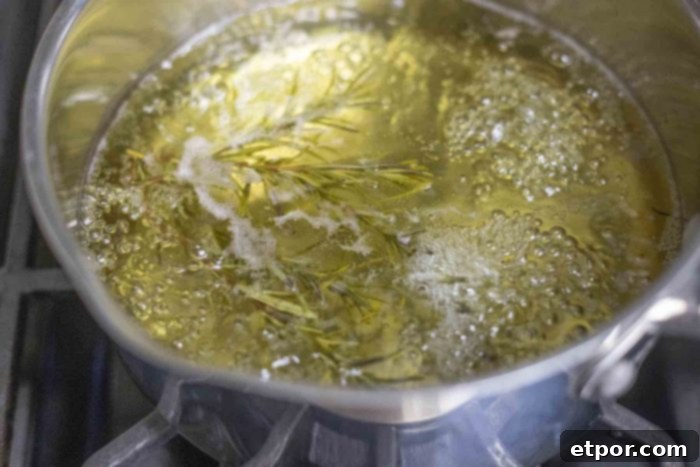
- Rinse Rosemary: Begin by thoroughly rinsing your fresh rosemary sprigs under cool water. Rosemary can sometimes harbor debris, so a good rinse is essential before use. Place the clean sprigs into a small saucepan.
- Add Water and Heat: Cover the rosemary sprigs with your desired amount of water (typically 1 cup per serving). Place the saucepan on your stovetop over high heat.
- Boil and Simmer: Bring the water to a rolling boil. Once boiling, reduce the heat to a low simmer and continue to gently simmer for 2 to 3 minutes. For an even stronger, more intense flavor and a higher concentration of beneficial compounds, you can extend the simmering time slightly.
- Strain the Tea: Carefully remove the saucepan from the heat. Using tongs or a slotted spoon, retrieve and discard the rosemary sprigs.
- Serve and Enjoy: Pour the hot herbal tea into your favorite mug. At this point, you can add any optional ingredients like honey, lemon, or ginger to customize the flavor. This method yields a wonderfully strong and aromatic rosemary tea.
Method 2: The Classic Tea Kettle Steep (For a Lighter, More Subtle Flavor)
This approach offers a more delicate rosemary flavor, ideal for those who prefer a milder herbal tea.
- Boil Water: Fill your tea kettle or saucepan with water and bring it to a full boil.
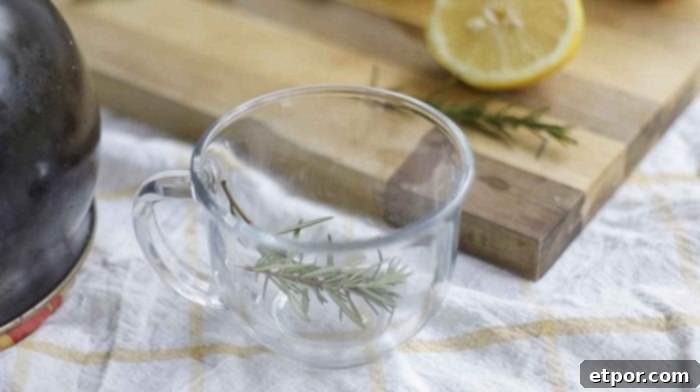
- Prepare Rosemary in Mug: While the water is heating, rinse your fresh rosemary sprigs thoroughly and place them directly into your mug.

- Pour and Steep: Once the water has boiled, carefully pour the hot water over the rosemary sprigs in your mug. Allow the tea to steep for 5 to 10 minutes. The longer it steeps, the stronger the flavor will be.
- Remove Leaves and Serve: After steeping to your desired strength, remove the rosemary sprigs from the mug. Add any desired additional ingredients like a slice of lemon or a dollop of honey.
- Sip and Savor: Your perfectly steeped rosemary tea is ready to be enjoyed! This method results in a beautifully fragrant and subtly flavored tea.

Refreshing Rosemary Iced Tea: A Cool Twist
For a revitalizing beverage on a warm day, transform your hot rosemary tea into a delightful iced version. It’s incredibly simple to prepare and offers a cool, aromatic escape.
- Brew a Concentrated Batch: Begin by preparing a double or triple batch of your homemade rosemary tea using either the simmering or steeping method. For iced tea, a slightly stronger brew works well as it will be diluted by ice. Consider adding any desired extra ingredients like ginger or a touch of sweetener during this stage.
- Strain and Sweeten: Once brewed, carefully strain the tea to remove all rosemary sprigs or leaves. If you prefer your iced tea sweetened, stir in honey, maple syrup, or your preferred sweetener while the tea is still warm to ensure it dissolves completely.
- Cool and Chill: Allow the tea to cool down to room temperature. Once cooled, transfer it to a pitcher or a sealed container, cover it, and place it in the refrigerator to chill thoroughly. This can take a few hours, or you can prepare it the night before.
- Serve Over Ice: When ready to serve, fill a glass with ice cubes and pour the chilled rosemary tea over them. Garnish with a fresh sprig of rosemary, a lemon slice, or even a few berries for an extra touch of elegance and flavor. Enjoy this wonderfully crisp and aromatic iced beverage!

Frequently Asked Questions About Rosemary Tea
Is it safe to boil rosemary for tea?
Yes, it is perfectly safe to boil rosemary with water to prepare rosemary tea. Boiling helps to extract the flavorful essential oils and beneficial compounds from the herb into the water, creating a potent and aromatic infusion. Just be mindful of the boiling time; a longer boil will result in a stronger tea.
What is the optimal way to make rosemary tea?
After experimenting with various methods, I’ve found that the best approach for a balanced and delicious rosemary tea is to use a tea kettle to boil water separately, then pour the hot water over fresh rosemary sprigs in a mug and let it steep for 5-10 minutes. This method yields a subtle yet satisfying flavor profile. If you desire a more potent infusion, simmering the sprigs directly in water for 2-3 minutes in a saucepan will produce a stronger, more intense taste.
Can I use fresh rosemary for tea?
Absolutely! Rosemary tea can be made from both fresh and dried rosemary. Many prefer fresh rosemary for its vibrant, clean aroma and taste, which can be more pronounced than that of dried leaves. If using fresh, ensure it’s thoroughly rinsed before steeping.
Is it okay to drink rosemary tea daily?
For most healthy adults, enjoying rosemary tea as part of a daily routine is generally considered safe and can be beneficial. However, like all herbal remedies, moderation is key. Consuming excessively large quantities of rosemary tea could potentially lead to side effects. If you have any concerns or underlying health conditions, it’s always best to consult a healthcare professional.
How would you describe the taste of rosemary tea?
Rosemary tea offers a distinctive and robust flavor profile that is both earthy and invigorating. It has refreshing notes reminiscent of pine and a subtle peppery finish. This fragrant evergreen herb, native to the Mediterranean region, imparts a unique and complex taste that is both comforting and awakening, often described as savory with hints of mint and citrus.
Important Considerations and Potential Side Effects
While rosemary tea is generally safe and beneficial for many, it’s crucial to be aware of potential contraindications and side effects. Always consult with a healthcare provider before introducing any new herbal remedies, particularly if you are pregnant, breastfeeding, currently on medications, or have existing health conditions.
Consuming rosemary in very large amounts can sometimes lead to adverse effects, including stomach upset, vomiting, and muscle spasms. Allergic reactions, though rare, have also been reported in sensitive individuals. (source)
Additionally, rosemary may interact with certain medications, affecting their efficacy or increasing the risk of side effects. It’s especially important to exercise caution if you are taking:
- ACE inhibitors: Medications for high blood pressure.
- Anticoagulants (blood thinners): Such as warfarin.
- Diuretics (water pills): Medications that increase urine production.
- Lithium: Used to treat bipolar disorder, as rosemary might affect its excretion. (source)
By being mindful of these considerations and seeking professional medical advice when necessary, you can safely enjoy the many wonderful benefits that rosemary tea has to offer. It’s an easy-to-make and delicious beverage that can easily become a staple in your daily wellness routine, providing a refreshing taste and a multitude of health-supporting properties.
Explore More Delicious and Healthy Drinks
- Lavender Lemonade
- Vegan Pumpkin Spice Latte
- Healthy Pina Colada Smoothie
- Honey Butter Latte
- Tropical Oatmeal Smoothie
If you try this delightful rosemary tea recipe and love it, I would be incredibly grateful if you could return to the post, leave a comment, and give it a 5-star rating! Your feedback is highly appreciated. Thank you!
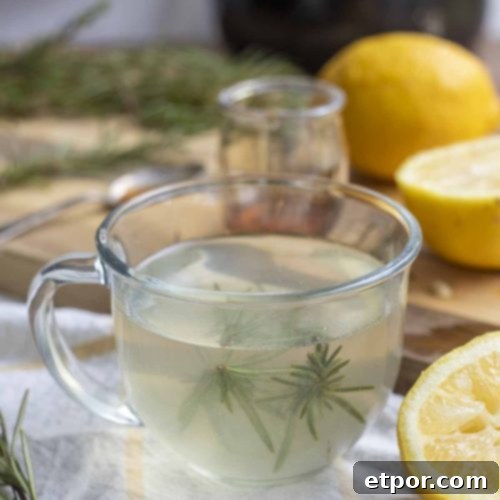
Rosemary Tea
Save This Recipe
We’ll get it sent to your inbox! Plus, get new recipes from us every week.
Equipment
- Tea kettle optional
Ingredients
- 2-3 sprigs fresh rosemary
- 1 cup water (filtered preferred)
Instructions
Simmered Potency Method
- Rinse rosemary thoroughly and place the sprigs in a small pot. Rosemary can often collect debris, so a good rinse is essential before use.
- Cover the rosemary with 1 cup of water and place the pot on high heat on your stovetop.
- Bring the water to a rolling boil, then reduce the heat and let it gently simmer for 2-3 minutes. For a stronger, more concentrated flavor, you can simmer for a longer duration.
- Remove the pot from the heat. Use tongs or a slotted spoon to carefully remove and discard the rosemary sprigs.
- Pour the freshly brewed herbal tea into your mug. Add any desired optional ingredients such as lemon, honey, or ginger. Enjoy the robust flavor!
Classic Tea Kettle Steep Method
- Add 1 cup of water to a tea kettle or saucepan and bring it to a boil.
- While the water heats, place thoroughly rinsed fresh rosemary sprigs into your mug.
- Once the water boils, pour the hot water into the mug over the rosemary. Allow it to steep for 5-10 minutes, adjusting the time to your desired strength.
- Remove the rosemary sprigs from the mug. You can use a tea strainer for small leaves or simply pull out the larger sprigs. Add any additional ingredients as desired.
- Your aromatic and calming rosemary tea is ready to enjoy.
Notes
- This tea can have a slightly overwhelming flavor for some. For a lighter taste, I highly recommend using the tea kettle steeping method. Additionally, consider adding natural flavor enhancers like fresh ginger, a spoonful of honey, or a squeeze of lemon to complement and balance the robust rosemary notes.
- While fresh rosemary leaves offer a vibrant flavor, dried rosemary works as a convenient alternative. Simply substitute 1 teaspoon of dried rosemary for each sprig of fresh rosemary called for in the recipe to achieve a similar strength.
- This versatile tea can be enjoyed both hot and cold. Prepare a larger batch and chill it for a wonderfully refreshing iced tea, perfect for warmer months or as an invigorating morning drink.