Crisp & Flavorful: Your Ultimate Guide to Quick Pickled Green Beans
Discover the easiest way to transform fresh green beans into a crunchy, tangy, and utterly delicious snack. This quick pickled green beans recipe captures all the zesty appeal of traditional pickles but with the satisfying snap of vibrant green beans, making them a perfect addition to any meal or a delightful stand-alone treat.
Table of Contents
Toggle
This delightful recipe actually began as a happy accident. I was in the midst of canning some pickled dilly beans, a favorite seasonal ritual, when I found myself with a generous amount of leftover brine. Alongside it sat a pile of green bean “nubs” – the ends trimmed to ensure the beans fit perfectly into their canning jars. It seemed a shame to waste these flavorful pieces of fresh produce.
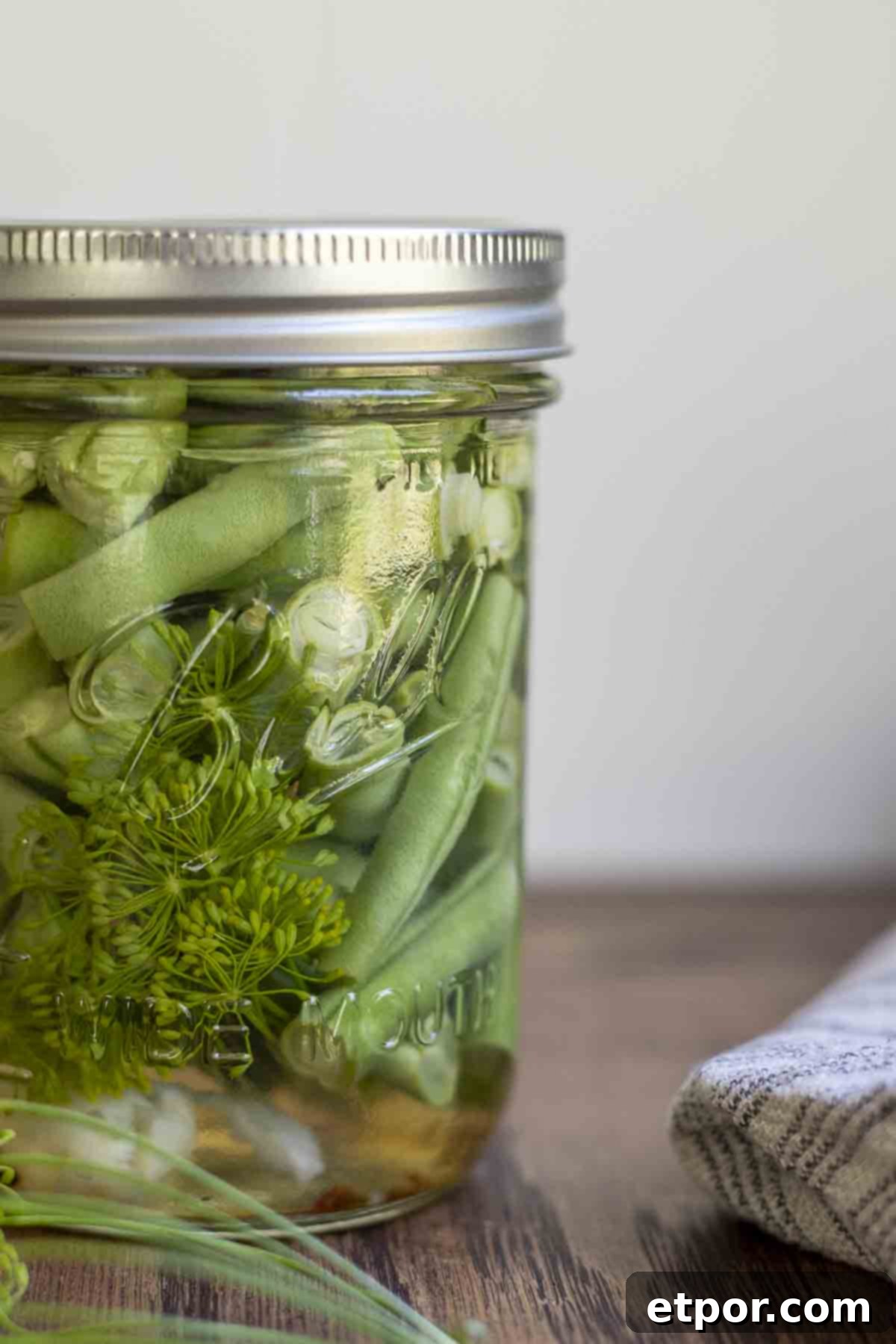
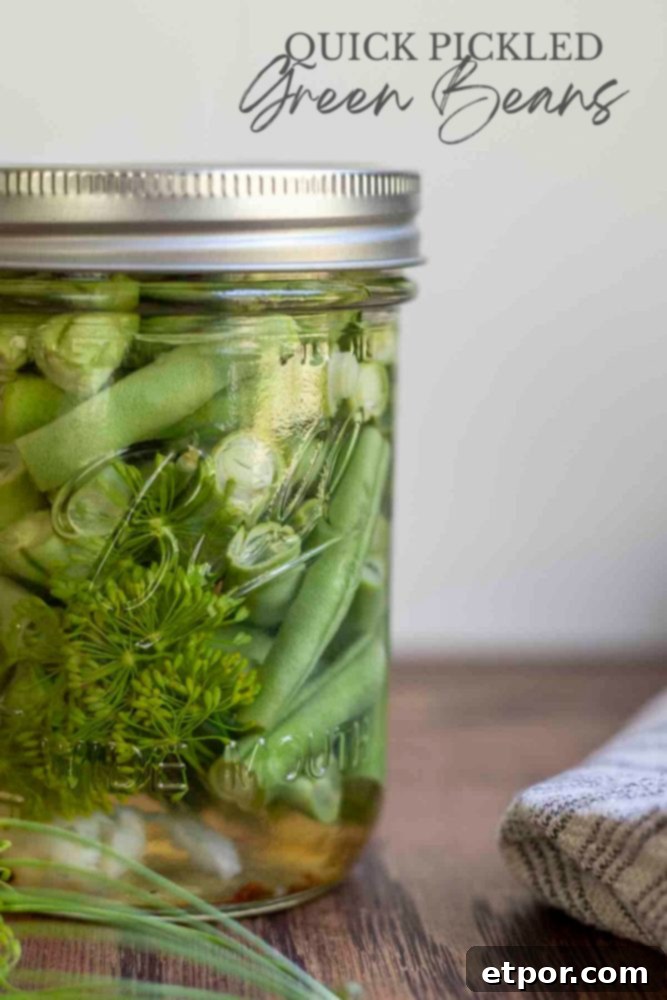
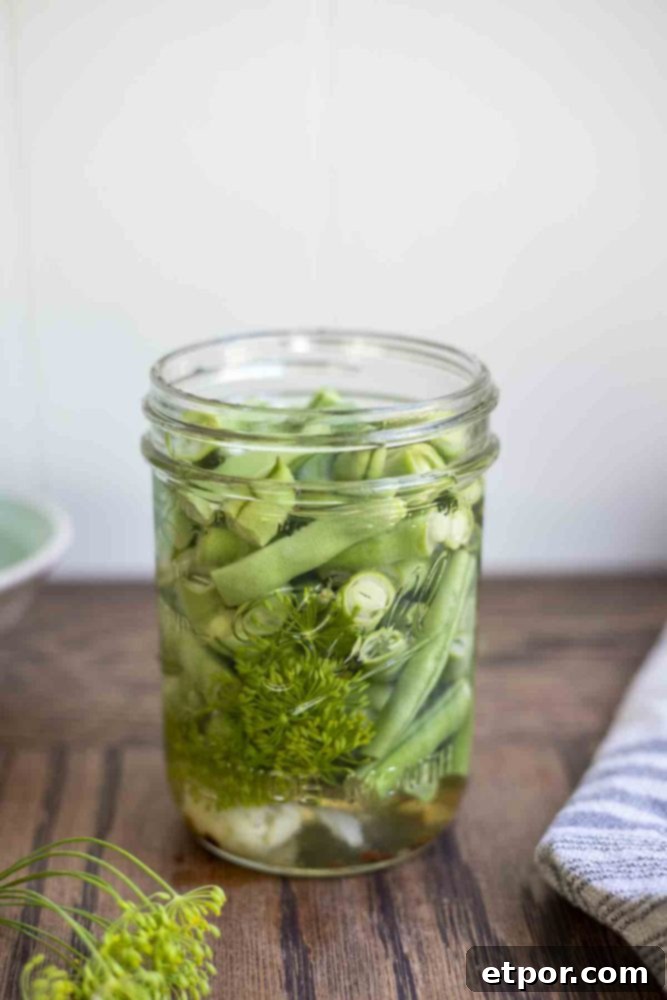
Driven by a desire for zero waste and a touch of culinary curiosity, I decided to experiment. I tossed the green bean trimmings into a clean jar, added a few smashed garlic cloves, some leftover fresh dill straight from the garden, and a sprinkle of vibrant red chili flakes for a hint of heat. I then poured the warm, aromatic brine over everything and placed the jar in the refrigerator, hoping for the best.
The results were nothing short of amazing! The quick pickled green beans emerged crunchy, tangy, and bursting with flavor. My daughter, who initially viewed them with skepticism (thinking they were “dilly beans,” which she claimed not to like), instantly fell in love after one bite. She even asked if we could transform all our freshly harvested green beans into these quick pickles.
While I couldn’t fulfill her wish entirely – our garden produced an abundance of beans, too many for just one pickling method – I vowed to make as many batches of these quick pickles as possible with our fresh green bean harvest. They’ve become an unexpected but cherished staple, proving that some of the best culinary discoveries happen quite by chance.
The Allure of Pickled Green Beans
If you’ve ever wondered what makes pickled green beans so appealing, especially as a standout addition to a sophisticated charcuterie board or a simple meal, the answer lies in their unique combination of taste and texture. They offer a delightful tanginess that cuts through rich flavors, a satisfying crunch that provides textural contrast, and a refreshing zest that brightens any dish. They are tangy, crunchy, a little surprising, and super delicious, making them a versatile and exciting element in your culinary repertoire.
A Delightful Accident Turned Family Favorite
The origin story of these quick pickled green beans is a testament to culinary improvisation. Born from a desire to utilize every part of our bountiful green bean harvest and a small amount of leftover pickling brine, this recipe quickly moved from an experiment to a family favorite. It transformed green bean trimmings into a crave-worthy snack, surprising even my pickiest eater. The crunchy texture and bright, savory-sour taste were an instant hit, proving that sometimes, the best recipes are discovered by happy chance.
Key Reasons You’ll Love This Quick Pickled Green Bean Recipe
- Excellent for Preservation: Quick pickling is a fantastic method to extend the life of fresh green beans beyond just a few days in the refrigerator. This allows you to savor the taste of summer’s harvest well into the cooler months. It’s a simple, effective way to reduce food waste and enjoy homegrown or farmers’ market produce longer.
- A Healthy Snack Option: These pickled green beans make a wonderfully healthy and low-calorie snack. Packed with vitamins and fiber from the green beans themselves, and without excessive oils or unhealthy additives, they are a guilt-free indulgence that even kids enjoy munching on.
- Incredibly Delicious Flavor: They offer a taste profile remarkably similar to traditional dill pickles, but with a more pronounced crunch and the earthy undertones of fresh green beans. The balance of tangy vinegar, savory garlic, and aromatic dill creates a vibrant flavor that is both familiar and exciting. They’re a fantastic side dish and an excellent addition to any snack spread, including charcuterie boards.
- Remarkably Versatile: Beyond snacking, these quick pickled green beans are incredibly versatile. They can elevate a simple sandwich, add a zesty bite to salads, or serve as a unique garnish for cocktails like a Bloody Mary. Their bright flavor and crisp texture make them a refreshing complement to a variety of main courses, from grilled meats to hearty stews.
Mastering the Art of Quick Pickled Green Beans: Essential Tips
Achieving perfectly crisp and flavorful quick pickled green beans is easier than you might think, especially with a few key considerations in mind. Follow these expert tips to ensure your homemade pickles are a resounding success every time.
- Selecting Fresh, High-Quality Green Beans: The foundation of any great pickle starts with excellent produce. It is absolutely vital to choose green beans that are as fresh and high-quality as possible. Look for beans that are vibrant in color, firm to the touch, and free from any blemishes, soft spots, or signs of wilting. Fresh, crisp beans will not only absorb the pickling flavors better but will also retain their satisfying crunch throughout the pickling process, which is a hallmark of a good pickled green bean.
- Proper Preparation is Key: Before submerging your green beans in brine, take the time to prepare them correctly. Begin by thoroughly washing each bean under cold water. Next, trim off both ends of each bean. While you can leave them whole, consider cutting them into shorter, uniform lengths. This not only helps them fit better into your chosen jars but also makes for easier snacking and serving later on. Uniformity in size also promotes even pickling.
- The Blanching Debate: To Blanch or Not to Blanch?: While some recipes call for blanching green beans before pickling, it’s not strictly necessary for quick pickles. Blanching (briefly boiling and then shocking in ice water) can help to set their vibrant green color and ensure maximum crispness. However, many find that fresh, unblanched beans retain a wonderful crunch and flavor simply from the quick pickling process. If you opt to blanch, ensure they are quickly cooled in an ice bath to stop the cooking process immediately.
- Perfecting Your Brine: The brine is the heart of your pickles. Ensure you use equal parts vinegar and water, and choose a good quality pickling or sea salt – avoiding iodized table salt which can make your brine cloudy. The addition of a touch of sugar is optional but highly recommended, as it balances the acidity of the vinegar, creating a more rounded and appealing flavor profile. Bring your brine to a full boil to dissolve all solids before pouring over the beans.
- Patience is a Virtue (Even for “Quick” Pickles): Although these are called “quick pickles,” allowing your green beans to marinate in the brine for an adequate amount of time is crucial for flavor development. While they can be enjoyed after as little as an hour, waiting at least 24 hours will truly allow the beans to absorb the tangy, savory flavors of the brine and spices. For the best results, give them a full 2-3 days in the refrigerator before indulging.
- Proper Storage for Lasting Freshness: Once pickled, always store your green beans in tightly sealed jars in the refrigerator. This not only maintains their crispness and flavor but also ensures food safety. Quick pickles are not shelf-stable like traditional canned pickles and must be kept chilled. They will typically last for several weeks in the refrigerator, continuing to develop flavor over time.
The links in this post contain affiliate links and I will receive a small commission if you make a purchase after clicking on my link. See the full disclosure here.
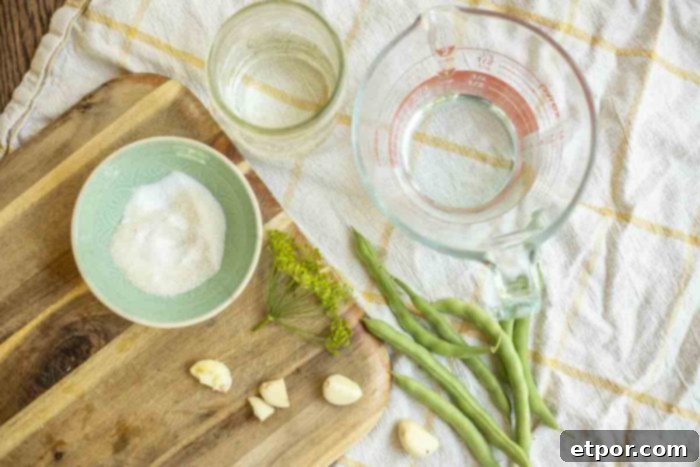
Gather Your Ingredients for Zesty Pickled Green Beans
Crafting delicious quick pickled green beans requires a simple yet potent combination of ingredients. Each component plays a vital role in achieving that perfect balance of crunch, tang, and flavor. Here’s a detailed look at what you’ll need:
Core Ingredients
Green Beans: Naturally, the star of our show. Opt for fresh, crisp string beans – whether they are classic green, vibrant purple, or sunny yellow beans, all varieties work wonderfully for pickling. Freshness is paramount for a good crunch!
Water: The foundation of your pickling brine. Using filtered water is always a good practice to ensure the purest flavor profile for your pickles. You can find my favorite filter here.
Vinegar: This is what gives your pickles their signature tang. Both white vinegar and apple cider vinegar are excellent choices. White vinegar provides a sharper, cleaner pickling flavor, while apple cider vinegar offers a slightly fruitier, mellower tang. Feel free to use whichever you prefer or have on hand.
Salt: Essential for both flavor and preservation. Always use a good quality pickling salt, sea salt, or Himalayan salt. Avoid iodized table salt, as the anti-caking agents and iodine can sometimes lead to cloudy brine and an off-flavor.
Sugar: While technically optional, a touch of sugar significantly enhances the flavor balance by cutting through the sharp acidity of the vinegar. It adds a subtle sweetness that makes the pickles more palatable and complex. You can adjust the amount to your personal preference for a sweeter or more tart pickle.
Flavor Enhancers & Optional Spices
Garlic Cloves: A must-have for classic pickle flavor. Smashed garlic cloves infuse the brine with a pungent, savory aroma that is irresistible. You can use one whole clove per jar or more, depending on how garlicky you like your pickles.
Dill: The quintessential pickling herb. Fresh sprigs of dill or dill seed will lend that authentic “dilly” flavor. If using fresh dill, ensure it’s clean and vibrant. Dill seed provides a more concentrated flavor and is great if fresh dill isn’t available. This ingredient is technically optional, but highly recommended for traditional dilly beans.
Red Chili Peppers/Flakes: For those who enjoy a little heat, a pinch of red chili flakes or a few thin slices of fresh jalapeño or serrano pepper can add a fantastic kick. Adjust the quantity to control the spice level.
Other Spices: This is where you can truly get creative! Consider adding a teaspoon of mustard seeds for a classic pickle tang, a few black peppercorns for a subtle bite, or even a bay leaf for an added layer of herbaceousness. Coriander seeds, fennel seeds, or a slice of fresh ginger can also offer unique flavor twists.
Essential Tools for Pickling
- Glass Jars: Mason jars are ideal due to their sturdy construction and tight-sealing lids. Pint-sized (16 oz) jars are perfect for this recipe, making them convenient for storage and serving. Ensure your jars are clean and sterilized before use.
- Colander: For thoroughly washing your green beans and ensuring they are free from any garden debris.
- Liquid Measuring Cup: Essential for accurately measuring water and vinegar to create your brine.
- Saucepan: A medium-sized saucepan is needed to prepare and boil the pickling brine.
- Sharp Knife: For trimming the ends of the green beans and slicing any optional peppers or garlic.
- Cutting Board: A stable surface for preparing your vegetables.
- Tongs or Slotted Spoon: Useful for handling hot jars and gently placing beans, especially if blanching.
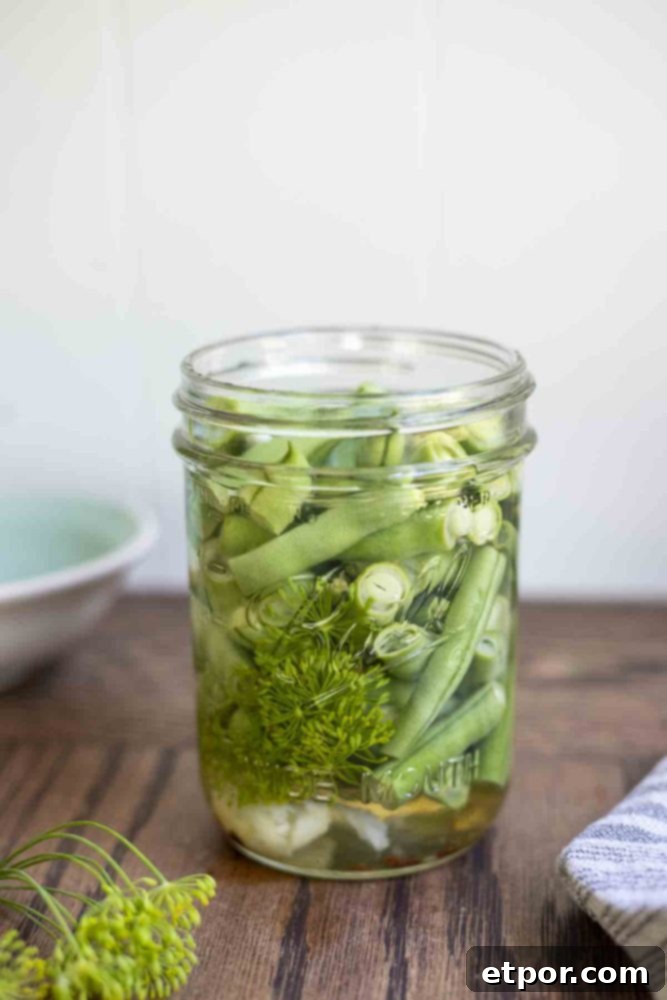
Step-by-Step: How to Make Quick Pickled Green Beans
Making quick pickled green beans is a straightforward process that yields incredibly rewarding results. Follow these simple steps to create your own batch of crunchy, tangy delights:
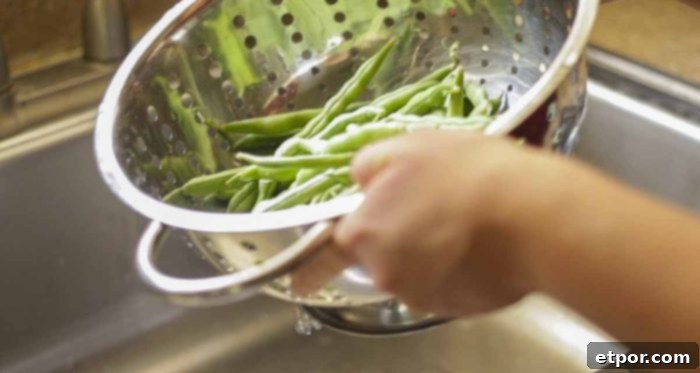
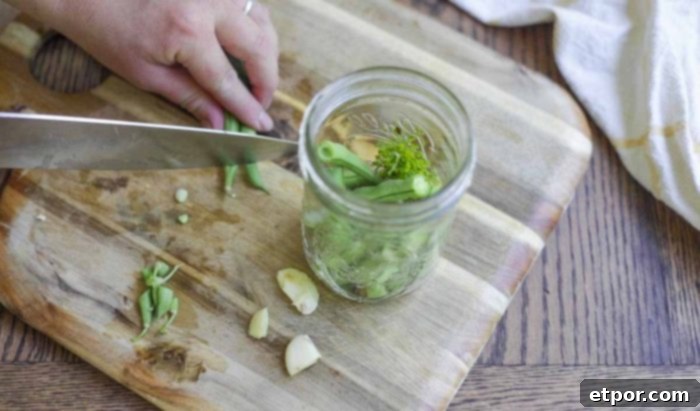
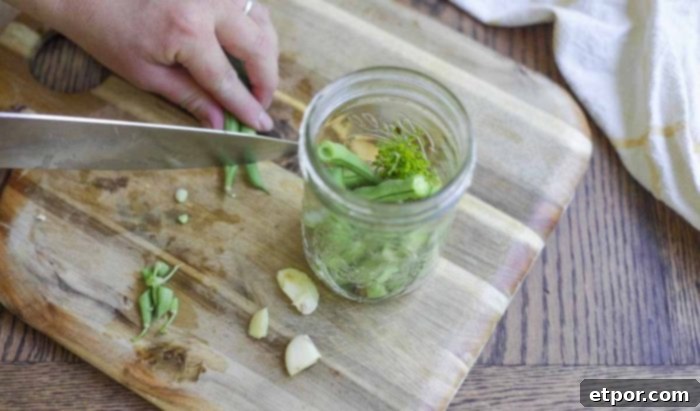
- Prepare Your Green Beans: Begin by thoroughly washing your fresh green beans in a colander under cold running water. Pat them dry with a clean towel. Next, trim off the fibrous ends from both sides of each bean. You have the option to leave the beans whole for a classic look or cut them into shorter, more manageable lengths (e.g., 2-3 inches). Cutting them shorter often makes them easier to pack into jars and more convenient for snacking.
- Prepare Your Jars and Spices: Ensure your glass jars (pint-sized are ideal) are sparkling clean. Wash them thoroughly with hot, soapy water and rinse well, or run them through a dishwasher. To each clean jar, add your desired aromatics and spices. I typically place smashed garlic cloves, fresh dill sprigs or dill seeds, and a pinch of red pepper flakes (if using) at the bottom of the jar. This placement helps the beans to hold them down when the brine is added, ensuring even flavor distribution.
- (Optional) Blanch Your Green Beans: If you desire a slightly brighter color and a softer, yet still crisp, texture, you can blanch the green beans. To do this, bring a large pot of water to a rolling boil. Simultaneously, prepare a large bowl of ice water. Once the boiling water is ready, immerse the trimmed green beans for precisely 30 to 60 seconds – no longer! Immediately transfer them to the ice bath to halt the cooking process and preserve their vibrant color and crunch. Drain well before proceeding. If you choose not to blanch, your beans will still be wonderfully crunchy.
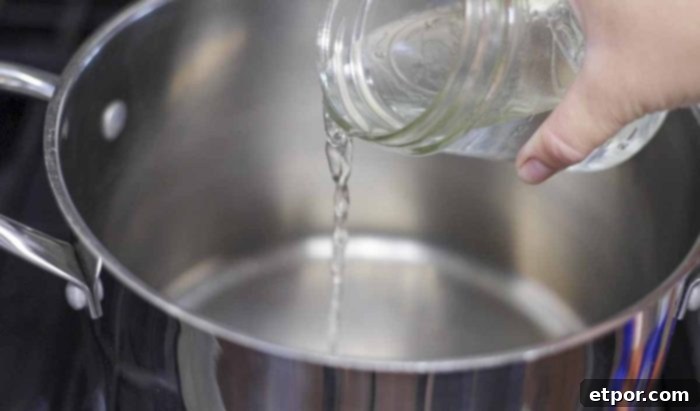
- Make the Pickling Brine: In a medium saucepan, combine equal parts vinegar (white or apple cider) and water. Add your salt and sugar. For instance, if you’re making a small batch, 1 cup of vinegar and 1 cup of water, along with 1 tablespoon of salt and 1 tablespoon of sugar, is a good starting point. Bring this mixture to a rolling boil over medium-high heat, stirring continuously until both the salt and sugar are completely dissolved. Once dissolved, remove the brine from the heat. If you blanched your beans, allow the brine to cool to at least room temperature before pouring it over the beans. If you did not blanch, you can pour the hot brine directly over the beans.
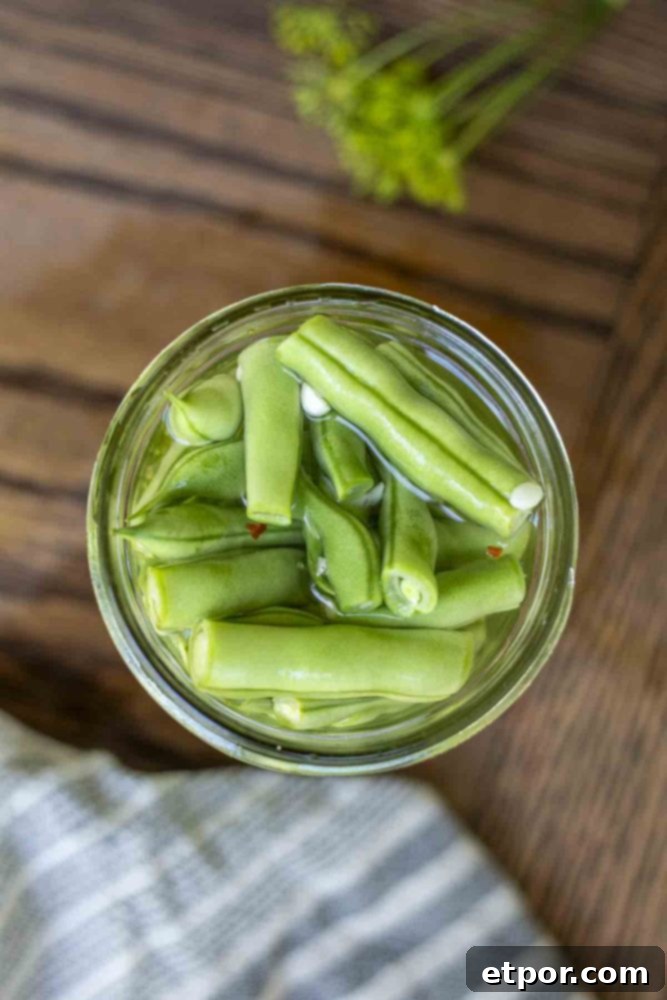
- Pack the Jars: Stand the trimmed green beans vertically in your prepared jars, packing them in as tightly as possible without bruising them. Fill them to about half an inch below the rim of the jar. This space, known as headspace, is crucial to allow the brine to fully cover the beans without overflowing, and to facilitate a proper seal if you were canning (though this is a quick pickle, headspace is still good practice).
- Pour the Brine: Carefully pour the hot (if not blanched) or cooled (if blanched) brine over the green beans in each jar. Make absolutely sure that the brine completely covers all the beans, still maintaining that small amount of headspace at the top. This ensures even pickling and prevents spoilage.
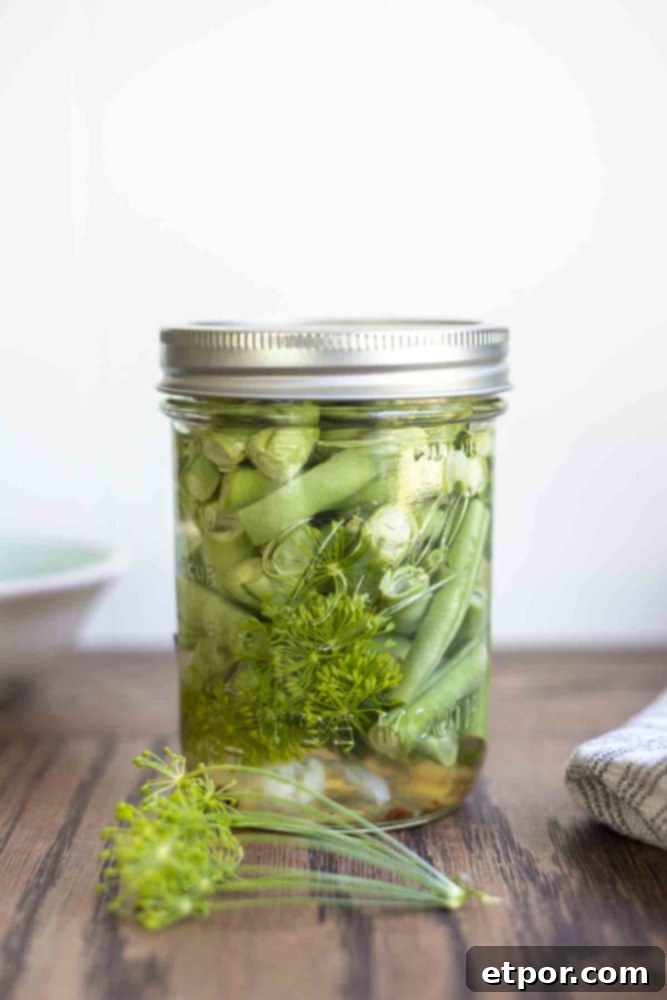
- Seal and Refrigerate: Once the jars are filled, secure them tightly with their lids. Give each jar a gentle shake to help distribute the spices and garlic evenly throughout the brine. Place the jars in the refrigerator. For the best flavor development, allow your quick pickled green beans to chill in the pickling liquid for at least 24 hours before enjoying them. While they are “quick,” this waiting period allows the flavors to meld beautifully. They will be delicious after an hour, but truly shine after a day or two.
Creative Ways to Enjoy Your Pickled Green Beans
Once you’ve mastered the art of making quick pickled green beans, the next exciting step is exploring the myriad ways to enjoy them. Their crisp texture and tangy flavor make them incredibly versatile. Here are some creative serving ideas to inspire you:
- Elevate Sandwiches and Wraps: These zesty pickles can transform any ordinary sandwich into a gourmet experience. Layer them on a classic turkey or ham sandwich for a burst of tanginess that perfectly cuts through the richness of the meats. Chop them finely and mix them into tuna, chicken, or egg salad for an unexpected crunch and bright flavor twist. They’re also fantastic tucked into a veggie wrap.
- Brighten Up Salads: Add a refreshing and vibrant kick to your favorite salads. Toss whole or sliced pickled green beans into a leafy green salad with cherry tomatoes, crumbled feta cheese, and a light vinaigrette for an explosion of flavor and texture. They pair exceptionally well with potato salad, pasta salad, or grain bowls, offering a much-needed acidic counterpoint.
- The Ultimate Bloody Mary Garnish: Move beyond the standard celery stick! A long, crunchy pickled green bean makes an excellent and visually appealing garnish for a classic Bloody Mary. It not only adds a unique savory element but also contributes a fantastic texture to the drink.
- A Perfect Side Dish for Any Meal: Serve them alongside a juicy grilled steak, roasted chicken, or flaky baked fish for an added layer of flavor and textural contrast. Their tangy crunch pairs perfectly with the smoky char from the grill or the rich flavors of a hearty protein, providing a refreshing palate cleanser.
- Innovative Ingredient in Main Courses: Don’t limit them to just sides! Chop them up and stir them into stir-fries for a tangy surprise, or add them to grain bowls and Buddha bowls for a zesty element. They can also be a delightful addition to cold noodle salads or even chopped into a vibrant salsa for tacos.
- Smart Use of Leftover Brine: To further reduce waste and maximize flavor, don’t discard the leftover pickling liquid! This flavorful brine can be repurposed to marinate meats, especially chicken or pork, infusing them with a delicious tangy depth. It can also be used as a flavorful base for salad dressings or even to quick pickle other small vegetables.
- Simple, Wholesome Snacking: Sometimes the best way to enjoy quick pickled green beans is straight from the jar! They make an incredibly satisfying, healthy, and low-calorie snack. Keep a jar readily available in your fridge for those moments when you crave something crunchy and flavorful.
Exciting Variations for Your Quick Pickled Green Beans
One of the best aspects of quick pickling is how easily you can customize the flavors to suit your palate. While the basic recipe is fantastic on its own, don’t hesitate to experiment with these exciting variations to create your signature pickled green beans:
- Spicy Quick Pickled Green Beans: If you love a bit of heat, infusing your pickles with a spicy kick is incredibly simple. Add sliced jalapeños, serrano peppers, or a generous amount of red pepper flakes directly to the jars. For an extra fiery punch, you can even include a few whole dried chilies or a dash of hot sauce to the brine. The more you add, the spicier they’ll become!
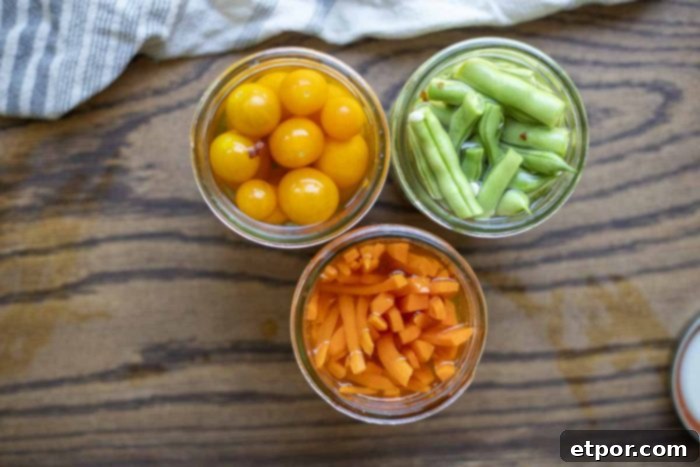
- Add a Variety of Veggies (Mixed Pickles): Expand your quick pickling horizons by incorporating other vegetables alongside your green beans. Carrot sticks or coins add a touch of sweetness and vibrant color. Sliced bell peppers (spicy or mild), thin slivers of red onions, crisp cucumber rounds, or even thinly sliced radishes can create a beautiful and flavorful medley. Ensure all vegetables are cut to a similar size for even pickling.
- Embrace More Dill (Dilly Beans): For a classic, traditional pickle flavor, don’t shy away from plenty of dill. Refrigerator dilly beans are a beloved staple, offering a taste remarkably similar to cucumber pickles, but with the satisfying snap of green beans. Use generous sprigs of fresh dill, and for an even deeper dill flavor, consider adding a teaspoon of dill seed to each jar.
- Sweet Pickled Green Beans: Adjust the sweetness level to your liking by adding a little more sugar to the brine. You can also experiment with natural sweeteners like a tablespoon of maple syrup or honey for a different kind of sweet undertone. This creates a sweet-and-sour pickle that can be particularly appealing to those who prefer a less tart taste.
- Garlic Lover’s Dream: If you’re a true garlic aficionado, feel free to increase the amount of garlic. Instead of just one clove, try adding two or three smashed cloves per pint jar for an intensely aromatic and flavorful pickle.
- Mustard & Peppercorn Infusion: For a more complex, savory profile, add a teaspoon of whole mustard seeds and 1/2 teaspoon of black peppercorns to each jar along with the garlic and dill. These classic pickling spices add depth and a subtle warmth.
Frequently Asked Questions (FAQ) About Pickled Green Beans
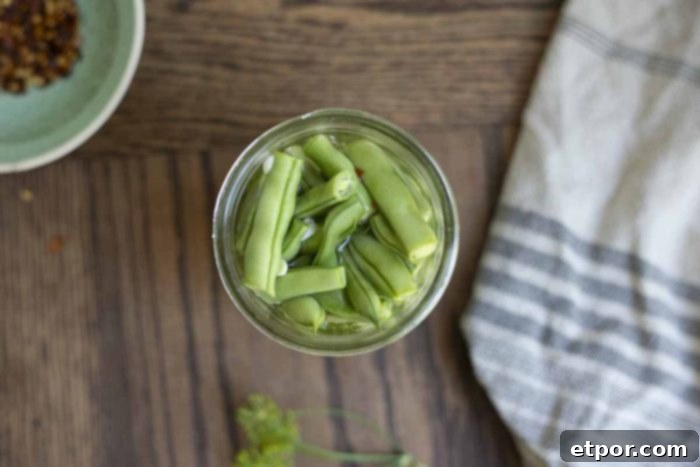
What type of bean should I use?
Any variety of fresh string beans will work beautifully for quick pickling. This includes common green beans (also known as snap beans), the less common but visually striking purple beans, or even the vibrant yellow wax beans. The key is to select beans that are firm, crisp, and free from blemishes or signs of wilting. Freshness is crucial for achieving that satisfying crunch in your finished pickles. Avoid older, softer beans as they tend to become mushy.
Do I have to blanch green beans before pickling?
Technically, no, blanching is not strictly required for quick pickled green beans. The main reasons people choose to blanch are to help the beans retain their vibrant green color and to ensure a very crisp texture, while also potentially reducing some surface bacteria. However, many home picklers find that unblanched fresh green beans still achieve an excellent crunch simply by being submerged in the acidic brine. The color of unblanched beans might not be as intensely bright green, but they will still be incredibly delicious and crunchy. It’s a matter of personal preference and how much time you have. If you do blanch, remember the ice bath to stop cooking immediately!
How long do quick pickled green beans last?
Quick pickled green beans are refrigerator pickles, meaning they are not shelf-stable and must be stored in the refrigerator. When properly stored in clean, airtight jars, they will typically last for about 2-3 weeks in the fridge. The flavor will continue to develop and meld over the first few days, reaching its peak after about 3-5 days. While they might still be safe to eat beyond 3 weeks, their crispness and optimal flavor may start to diminish.
Can I use frozen green beans?
While you can technically use frozen green beans, it is generally not recommended for quick pickling. Frozen beans tend to lose some of their crispness and develop a softer, sometimes mushy, texture once thawed and pickled. The ideal result for pickled green beans is a firm, satisfying crunch, which is best achieved with fresh, high-quality beans. If fresh beans are absolutely unavailable, and you must use frozen, blanch them briefly from frozen, then shock them in ice water, and be prepared for a slightly less crisp result.
Why are my pickled beans not crunchy?
Several factors can contribute to soft or mushy pickled green beans. The most common reasons include using old or less-than-fresh beans to begin with, over-blanching them (if you chose to blanch), or not cooling the beans rapidly enough after blanching. It’s also possible the brine ratio was off, or that the beans were exposed to too much heat for too long during the pickling process (e.g., pouring hot brine over blanched beans that weren’t properly cooled). Always start with fresh, firm beans and follow the blanching and cooling steps carefully if you opt for them. Ensuring your jars are packed tightly also helps maintain crispness.
Find More Delicious Preservation Posts:
- How To Dehydrate Blueberries
- Homemade Refrigerator Dill Pickles
- How to Freeze Kale – 2 Easy Ways
- How To Freeze Tomatoes – Preserving Tomatoes Without Canning
- How To Dehydrate Strawberries
Did you try this recipe and love it? Come back and give it 5 stars and pin it! Please and thank you.
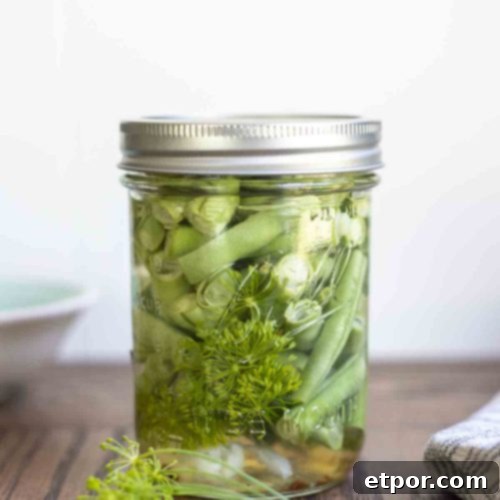
Quick Pickled Green Beans
Print
Pin
Rate
SaveSaved!
Save This Recipe
We’ll get it sent to your inbox! Plus, get new recipes from us every week.
Ingredients
- 1 lb fresh green beans
- 1 cup water
- 1 cup vinegar white or apple cider vinegar
- 1 tbs sugar
- 1 tbs salt preferably pickling or sea salt
- 1 clove garlic
- pinch red pepper flakes
- 1 head fresh dill or a few sprigs of dill
Instructions
-
Wash your fresh green beans thoroughly and trim off both ends. You can leave them whole or cut them into shorter lengths to fit your jars and for easier snacking.
-
(Optional) To blanch the beans: Bring a large pot of water to a rolling boil and prepare a bowl of ice water. Blanch the beans for 30-60 seconds, then immediately transfer them to the ice bath to cool. Drain well.
-
In a medium saucepan, combine equal parts vinegar and water, along with salt and sugar.
-
Bring the brine to a boil, stirring until the salt and sugar are fully dissolved. Turn off the heat. If you blanched the beans, allow the brine to cool to about room temperature before pouring.
-
Ensure your jars are clean and sterilized.
-
To each pint jar, add smashed garlic and desired spices (like fresh dill or red pepper flakes) at the bottom.
-
Stand the trimmed green beans vertically in the jars. Fill them to about half an inch below the rim, leaving enough headspace for the brine to cover the beans completely.
-
Pour the brine (hot if not blanching, cooled if blanched) into the jars, ensuring it entirely covers the beans while maintaining the desired headspace.
-
Seal the jars tightly with their lids and give them a gentle shake to distribute the spices and garlic evenly.
-
Refrigerate your green beans in the pickling liquid for at least 24 hours to allow the flavors to mingle and develop fully. For best flavor, wait 2-3 days.
Notes
- Selecting fresh, vibrant, and firm green beans is crucial for achieving that desirable crunchy texture. Avoid any beans that appear soft or wilted.
- While these are “quick pickles,” patience is rewarded. Allowing your green beans to sit in the brine for at least 24 hours (or ideally 2-3 days) before enjoying them will significantly enhance their tangy flavor and spice absorption.
- Always store quick pickled green beans in tightly sealed jars in the refrigerator. They are not shelf-stable and will last for approximately 2-3 weeks, with flavors developing over time.
- Customize your pickles! Feel free to add more garlic, extra dill, mustard seeds, peppercorns, or even sliced hot peppers for a spicy kick.