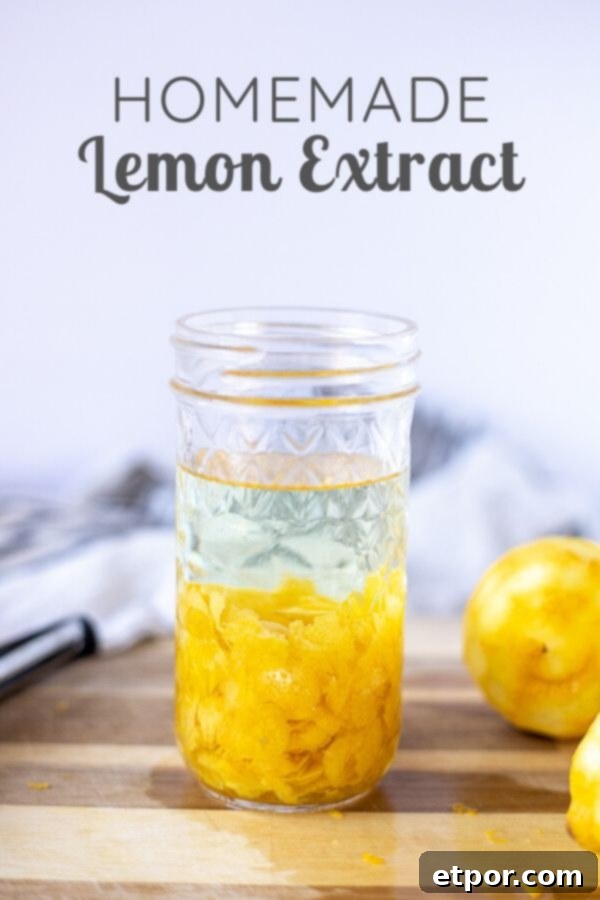
Homemade Lemon Extract: Brighten Your Baking with This Simple DIY Recipe
Unlock the vibrant, zesty flavor of fresh lemons with this incredibly simple, two-ingredient recipe for homemade lemon extract. All you need are fresh lemon peels and vodka to create a potent, aromatic extract that will elevate all your baked goods, desserts, and even savory dishes. Say goodbye to expensive store-bought versions and hello to a more self-reliant, flavorful kitchen.
Table of Contents
Toggle

Why Make Your Own Lemon Extract?
There’s a special satisfaction that comes from making things yourself, especially when it saves you money and gives you complete control over the ingredients. For me, this journey into self-sufficiency began almost a decade ago, and I continue to discover new ways to create staples from scratch. Extracts are a prime example of this philosophy.
Have you ever noticed the surprisingly high price tag on extracts at the grocery store? It can be quite astonishing, especially for popular flavors like vanilla or lemon. Vanilla, for instance, can be prohibitively expensive, yet a homemade version requires minimal effort – often less than five minutes of active prep time – and costs a mere fraction of what you’d pay in a store. The same principle applies to lemon extract!
These concentrated flavorings add an incredible depth and brightness to a wide array of recipes. Imagine the burst of citrus in your next batch of cookies, cakes, glazes, or even savory marinades. I’m currently using my latest batch of homemade lemon extract to infuse some delectable sourdough scones with lemon and vanilla, and the results are truly delightful. I’m eager to share that recipe soon!
Making your own lemon extract is remarkably simple, requiring just a couple of readily available ingredients. It’s a rewarding project that allows you to customize the potency and ensures you’re using only the purest components. Today, I’ll guide you through the straightforward process, so you can start enjoying this wonderful homemade staple.
Essential Lemon Extract Making Tips
To ensure your homemade lemon extract is as flavorful and potent as possible, keep these key tips in mind:
- Choose Your Peeling Method: I find a vegetable peeler to be the fastest and most efficient tool for removing lemon rind. It allows for quick, light movements that minimize the amount of white pith you collect. A microplane zester can also be used, but be careful not to grate too deeply.
- Avoid the Pith: This is crucial! Only the bright yellow outer layer of the lemon rind contains the aromatic oils we want to extract. The white pith underneath is bitter and will impart an unpleasant taste to your extract. Use quick, gentle strokes to get just the rind.
- Opt for Organic Lemons: Since you’ll be using the peels, choosing organic lemons whenever possible is highly recommended. This minimizes your exposure to pesticides and waxes often found on conventionally grown citrus.
- Patience is Key: Extracts need time to steep and develop their full flavor. After combining the peels and vodka, shake the jar gently at least once a week. Allow it to steep for a minimum of 3-4 weeks before its first use. For an even stronger, more concentrated flavor, you can let it sit for up to 6-8 weeks, or even longer.
- Dark Storage: Store your infusing extract in a cool, dark cabinet. Direct sunlight can degrade the flavor and potency over time.
Lemon Juice vs. Lemon Extract: What’s the Difference?
It’s a common question, but no, lemon juice and lemon extract are not the same thing. Lemon juice is simply the liquid squeezed directly from the fruit, primarily composed of water, citric acid, and some natural sugars. It offers a bright, tart flavor but can dilute recipes, especially baked goods, if used in large quantities for flavor.
Lemon extract, on the other hand, is a concentrated flavoring made by soaking the lemon’s outer rind (where the essential oils reside) in alcohol. The alcohol acts as a solvent, drawing out these potent citrus oils, resulting in a much stronger, more intense lemon flavor profile without the acidity or added liquid of juice. This makes extract ideal for baking, where precise moisture levels are important, and for achieving a powerful lemon aroma.
Can You Make Alcohol-Free Lemon Extract?
Yes, you absolutely can! For an alcohol-free alternative, you can substitute vodka with food-grade vegetable glycerin. Glycerin also acts as a solvent, though it typically takes a bit longer to extract the flavor compared to alcohol. To make an alcohol-free version:
- Combine 1/4 cup water with 3/4 cup food-grade vegetable glycerin in a jar.
- Pour this mixture over your lemon peels (follow the same peeling process as for the alcohol version).
- Seal the jar tightly, shake well, and store it in a cool, dark cabinet.
- Allow it to steep for at least two months, shaking periodically, to fully extract the lemon flavor. The longer it steeps, the stronger the flavor will be.
While the process is similar, be aware that the flavor profile of glycerin-based extracts can be slightly different, often having a sweeter undertone due to the glycerin itself. They are a fantastic option for those who prefer to avoid alcohol in their cooking and baking.
The following are affiliate links. We are a participant in the Amazon Services LLC Associates Program, an affiliate advertising program designed to provide a means for us to earn fees by linking to Amazon.com and affiliated sites.

Simple Ingredients for Superior Flavor
The beauty of homemade lemon extract lies in its simplicity. You only need two core ingredients, but selecting the right ones can make all the difference.
Lemons: As mentioned, always prioritize organic lemons if they are available. Since the extract relies solely on the oils from the peel, you want to ensure those peels are free from unwanted pesticides or waxy coatings. Any variety of lemon will work, but consider the subtle differences:
- Eureka/Lisbon lemons (the most common supermarket varieties) offer a classic, robust lemon flavor.
- Meyer lemons provide a slightly sweeter, more floral, and less acidic citrus note, which can make for a uniquely fragrant extract.
Don’t let the peeled lemons go to waste! Squeeze the juice to make your own homemade sodas, refreshing lavender lemonade, tangy lemon vinaigrette, or delightful blueberry lemon bars. The possibilities are endless, ensuring zero waste of these versatile fruits.
Vodka: The key to a good extract is a neutral alcohol that effectively draws out the flavors without imparting its own taste. Vodka is ideal for this purpose due to its typically unflavored nature and high alcohol content (usually 80 proof or 40% alcohol by volume).
- GMO Concerns: Many vodkas are made from grains like corn or soybeans, which can be genetically modified. If avoiding GMOs is important to you, seek out brands that explicitly state they use non-GMO ingredients or are made from wheat or potatoes.
- Gluten-Free Options: While wheat-based vodkas like Absolut, Grey Goose, or Ketel One are generally considered gluten-free due to distillation, those with severe sensitivities might prefer vodkas made from potatoes (like Chopin or Boyd & Blair), grapes (Ciroc), or sugarcane (some craft brands) for a completely gluten-free assurance. Smirnoff, for example, is noted for using non-GMO corn.
The quality of the vodka doesn’t need to be top-shelf; an affordable yet decent quality 80-proof vodka will work perfectly for extracting the lemon oils.
Tools You’ll Need
Gathering your tools beforehand will make the process even smoother:
- Vegetable peeler or Microplane Zester: Essential for carefully removing just the yellow rind without the bitter pith.
- Mason Jar: A clean, airtight glass mason jar (pint or quart size, depending on how much extract you want to make) is perfect for steeping the peels. Its tight-sealing lid prevents evaporation.
- Liquid Measuring Cup: For accurately measuring the vodka.
- Fine-Mesh Sieve or Cheesecloth: For straining the peels once the extract is ready.
- Small Bottles with Droppers or Airtight Lids: For storing your finished extract. Amber glass bottles are ideal for protecting the extract from light.
Watch The Tutorial Video
Prefer to see it in action? Watch this helpful video tutorial for a visual guide on making your own lemon extract:
How To Make Homemade Lemon Extract: Step-by-Step
Creating your own lemon extract is a straightforward process that yields incredibly rewarding results. Follow these simple steps for a potent, vibrant extract:
Step 1: Prepare Your Lemons. Begin by thoroughly washing and drying your organic lemons. Any dirt, residue, or moisture on the peels should be removed to ensure a clean extraction.
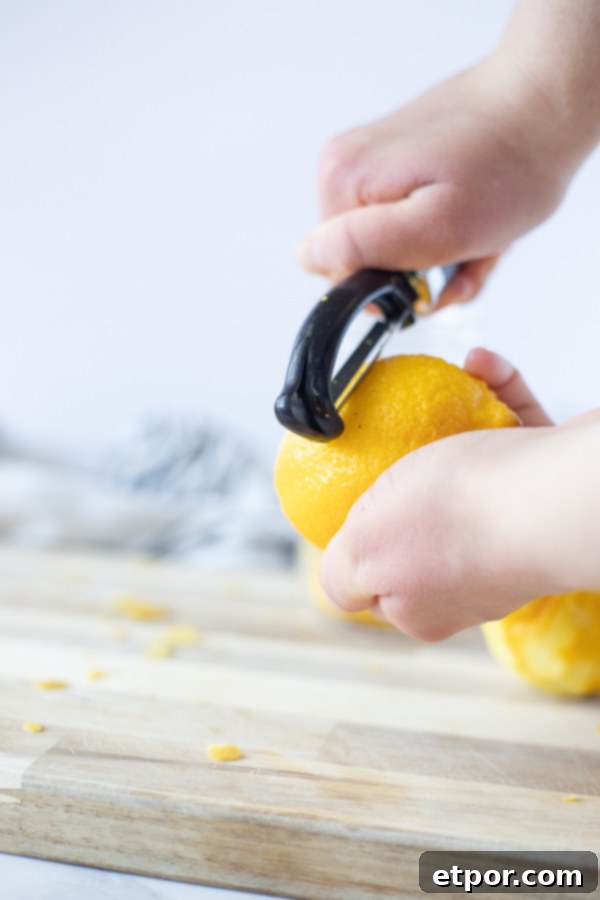
Step 2: Peel the Rind. Using a sharp vegetable peeler or a microplane zester, carefully remove only the bright yellow outer layer of the lemon rind. It is absolutely essential to avoid the white pith beneath the yellow peel, as the pith contains bitter compounds that will negatively impact the flavor of your extract. Aim for thin, wide strips of zest if using a peeler, or finely grated zest if using a microplane, ensuring no white is included.
Step 3: Combine in a Jar. Place the carefully peeled lemon rinds into a clean glass mason jar. Make sure the jar is large enough to comfortably hold the peels and the vodka, leaving about two inches of headspace at the top. This allows for proper agitation and ensures no overflow when shaking.

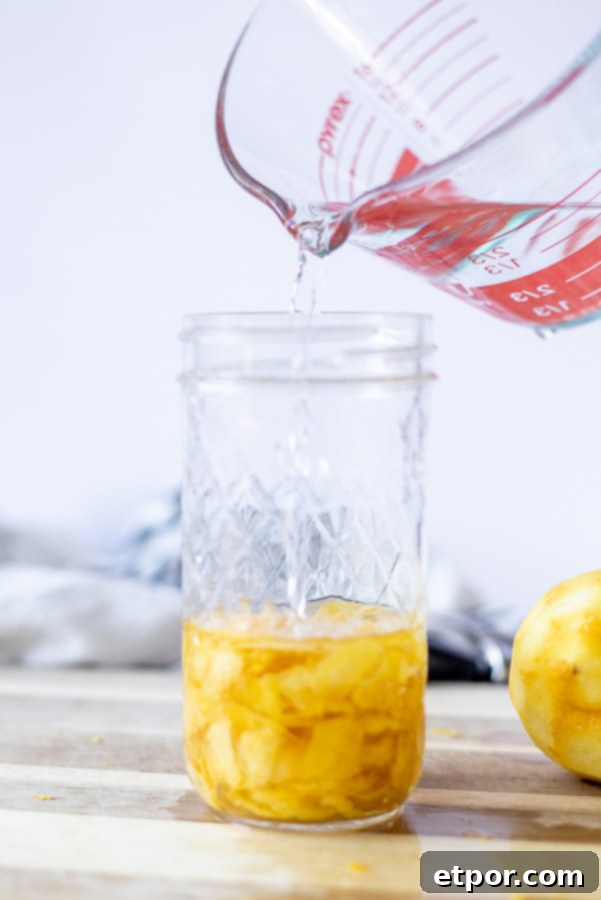
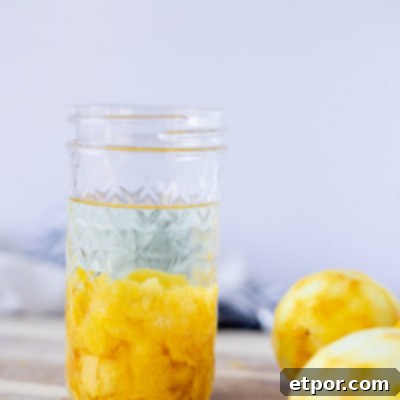
Step 4: Add Vodka and Seal. Pour one cup of your chosen vodka over the lemon peels, ensuring they are fully submerged. The alcohol will begin to extract the essential oils from the peels. Once the vodka is added, secure the jar with a tight-fitting lid to prevent any evaporation of the alcohol.
Step 5: Steep and Shake. Store the sealed jar in a cool, dark place, such as a pantry or cabinet, away from direct sunlight. This is where patience comes in! Allow the mixture to steep for a minimum of four weeks. During this period, make sure to shake the jar gently at least once a week. Shaking helps to agitate the peels and ensures continuous extraction of the lemon oils into the vodka. For a truly robust flavor, you can let it steep for six to eight weeks, or even longer.
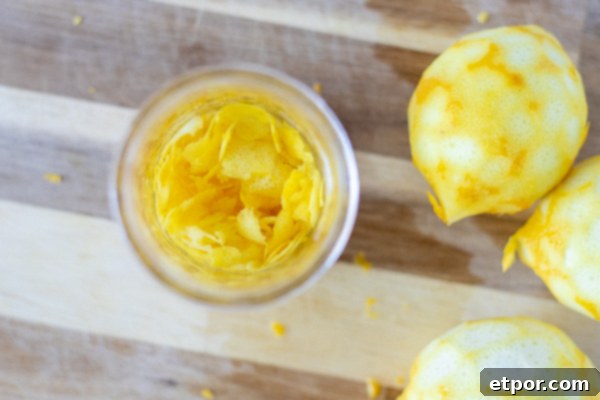
Step 6: Strain and Store. After the steeping period (at least four weeks), it’s time to check your extract. Open the jar and take a sniff; it should have a strong, bright lemon aroma and a distinct yellow hue. If it has reached your desired strength, strain the lemon peels using a fine-mesh sieve or a piece of cheesecloth into a clean, airtight glass storage container. Discard the spent peels.
Your homemade lemon extract is now ready to infuse your culinary creations with its delightful zest! For best results, store the finished extract in a dark, cool place. It will last indefinitely, much like vanilla extract, and its flavor may even deepen over time.
Creative Uses for Your Homemade Lemon Extract
Once you’ve made your own lemon extract, you’ll find countless ways to incorporate its bright, citrusy essence into your cooking and baking. Here are just a few ideas:
- Baked Goods: This is the most common use! Add a teaspoon or two to cakes, cookies, muffins, scones, pie fillings, and bread. It pairs beautifully with vanilla, berries, and chocolate.
- Glazes and Frostings: A few drops can transform a plain powdered sugar glaze or butter-cream frosting into a zesty delight for cakes, doughnuts, or pastries.
- Desserts: Enhance custards, puddings, fruit tarts, mousses, and cheesecakes with a splash of lemon extract for an instant flavor boost.
- Beverages: Stir a tiny amount into iced tea, homemade lemonade, or even cocktails for an extra layer of lemon flavor. Remember, a little goes a long way!
- Marinades and Dressings: For savory applications, lemon extract can be a secret ingredient in chicken or fish marinades, or added to homemade vinaigrettes for a brighter tang.
- Candies and Confections: Use it to flavor homemade chocolates, truffles, hard candies, or marshmallows.
- Homemade Jams and Jellies: A few drops can brighten the flavor of fruit preserves, especially berry or stone fruit varieties.
If you try this recipe and love it, I would love if you could come back, comment on the post, and give it 5 stars! Please and thank you.
Lemon Extract
Rating: 5 from 1 vote
Print Recipe
Pin Recipe
Amy
5 minutes
28 days (4 weeks)
1
cup
Save This Recipe
We’ll get it sent to your inbox! Plus, get new recipes from us every week.
Equipment
Ingredients
Instructions
-
Wash and thoroughly dry the lemons.
-
Using a vegetable peeler or zester, carefully remove only the yellow part of the lemon peel, ensuring no white pith is included.
-
Place the lemon peels into a clean glass mason jar, leaving about two inches of space from the top. Pour the vodka over the peels, making sure they are fully submerged.
-
Secure the jar with a tight-fitting lid. Store it in a cool, dark cabinet for at least four weeks, shaking the jar gently at least once a week.
-
After four weeks (or longer for a stronger flavor), check the extract for desired strength and aroma. It should have a vibrant lemon scent and a yellow color.
-
Once ready, strain out the lemon peels using a fine-mesh sieve or cheesecloth. Pour the finished lemon extract into a clean, airtight glass storage container (preferably dark glass) for long-term storage.
Notes
Shake the jar once a week and allow it to steep for at least 3-4 weeks. For a more intense flavor, steep for 6-8 weeks or even longer. The extract should develop a strong lemon scent and a yellow color over time.
Store the finished extract in a cool, dark place. It has an indefinite shelf life due to the alcohol content.
Nutrition
(Nutritional values are approximate as most alcohol evaporates during baking. Figures are for reference based on lemon peel and a small amount of residual alcohol per serving.)
Serving: 1 tsp
|
Calories: 12kcal
|
Carbohydrates: 1g
|
Protein: 1g
|
Fat: 1g
|
Saturated Fat: 1g
|
Sodium: 1mg
|
Potassium: 1mg
|
Fiber: 1g
|
Sugar: 1g
|
Vitamin C: 1mg
|
Calcium: 1mg
|
Iron: 1mg
Extracts, Baking
Homemade, American
lemon extract, DIY, homemade, baking
Tried this recipe? Tag me!
Mention @ablossominglife or tag #ablossominglife!