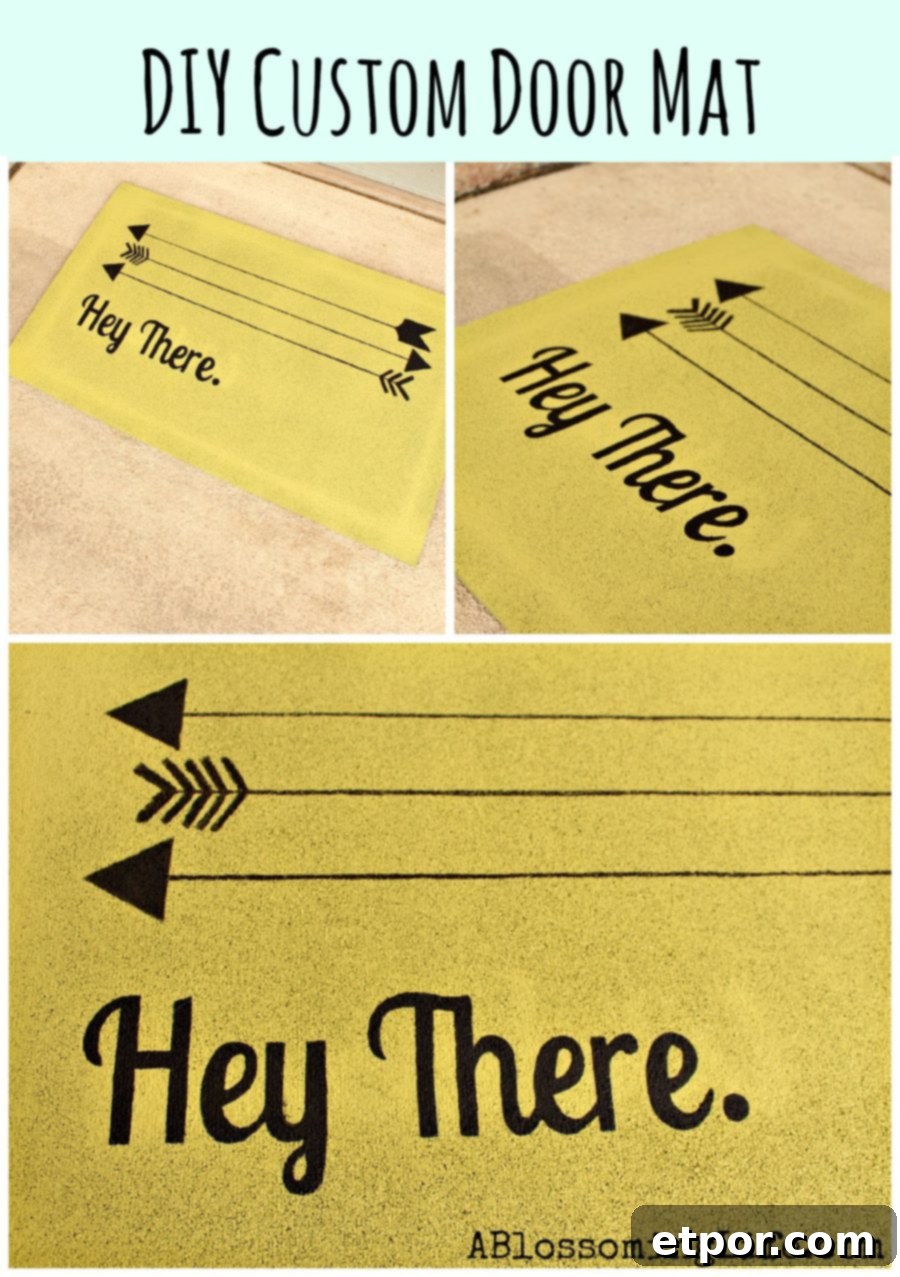
Transform Your Entryway: The Ultimate Guide to DIY Custom Doormats
Is your entryway looking a little lackluster? Does your welcome mat seem to have lost its welcoming charm? You’re not alone! Many homes feature a doormat that’s seen better days, often faded, worn, or just plain boring. But what if you could transform that tired old mat into a vibrant, personalized statement piece that truly reflects your style and personality? With a touch of creativity and some simple supplies, you can embark on an incredibly satisfying DIY project: crafting your very own custom welcome mat. This guide will walk you through turning a drab, forgotten mat into a fabulous focal point for your front door, proving that even the most mundane household items can be given a new lease on life with a little paint and imagination.
This project is not only a fantastic way to refresh your home’s curb appeal on a budget, but it also offers an opportunity for unique self-expression. Forget generic store-bought mats; imagine greeting guests with a custom message, a family initial, or a design that perfectly complements your home decor. While my own journey included a few learning curves and perhaps more than one redo (a common occurrence in the world of crafting!), the end result is always worth the effort. Every DIY endeavor is a chance to learn something new and hone your creative skills!
Why Create a Custom Doormat? The Benefits of Personalization
Before we dive into the “how-to,” let’s briefly consider the compelling reasons why a custom doormat is a worthwhile project for any homeowner or renter:
- Boosted Curb Appeal: Your front door is the face of your home. A personalized doormat adds an immediate touch of warmth, personality, and charm, making your entryway more inviting and aesthetically pleasing.
- Express Your Personality: Unlike mass-produced mats, a DIY custom doormat allows you to showcase your unique style, humor, or values. Whether it’s a witty quote, a family name, or a seasonal design, it’s a reflection of you.
- Cost-Effective Home Decor: Instead of splurging on expensive designer mats, you can upcycle an old mat or purchase a plain one cheaply and transform it into a high-end looking piece for a fraction of the cost.
- Unique and One-of-a-Kind: Stand out from your neighbors! Your custom doormat will be truly unique, ensuring your entryway makes a memorable first impression.
- A Fun and Rewarding Project: There’s immense satisfaction in creating something beautiful and functional with your own hands. This project is approachable for crafters of all skill levels.
Materials You’ll Need for Your Custom Welcome Mat
Gathering all your materials beforehand ensures a smooth crafting process. Here’s what you’ll need, along with some tips for selection:
- Old Rubber Mat: Look for a rubber-backed mat that is still structurally sound, even if the surface is faded or worn. If the front has too much fuzz or texture, using the smooth, flat back side is often ideal for stenciling, as I did. Make sure it’s clean and free of debris.
- Outdoor Spray Paint: Choose a durable outdoor-grade spray paint for your base color. Brands like Valspar, Rust-Oleum, or Krylon offer excellent options specifically designed for outdoor use, resisting fading and moisture. I opted for Valspar Spring Sprout for a fresh base. Select a color that complements your home’s exterior or your desired design.
- Paper: Standard printer paper or cardstock works well for creating your stencil template.
- Painter’s Tape: Essential for securing your stencil to the mat and for creating crisp, straight lines or borders.
- Printer: For printing your custom design or lettering.
- Exacto Knife (or Craft Knife): A sharp Exacto knife is crucial for precise cutting of your stencil letters. Always use with caution and on a protective surface.
- Sharpie Marker: A fine-tip or medium-tip Sharpie is perfect for tracing your stencil onto the mat before painting.
- Acrylic Outdoor Craft Paint: Select a contrasting color for your design. Ensure it’s explicitly labeled for outdoor use to withstand the elements. Various brands offer outdoor acrylics in a wide range of colors.
- Small Paintbrush: A small, flat or angled artist’s brush will give you the control needed for painting intricate details and letters.
- Optional: Outdoor Sealer Spray: For maximum durability and weather resistance, a clear outdoor sealer (matte or gloss finish) is highly recommended.
- Optional: Ruler, Cookie Cutters (for shapes), Self-Healing Cutting Mat, Tarp/Drop Cloth.
Step-by-Step Directions: Creating Your Custom Doormat
Let’s transform that mat! Follow these detailed steps to bring your vision to life.
Step 1: Prepare Your Doormat
Begin by thoroughly cleaning the side of the mat you intend to paint. If, like mine, the front surface is too fuzzy or worn for crisp stenciling, utilize the smooth rubber back. Wash the mat with soap and water, scrubbing away any dirt, grime, or loose particles. A clean surface is paramount for paint adhesion. Rinse it well and allow it to air dry completely. This step is critical; any moisture or debris will compromise the paint’s longevity and finish.
Step 2: Apply the Base Coat
Once your mat is dry, move to a well-ventilated area, preferably outdoors or in a garage with open doors. Lay down a tarp or drop cloth to protect the surrounding surfaces from overspray. Shake your outdoor spray paint can vigorously for at least a minute. Hold the can about 8-12 inches from the mat and apply the first light, even coat, using a sweeping motion. Avoid holding the can in one spot to prevent drips. Since the mat was black, it required several coats to achieve a vibrant base color. Apply about 3-4 thin coats, waiting approximately 5 minutes between each coat as specified by the paint manufacturer. Multiple thin coats are always better than one thick coat, as they dry faster, adhere better, and are less prone to cracking or peeling. Allow the base coat to fully dry for at least a few hours, or even overnight, before proceeding.
Step 3: Design Your Custom Stencil
While your mat dries, it’s time to create your custom design. Online design tools like PicMonkey.com or Canva are excellent resources for this. You can choose from a vast library of fonts, shapes, and graphics. Once you’ve crafted your custom saying or design, save it as a high-resolution image file. Then, insert this image into a word processing document (like Microsoft Word or Google Docs). Adjust the image size to ensure your design is as large as possible to fit your mat effectively. Print out your design on standard paper. If your design is larger than a single sheet, you may need to print it in sections and carefully tape them together to form a complete stencil. You can get a pre-designed PDF here to get started!
Step 4: Cut Out Your Stencil
Place your printed design on a self-healing cutting mat or several layers of cardboard to protect your work surface. Carefully use an Exacto knife to cut out the letters or shapes of your design. The parts you cut out will be where your accent color paint will go. Take your time and be precise, especially with intricate details. A sharp blade makes all the difference for clean edges. Hold the Exacto knife like a pen and apply consistent, firm pressure.
Step 5: Position and Trace Your Stencil
Once your base coat is completely dry, carefully position your cut-out paper stencil onto the mat. Use painter’s tape to secure the paper firmly in place around the edges. This prevents the stencil from shifting while you work. Now, using a Sharpie marker, carefully trace the outlines of your cut-out letters and shapes onto the mat. This will create a clear guide for your paint application. Double-check that all parts of your design are accurately traced before removing the paper stencil.
Step 6: Paint Your Design
Now for the fun part! Using a small paintbrush and your chosen outdoor acrylic craft paint, carefully fill in the traced letters and shapes. Apply the paint in thin, even coats. For a bold and opaque finish, you’ll likely need at least two coats of paint. Allow each coat to dry to the touch before applying the next. Be careful not to overload your brush, as this can cause paint to bleed under your traced lines. If any bleeding occurs, a small amount of base coat spray paint on a fine brush can be used for touch-ups once the accent paint is dry.
Step 7: Add Embellishments (Optional)
To add extra flair, consider incorporating simple embellishments. For arrows, use a ruler and a black Sharpie marker to draw a straight line, then freehand or stencil the arrowheads. For shapes like triangles, stars, or hearts, you can use cookie cutters or other templates. Trace around the cookie cutter with a Sharpie and then carefully paint inside the lines with your craft paint. This adds another layer of personalization and visual interest to your custom doormat.
Step 8: Seal for Protection and Durability
Once all the paint has thoroughly dried (allow at least 24 hours for curing), it’s highly recommended to apply an outdoor sealer. A clear acrylic outdoor sealer spray will provide an extra layer of protection against the elements, UV rays, and foot traffic, significantly extending the life and vibrancy of your customized doormat. Apply the sealer in a well-ventilated area, following the manufacturer’s instructions for application and drying times. Typically, 2-3 light coats are sufficient, allowing adequate drying time between each.
Troubleshooting and Tips for Success
- Paint Bleeding: To minimize bleeding under your stencil, use a “dry brush” technique (offload excess paint) and apply thin coats. A light layer of spray adhesive on the back of your paper stencil before taping can also help seal edges.
- Uneven Paint Coverage: This usually means you need more thin coats. Patience is key!
- Choosing the Right Mat: Mats with a tighter weave or smoother surface (like the rubber back) work best for stenciling. Coir mats can be used, but require more dabbing for full coverage.
- Weather Considerations: Always paint and seal in dry, temperate conditions. Extreme humidity or cold can affect paint drying and curing.
- Safety First: When using spray paint, wear a mask and ensure proper ventilation. Always cut with an Exacto knife away from your body on a protected surface.
Caring for Your Custom Doormat
To keep your beautiful new custom welcome mat looking its best, periodic care is recommended. Simply shake it out regularly to remove loose dirt and debris. For a deeper clean, you can gently hose it down with water and mild soap, then let it air dry completely. Avoid harsh chemicals or scrubbing that could damage the paint or sealer. With proper care, your personalized doormat will continue to greet your guests with style for a long time.
Endless Customization Possibilities
This project is incredibly fun and straightforward, but the real beauty lies in its limitless possibilities! You can truly make your custom doormat a reflection of your unique taste. Consider these ideas for your next personalized entryway mat:
- Family Identity: Feature your last name (“The Smith Est. 2023”), family initials, or a simple “Welcome to Our Home.”
- Funny Quotes: Inject humor with sayings like “Wipe Your Paws,” “Oh, You’re Here,” or “Seriously, Knock First.”
- Seasonal Themes: Create different mats for holidays (e.g., “Happy Fall,” “Merry & Bright”) or seasons (e.g., flowers for spring, snowflakes for winter).
- Pet-Friendly: Showcase your love for your furry friends with paw prints, a specific breed silhouette, or “Welcome, Dogs & Humans.”
- Abstract Designs: Experiment with geometric patterns, stripes, polka dots, or even a freehand artistic design.
- Local Pride: Include your house number, street name, or a silhouette of your state.
What do you think? How would you personalize your doormat to make your entryway truly yours? Share your ideas and get inspired!
This post was originally shared over at Smart School House! We’re delighted to share this timeless craft with you.