
Effortless No-Knead Sourdough Bread: The Ultimate Beginner’s Guide with Unfed Starter
Embarking on the journey of sourdough baking can seem daunting, filled with unfamiliar terminology and complex techniques. However, this revolutionary easy no-knead sourdough bread recipe is perfect for beginners, simplifying the process dramatically. It ingeniously utilizes unfed sourdough starter, often referred to as sourdough discard, allowing you to bake a magnificent loaf in just one day without the need for commercial yeast. This recipe truly feels like magic, transforming simple ingredients into a rustic, flavorful bread that will impress everyone.
Table of Contents
Toggle

Many aspiring bakers feel completely overwhelmed by the complexities of traditional sourdough bread making. They might confidently whip up sourdough discard recipes like discard banana bread, blueberry scones, or discard crackers, but hesitate to make the leap to baking an actual loaf of bread. Who can blame them when faced with terms like “autolyse,” “stretch and folds,” and “float tests”? Even understanding the precise timing of each step can feel paralyzing for a novice.
I understand this feeling firsthand, as it took me years to consistently achieve excellent results with sourdough. But with this particular recipe, you can cast aside all those worries. Honestly, I’m still amazed myself every time I pull one of these ridiculously delicious loaves out of the oven, thinking, “Can it really be this easy?”
This recipe is incredibly straightforward and an excellent starting point for anyone new to sourdough baking. It’s often affectionately called an “unloaf” because it strips away all the intimidating steps. There’s no kneading, no intricate stretch and folds, no preheating of your Dutch oven, and you don’t even need to feed your starter beforehand. This sourdough loaf is truly unfed, essentially untouched, and unbelievably simple to make.
The process couldn’t be simpler: just mix the ingredients, let the dough rest and rise, shape it, and bake. The single most crucial requirement is a healthy, well-established sourdough starter that has been fed relatively recently. A brand-new starter won’t have the necessary strength to leaven the bread effectively. If your starter is young, I recommend trying a recipe like this sourdough discard bread, which incorporates commercial yeast to ensure a successful rise.
This no-knead sourdough bread is a fantastic option for those who aren’t meticulous meal planners. Its versatility knows no bounds. Serve it alongside hearty dishes like bacon minestrone soup or sausage potato soup, use it to craft gourmet sandwiches, arrange it beautifully on a charcuterie board, or even transform stale slices into an amazing French toast casserole. The possibilities are endless with this delightful homemade bread.
Why You Will Love This Easy Sourdough Recipe
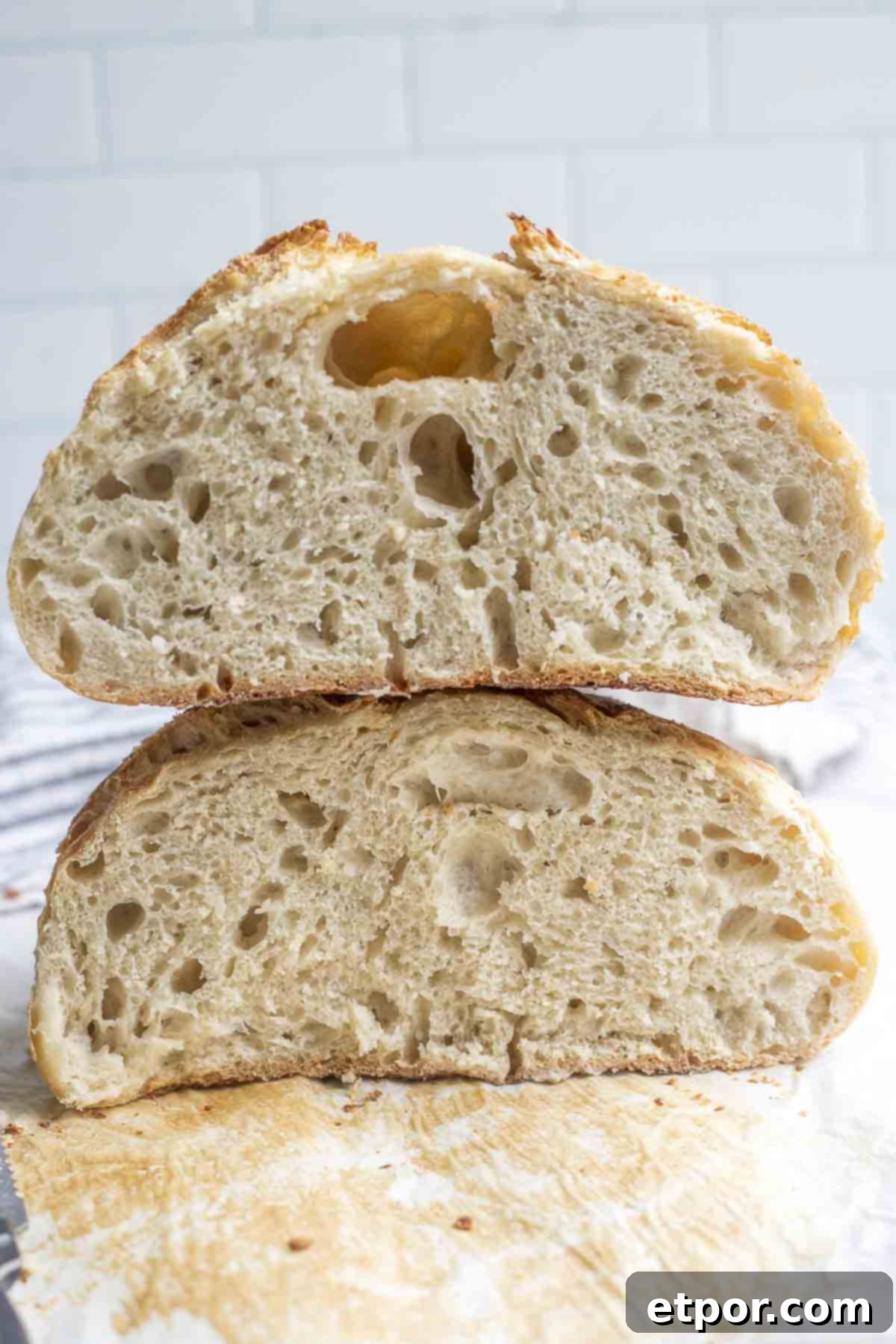
- Unparalleled Ease: This is arguably the simplest sourdough recipe you will ever encounter. Unlike traditional methods, it doesn’t even demand an active, bubbly sourdough starter. By skipping complex steps like kneading, stretching, and folding, it makes sourdough baking accessible and enjoyable for even the most hesitant first-time bakers. It’s truly a game-changer for anyone looking to try sourdough for the first time.
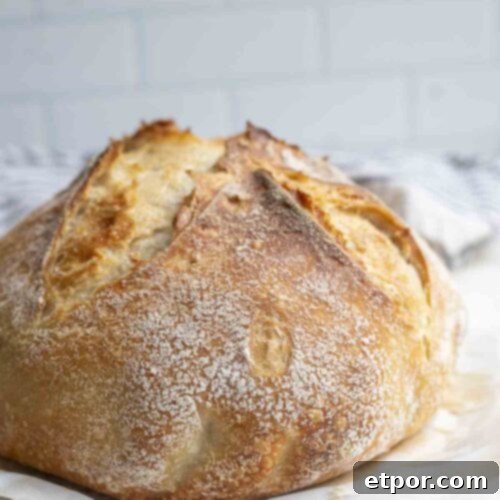
- Incredibly Delicious Results: There’s nothing quite like the taste and aroma of freshly baked, homemade bread straight from your oven. This no-knead sourdough loaf boasts a wonderfully crunchy, crackly crust that yields to a soft, airy interior with a beautiful open crumb. The subtle tang of sourdough combined with the comforting texture makes for an unforgettable baking experience and a truly satisfying treat.
- Remarkably Quick for Sourdough: Say goodbye to multi-day sourdough processes! This is a genuine same-day sourdough bread recipe. All the steps, from mixing to baking, can be completed within a single day without any commercial yeast. You won’t need to spend hours feeding your starter and meticulously timing your dough to its peak activity. This recipe works with an unfed starter, streamlining your baking schedule significantly.
- Perfect for Sourdough Discard: This recipe is a fantastic way to utilize your sourdough discard (unfed starter). Traditional sourdough typically requires a perfectly active and bubbly starter, but this method capitalizes on the still-present wild yeast in your unfed starter. These wild yeasts continue to work their magic, providing an impressive rise and delicious flavor even when not at their peak activity. It’s an efficient and flavorful way to avoid wasting your discard.
- No Preheated Dutch Oven Required: Yes, you read that correctly! One of the most common challenges in sourdough baking is dealing with a scorching hot Dutch oven. This recipe eliminates that step entirely, making it much safer and more convenient. You simply place your dough into a cold Dutch oven, set the temperature, and let the oven gradually heat up, creating the ideal steamy environment for a perfect crust and rise.
What is Sourdough Starter?
At its heart, a sourdough starter is a living culture created by simply mixing flour and water and allowing it to ferment naturally. This fermentation process is driven by wild yeast and beneficial lactic acid bacteria, which are naturally present in our environment and on the flour itself. These microorganisms colonize the flour-and-water mixture, breaking down carbohydrates and producing acids and gases. The sourdough starter then serves as a natural leavening agent for bread, helping it to rise, while also imparting that distinct, complex flavor and aroma. Beyond just leavening, the fermentation process can also improve the digestibility of grains and enhance nutrient availability, making sourdough bread a healthier choice.
Understanding Unfed Sourdough Starter (Discard)
An unfed starter, also widely known as sourdough discard, is simply a sourdough starter that has been fed, risen to its peak activity, and then fallen back down. At this stage, while it might not be as vigorously bubbly as an active starter, it still contains plenty of wild yeast and beneficial bacteria. For this specific recipe, it’s crucial to use a starter that is generally healthy and has been fed somewhat regularly. If your starter has been languishing in the fridge for an extended period, perhaps weeks without a fresh feeding, it’s highly recommended to revive it. Give it a few consistent feedings over a day or two to re-energize its microbial community before attempting this recipe to ensure it has enough strength to leaven your bread properly.
Essential Ingredients for No-Knead Sourdough
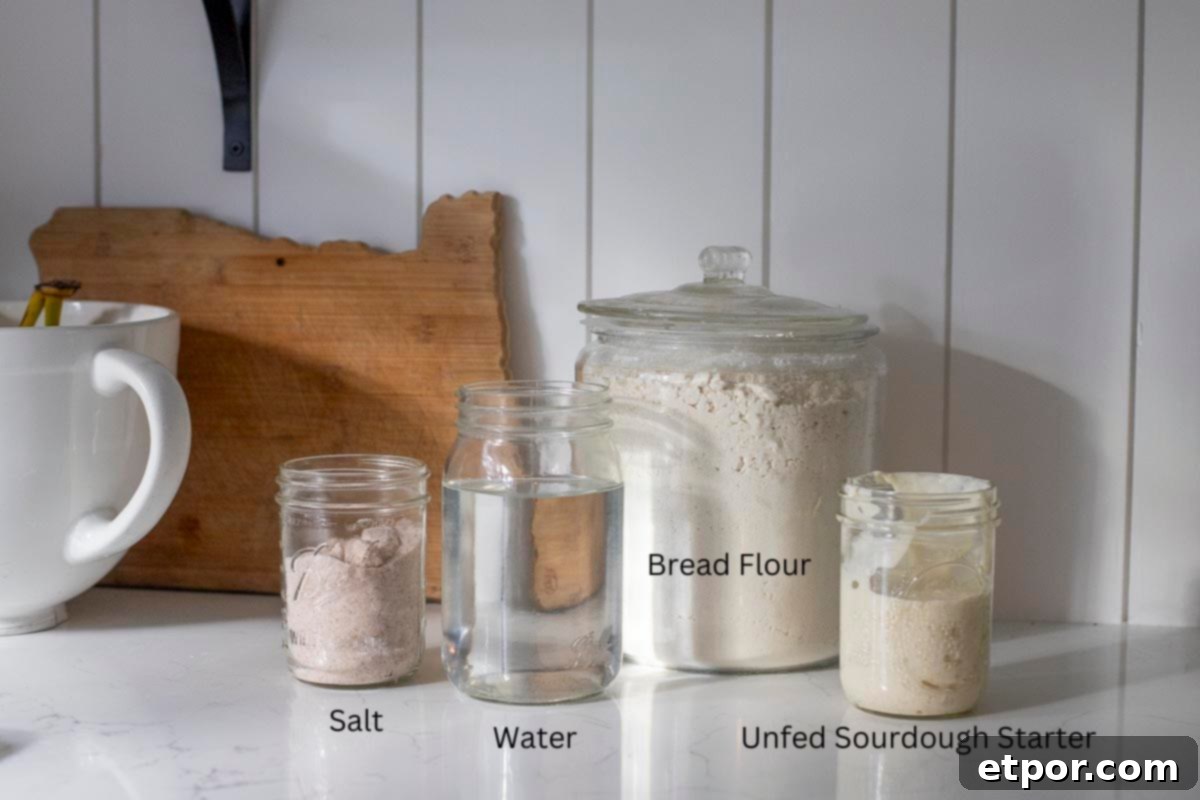
- Unfed Sourdough Starter (Discard): As mentioned, this is the star of our recipe. It needs to be a healthy, established starter that has gone past its peak rise and fallen. You can certainly use a starter that’s been stored in the fridge, provided it received a feeding within the last week or so. If it’s been a longer stretch, give it a couple of feedings at room temperature to wake it up before integrating it into this recipe. This ensures enough activity to achieve a good rise.
- Bread Flour: While you can technically use all-purpose flour for this recipe, bread flour is highly recommended. Its higher protein content contributes to a stronger gluten network, which in turn leads to a more structured loaf with those desirable large, open holes (alveoli) and a chewier texture. If you opt for all-purpose flour, be prepared to slightly reduce the water quantity as it absorbs less liquid than bread flour, or adjust as needed based on dough consistency.
- Water: The hydration level is critical for sourdough. The amount of water will influence the dough’s texture and the final crumb. It’s often adjusted based on your starter’s hydration and the ambient humidity.
- Salt: Essential for flavor, gluten strength, and controlling the fermentation rate. Don’t skip it!
A complete list of all ingredients with precise measurements can be found in the detailed recipe card below.
Recommended Baking Tools
- Kitchen Scale: For unparalleled accuracy in baking, a kitchen scale is indispensable. Measuring ingredients by weight rather than volume ensures consistent results every time, which is particularly important in sourdough where ratios are key.
- Dutch Oven: This is a non-negotiable tool for achieving that characteristic crunchy, crackly crust and excellent oven spring typical of artisan sourdough loaves. The sealed environment of a Dutch oven traps steam, which keeps the dough surface moist during the initial baking phase, allowing it to expand fully before the crust sets. Alternatively, you might use a baking sheet and attempt to create steam by spritzing the tops of the loaves with water multiple times during baking, or by placing a baking dish filled with water on the rack below the bread. *Please note: I have not personally tested the alternative methods, but a Dutch oven guarantees optimal results.
- Razor Blade or Sharp Knife for Scoring (Lame): Scoring the top of your dough before baking isn’t just for aesthetics; it provides a controlled expansion point for the bread in the oven. A sharp blade (or a specialized tool called a lame) creates clean cuts that allow the gases produced during fermentation to escape, resulting in a better rise and a more visually appealing loaf.
- Dough Scraper: This simple tool is incredibly versatile for handling sticky dough, dividing it, and cleaning your work surface efficiently. It makes shaping and transferring the dough much easier without overly sticking to your hands.
- Large Mixing Bowl: You’ll need a spacious bowl to comfortably mix your ingredients and allow the dough ample room to rise during bulk fermentation. I personally love glass bowl sets with lids for their visibility and convenience.
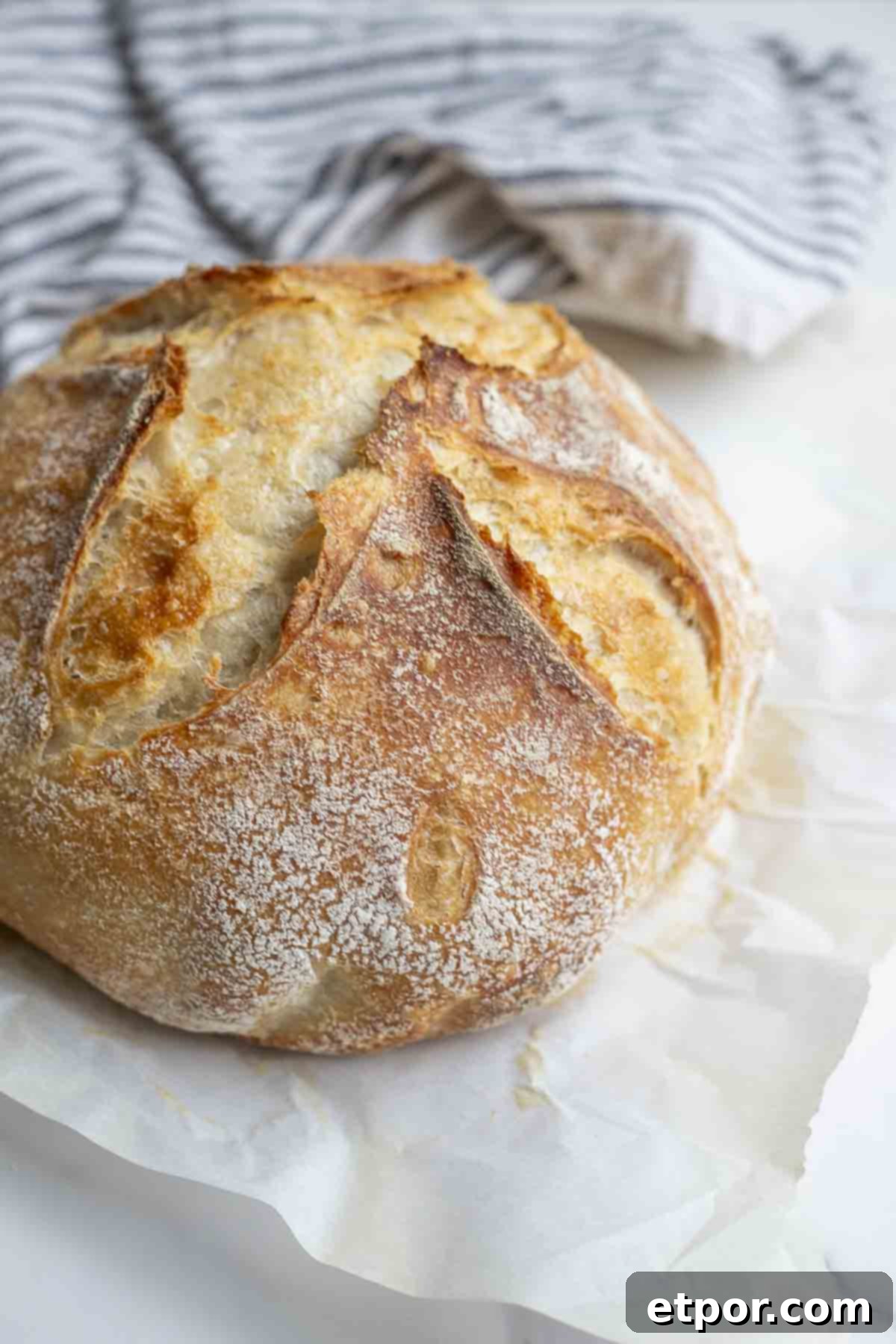
Step-by-Step: How to Make Easy Sourdough Bread with Unfed Starter
Follow these simple steps to create a beautiful, rustic loaf of no-knead sourdough bread using your unfed starter. This straightforward method takes the guesswork out of baking and is perfect for busy schedules.
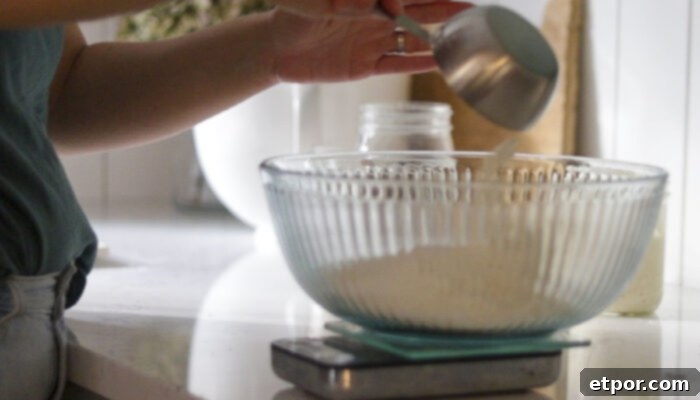
Step 1: Combine All Ingredients. If you’re using a kitchen scale for precise measurements (highly recommended!), place your large mixing bowl directly onto it and zero out the weight. Add all your ingredients – bread flour, unfed sourdough starter, water, and salt – into the bowl. Accuracy at this stage sets the foundation for a successful loaf.
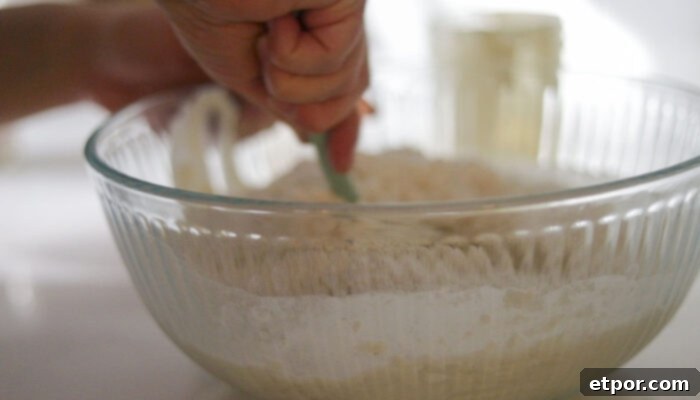
Step 2: Mix Until Just Combined. Using a sturdy spoon, or eventually your hand, mix the ingredients together until all the flour is fully hydrated and no dry spots remain. At first, the dough will appear quite shaggy and feel relatively dry. Don’t worry about it being perfectly smooth; this “no-knead” method relies on time for gluten development. As the dough rests, the flour will absorb the water more thoroughly, and the mixture will become significantly more moist and cohesive.
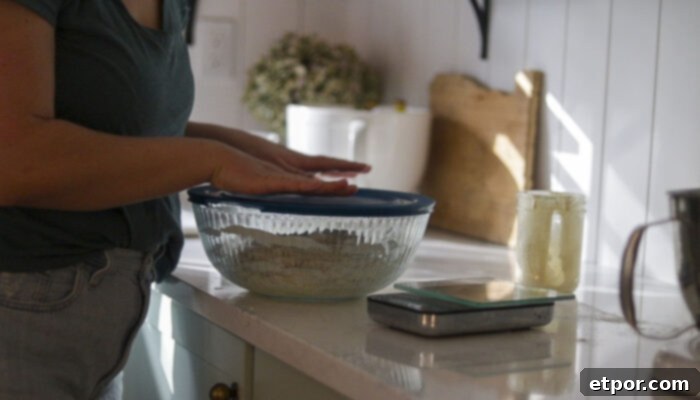
Step 3: Bulk Fermentation (First Rise). Cover the bowl tightly with a lid or plastic wrap to prevent the dough from drying out. Place it in a warm spot in your home – ideally between 70-78°F (21-26°C). Allow the dough to ferment for 6-8 hours, or until it has visibly doubled in size. This crucial first rise is known as bulk fermentation. The exact time required will vary depending on the health and activity of your starter and the ambient temperature of your kitchen; a warmer environment generally speeds up the process.

Step 4: Shape the Dough. Once the dough has doubled, gently transfer it onto a lightly floured surface. Using a dough scraper or your hands, carefully shape the dough into a round ball, or “boule.” To create surface tension, a key for a good rise and shape, gently pull the boule towards you across the countertop, turn it a quarter turn, and repeat this pulling motion several times. This tightens the dough surface, making it easier to handle and contributing to a better oven spring.
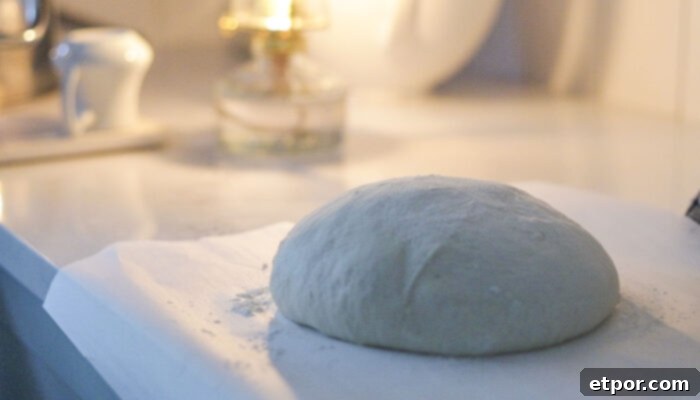
Step 5: Second Rise (Proofing). Carefully transfer the shaped dough onto a piece of parchment paper. This makes it easy to move later. Cover the dough with a clean tea towel to prevent it from drying out. Allow it to rest at room temperature for approximately one hour. For an even better texture and easier scoring, you have the option to cold proof the dough by placing it in the fridge for 12-15 hours (or even up to 5 days). Cold proofing slows fermentation, develops more flavor, and stiffens the dough for cleaner cuts.
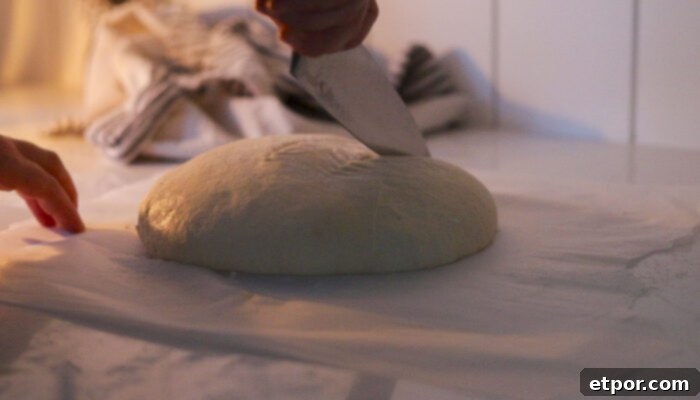
Step 6: Score the Dough. Using a sharp razor blade, a specialized bread lame, or a very sharp knife, make a shallow cut (or a decorative pattern) on the top surface of the dough. Scoring directs the bread’s expansion, preventing uncontrolled cracks and enhancing its visual appeal. For a beautiful contrast, you can lightly dust the top of the loaf with a sprinkle of flour before scoring, which makes the cuts stand out even more after baking.
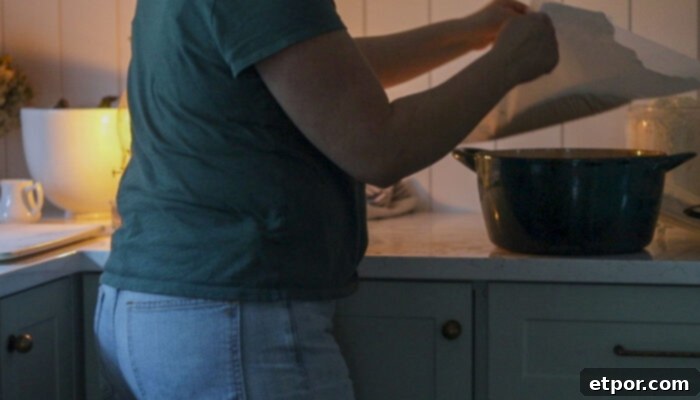
Step 7: Bake in a Cold Dutch Oven. This step is where convenience truly shines! Carefully lift the parchment paper with the dough and place it directly into a cold Dutch oven. Cover with the lid, then place the entire Dutch oven into a cold oven. Set your oven temperature to 425°F (218°C). This method allows the bread to gently heat up with the oven, providing a fantastic initial burst of steam and a more even bake. Bake for 45 minutes with the lid on.
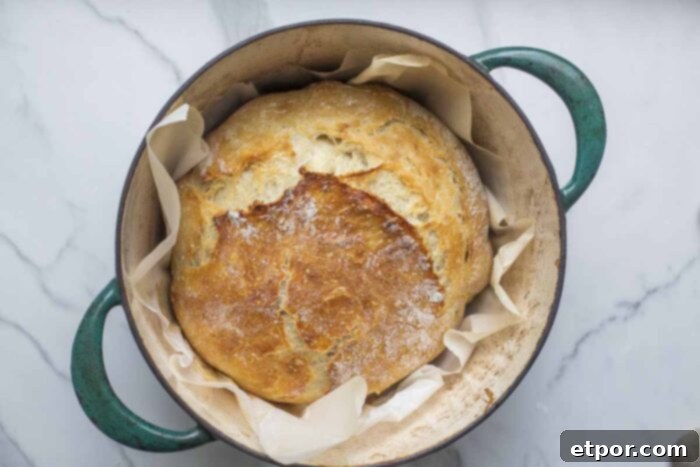
Step 8: Finish Baking and Cool. After 45 minutes, carefully remove the lid from the Dutch oven. This allows the crust to crisp up and develop a beautiful golden-brown color. Continue baking for an additional 10-15 minutes, or until your desired crust color is achieved. Once baked, carefully remove the Dutch oven from the oven. Using the parchment paper, lift the bread out and transfer it to a wire rack. It’s crucial to allow the bread to cool for at least an hour before slicing. This cooling period allows the internal structure to set and prevents a gummy texture, ensuring the best possible eating experience.
Expert Tips for Sourdough Success
- Ensure a Robust Starter: The foundation of this recipe is a healthy, established sourdough starter. A brand-new starter typically lacks the robust microbial activity needed to achieve a good rise. If your starter is new or has been dormant for a long time, feed it consistently for a few days to strengthen it before attempting this bread.
- Adjust Water Content for Environment: The exact amount of water required can fluctuate based on several factors, including the humidity in your environment and the consistency of your unfed starter (some are thicker, some are runnier). Start with the recommended amount and adjust slightly. The dough should feel hydrated but still on the drier side when initially mixed, as it will absorb more moisture during the bulk fermentation.
- Dutch Oven is Key: While it might be tempting to skip it, a Dutch oven is highly recommended for creating that signature crunchy, crackly crust and superior oven spring. The enclosed environment traps steam, crucial for a good rise. If you absolutely must bake without one, you’ll need to actively create steam in your oven (e.g., placing a tray of hot water on a lower rack) and spritzing the bread with water periodically.
- Monitor Fermentation Closely: Pay attention to your dough during the bulk fermentation. Over-fermentation can occur if the dough sits at room temperature for too long, leading to a collapsed loaf with a dense crumb. Look for the dough to approximately double in size. If your kitchen is very warm, the process will be faster.
- Pause with Refrigeration: Life happens! If you need to pause the recipe at any stage after mixing or shaping, you can place the dough in the fridge. Cold temperatures significantly slow down fermentation, giving you flexibility. Just remember to bring it back to a suitable temperature for proofing before baking.
- Mastering Scoring with Cold Proofing: For intricate and beautiful scoring patterns, consider placing your shaped dough in the fridge for a cold proof of 12-15 hours (or even up to 5 days). The cold temperature firms up the dough, allowing for much cleaner and more defined cuts with your razor or lame. While a one-hour room temperature proof works perfectly fine, cold proofing often yields the most aesthetically pleasing results. You can then score and bake directly from the fridge into a cold oven.
- Temperature Affects Rise Time: The speed at which your dough rises is directly influenced by the health of your starter and the ambient temperature. To accelerate the bulk fermentation, place your covered bowl in a warmer spot, such as near a fireplace (but not directly on it!) or in a proofing box. Conversely, a cooler kitchen will extend the rise time.
A Beginner’s Baker’s Timeline
8 AM: Begin by combining all ingredients in a large bowl. Cover the bowl securely and allow the dough to undergo its bulk fermentation (first rise) in a warm place. This process will typically take between 6 to 8 hours, depending on your starter’s activity and ambient temperature, until the dough has roughly doubled in size.
2 PM: Once the dough has sufficiently risen, gently transfer it to a lightly floured surface. Shape it into a neat boule (round loaf) and place it on a piece of parchment paper. Cover with a tea towel and let it rest at room temperature for approximately one hour for a quick second proof.
3 PM: It’s time to prepare for baking! Score the top of your loaf with a sharp blade or lame. Carefully lift the parchment paper with the dough and place it into a cold Dutch oven, then cover with the lid. Place the Dutch oven into a cold oven and set the temperature to 425°F (218°C). The bread will bake as the oven preheats.
5 PM: Your delicious sourdough bread should be ready! Carefully remove the Dutch oven from the oven. Transfer the hot loaf to a wire rack and allow it to cool completely before slicing. This resting period is crucial for the internal structure to set, ensuring a perfect crumb and texture. Enjoy your homemade masterpiece!
Creative Sourdough Bread Variations
This easy no-knead sourdough recipe serves as a fantastic versatile base, inviting you to customize it with an array of delicious additions. The best time to incorporate these extra ingredients is typically during the shaping phase, just before the second rise. Here are some inspiring ideas to elevate your homemade loaf:
- Spicy Cheddar Jalapeño: Fold in diced jalapeños (deseeded for less heat, or left in for more) and generous amounts of shredded sharp cheddar cheese for a savory and slightly spicy kick. This combination is fantastic with chili or soups.
- Nutty & Fruity Delight: Add a mix of your favorite nuts (like walnuts or pecans), dried fruits (such as cranberries, apricots, or figs), and/or seeds (sunflower, pumpkin, sesame) for added texture, flavor, and nutrition. This makes a wonderful breakfast bread.
- Pure Cheese Bliss: Sometimes, simplicity is best. Incorporate only shredded cheese – options like Gruyere, Parmesan, or a robust aged cheddar work beautifully – for a rich, savory loaf that’s perfect with almost any meal.
- Cranberry Walnut Sourdough: A classic pairing! The tartness of dried cranberries perfectly complements the earthy crunch of walnuts, making for a sophisticated and flavorful bread.
- Herb Infusion: Elevate your bread with fresh, aromatic herbs like rosemary, parsley, oregano, or thyme. Chop them finely and mix them in for a fragrant loaf that pairs wonderfully with Italian dishes or roasted meats.
- Mediterranean Olive Bread: For a burst of savory, briny flavor, add sliced or minced olives (Kalamata, green, or a mix) to your dough. A touch of dried oregano or garlic powder can enhance this Mediterranean-inspired variation.
- Sweet Cinnamon Raisin: For a delightful breakfast or snack bread, swirl in cinnamon and plump raisins. You can even add a touch of brown sugar for extra sweetness. This variation is excellent toasted with butter.
Frequently Asked Questions About Sourdough
Yes, in many aspects, sourdough bread is considered healthier than conventional yeast bread. The long fermentation process breaks down gluten and phytic acid, making it easier to digest and allowing your body to absorb more nutrients. It also contains beneficial prebiotics (fiber that feeds good gut bacteria) and can introduce some probiotics (beneficial bacteria) into your diet, supporting a healthier gut microbiome.
For sourdough bread, flours with higher protein content are generally preferred because they develop stronger gluten networks, which are crucial for trapping the gases produced by the starter and achieving a good rise. Bread flour is often considered the best choice for its high protein. All-purpose flour can work, but may yield a slightly less chewy texture and smaller holes. Whole wheat flour adds a richer flavor and more nutrients but can be more challenging to work with due to its increased bran content, often requiring higher hydration.
This particular easy, same-day sourdough bread tends to be less sour compared to traditional sourdough loaves that undergo a much longer, often multi-day, fermentation process. The shorter fermentation time in this recipe means the lactic acid bacteria have less time to produce strong sour notes. If you prefer a more pronounced sour flavor, you can achieve this by extending the cold proofing period in the fridge for the second rise, from 15 hours up to several days (even 5 days is possible!). This extended cold fermentation allows the characteristic sourdough flavors to develop more intensely.
You’ll know your sourdough bread is perfectly baked when its crust achieves a beautiful, deep golden-brown color. For a more precise assessment, use an instant-read thermometer. The internal temperature of the loaf should register between 190-210 degrees Fahrenheit (88-99°C). Additionally, when you tap the bottom of the loaf, it should sound hollow, indicating it’s fully cooked through.
Contrary to a common misconception, you don’t necessarily have to discard your sourdough starter every single time you feed it. However, to maintain a healthy and vibrant starter, it’s generally recommended not to let your volume of starter grow too large. A smaller, more manageable quantity of starter means you’ll use less flour and water for feedings, making it easier to keep it happy and active. Many bakers, including myself, prefer to use their “discard” in a variety of delicious recipes rather than throwing it away, which is precisely what this recipe allows you to do!
Discover More Delicious Sourdough Recipes Here
If you’re eager to continue your sourdough journey and explore other incredible ways to use your starter, especially your discard, check out these popular recipes:
- Sourdough Chocolate Chip Cookies
- Sourdough Pumpkin Pancakes
- Quick Sourdough Discard Pancakes
- Sourdough Apple Muffins with Cinnamon Streusel
- Sourdough Discard Cinnamon Rolls
If you try this easy sourdough bread recipe and absolutely love it, please consider returning to this post to leave a comment and give it a 5-star rating! Your feedback is greatly appreciated. Thank you!
Easy Sourdough Bread Recipe Card
Print
Pin
Rate
SaveSaved!
Save This Recipe
We’ll get it sent to your inbox! Plus, get new recipes from us every week.
Equipment
-
Dutch Oven
-
Kitchen Scale
-
Large Mixing Bowl
-
Dough Scraper
-
Lame or Sharp Knife for scoring
Ingredients
- 500 grams bread flour
- 175 grams unfed sourdough starter
- 300 grams water*
- 10 grams salt
Instructions
-
Prepare Ingredients: Place a large mixing bowl on a kitchen scale (if using) and add all the measured ingredients: bread flour, unfed sourdough starter, water, and salt.
-
Mix and Bulk Ferment: Mix all ingredients thoroughly with a spoon or your hand until no dry flour remains and a shaggy dough forms. Cover the bowl with a lid or plastic wrap and allow it to sit in a warm place (70-78°F / 21-26°C) for 6-8 hours, or until it has noticeably doubled in size. This is the bulk fermentation phase; warmer temperatures will shorten the time.
-
Shape the Dough: Gently transfer the risen dough onto a lightly floured surface. Carefully shape the dough into a tight boule (round loaf). To create good surface tension, pull the dough towards you, turn it a quarter, and repeat this motion until the surface is taut.
-
Second Rise (Proofing): Place the shaped dough onto a piece of parchment paper. Cover it with a clean tea towel and let it rest at room temperature for approximately one hour. For enhanced flavor and easier scoring, you can choose to cold proof it in the fridge for 12-15 hours.
-
Score and Prepare for Baking: Preheat your oven to 425°F (218°C). While the oven preheats, lightly dust the top of your dough with flour (optional) and then score it with a razor blade or sharp knife. Place the parchment paper and dough carefully into a cold Dutch oven, then cover it with the lid.
-
Bake Covered: Place the covered Dutch oven into the preheating oven. Bake for 45 minutes with the lid on. The steam trapped inside will help create a beautiful oven spring and a soft interior.
-
Bake Uncovered & Cool: After 45 minutes, remove the lid from the Dutch oven. Continue baking for another 10-15 minutes, or until the crust is a rich golden brown and sounds hollow when tapped. Carefully remove the bread from the Dutch oven and transfer it to a wire rack to cool completely before slicing and serving. Cooling is essential for proper texture.
Notes
- For successful results, always use a healthy and established sourdough starter. A new starter will not have the necessary strength to leaven the bread effectively in this recipe.
- Be mindful that environmental factors like humidity and room temperature can influence the dough’s consistency and rising time. Adjust water and fermentation time as needed.
- A Dutch oven is highly recommended for achieving the best crust and rise. If you do not have one, you will need to find alternative ways to create steam in your oven (e.g., placing a tray of water on the bottom rack or spritzing the dough) to prevent the crust from hardening too quickly.
- It’s important to monitor the bulk fermentation to prevent over-proofing, which can lead to a dense crumb and a collapsed loaf. Look for the dough to visibly double in size.
- If at any stage you need to delay the process, you can place the covered dough in the refrigerator to slow down fermentation. Just remember to bring it back to room temperature before continuing, or bake directly from the fridge if cold-proofing.
- For more defined and beautiful scoring patterns, consider an overnight cold proof. Place your shaped dough in the fridge for 12-15 hours after shaping. Score the chilled dough just before baking and place it directly into a cold Dutch oven in a cold oven, following the baking instructions.