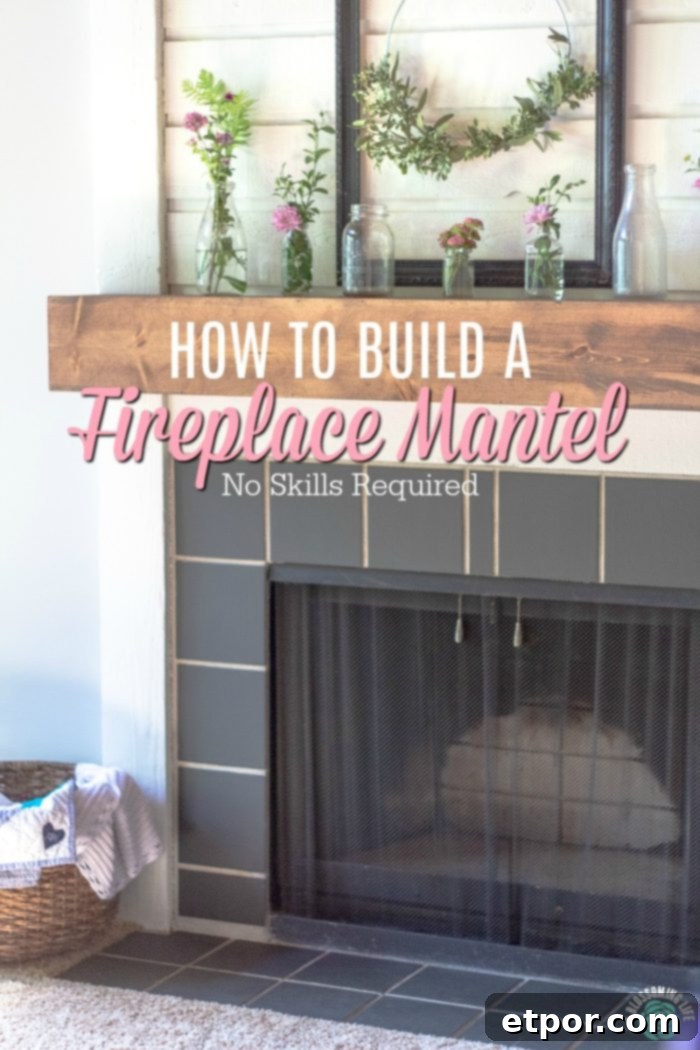
DIY Fireplace Mantel: A Comprehensive Guide to Building a Stunning Custom Wood Shelf
Embark on an exciting home improvement journey with this incredibly straightforward, step-by-step guide on how to build a fireplace mantel. Whether you’re a seasoned DIY enthusiast or picking up a saw for the very first time, this project is designed to be accessible and rewarding. Follow along as we transform your fireplace with a beautiful, custom-built wooden mantel that will elevate the entire aesthetic of your living space.
Table of Contents
Toggle
To build your custom fireplace mantel, you will need the following supplies: a 1×10 (or 1×8) board for the front, top, and bottom sections, a 2×4 for mounting, a nail gun or finishing nails, a drill, screws, a miter saw, a circular saw, wood glue, and your preferred wood stain.
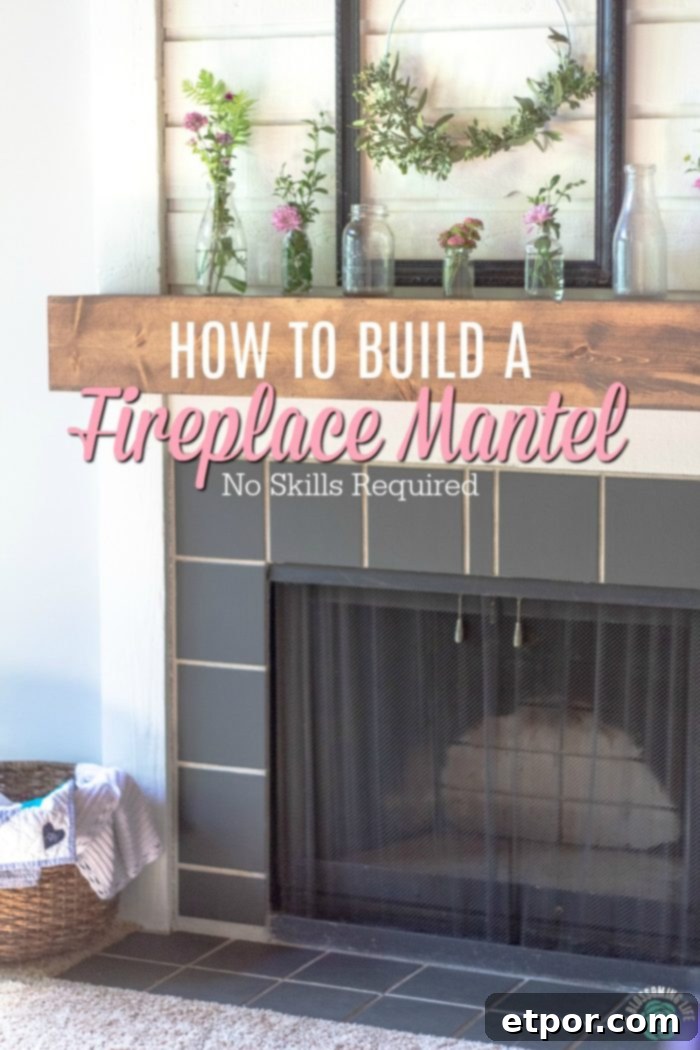
This guide was originally published in July 2018 and updated in July 2019 for clarity and improved instructions.
Every home tells a story, and often, it’s a story of transformation. When we moved into our house, its style didn’t quite align with our vision. But with each thoughtful update, each DIY project, the house has steadily evolved into a place that truly feels like home. The living room, in particular, has been a canvas for our creativity, and seeing it come together piece by piece has been immensely satisfying.
You might recall our dramatic fireplace makeover from a few weeks ago? The transformation was incredible! It’s amazing what a bit of paint and dedicated effort can achieve in revitalizing a central feature of any room. However, even after the fresh paint on the tile and surround, something felt incomplete. The fireplace, while updated, was crying out for a prominent feature – a beautiful, custom fireplace mantel.
Initially, I considered reaching out to friends for assistance, but schedules didn’t align, and some even suggested the task might be more complex than I anticipated. Well, when someone questions my ability to tackle a DIY project, it only fuels my determination. I decided right then and there to build the fireplace mantel myself. Even with some initial hesitation from my supportive husband, he graciously provided the supplies, perhaps also seeing an opportunity to delegate the task! My incredibly helpful friend, Abby, also stepped up to lend a hand, as she always does.
In just about two hours, I went from never having used a saw to successfully constructing this impressive DIY fireplace mantel. This experience truly underscores the power of a determined mindset. No special skills were required, just a healthy dose of stubbornness and a willingness to learn. Now, I’m thrilled to share my journey and teach you how to build a fireplace mantel that will become a cherished focal point in your home.
Essential Fireplace Mantel Building Tips
Before you dive into cutting and assembling, consider these valuable tips to ensure your DIY fireplace mantel project goes smoothly and yields professional-looking results:
- **Measure Twice, Cut Once:** This age-old adage is paramount in woodworking. Double-checking your measurements before making any cuts will save you time, material, and frustration. Precision here is key to a perfectly fitted mantel.
- **Embrace Imperfections and Be Patient:** No two pieces of wood are identical, and no wall is perfectly straight. You might encounter slight variations. Approach the project with patience and be prepared to make minor adjustments. These small challenges are part of the learning process and contribute to the unique character of your custom fireplace mantel.
- **An Extra Set of Hands is Invaluable:** While this project can be tackled solo, having a helper for holding long boards, steadying pieces during nailing, or simply offering a second opinion on measurements can significantly ease the process and enhance accuracy.
- **Adapt to Your Specific Fireplace:** Every fireplace has its own unique dimensions and characteristics. Use this guide as a flexible framework for how to build a fireplace mantel, but remember to tailor all measurements and cuts to your specific fireplace opening and wall structure.
- **Prioritize Safety:** Always wear appropriate safety gear, including eye protection, gloves, and hearing protection, especially when operating power tools. Understand how to use each tool safely before you begin.
- **Choose the Right Wood:** Select lumber that is straight and free of major defects. For a sturdy and beautiful mantel, consider common woods like pine, poplar, or even reclaimed barn wood for a rustic look. The quality of your materials will directly impact the final appearance and durability of your custom mantel shelf.
The following are affiliate links. We are a participant in the Amazon Services LLC Associates Program, an affiliate advertising program designed to provide a means for us to earn fees by linking to Amazon.com and affiliated sites.
DIY Fireplace Mantel Supplies & Tools Checklist:
Gathering all your materials and tools before you begin will make the entire process more efficient. Here’s a detailed list of what you’ll need to build your custom fireplace mantel:
- Wood Boards:
- 3 – 1×10 boards (for the front, top, and bottom of the mantel). While 1x10s were used in this tutorial, if starting fresh, you might consider a 1×10 for the front facade and 1x8s for the top and bottom to create a slightly shallower, more streamlined mantel shelf. Always choose straight boards with minimal knots or warping.
- Mounting Support:
- 1 – 2×4 board, cut slightly shorter than the overall length of your finished fireplace mantel. This will serve as your hidden mounting cleat, providing robust support for your mantel.
- Fastening Tools:
- Wood Glue: Essential for creating strong, durable joints between your mantel pieces.
- Nail Gun: A pneumatic or electric nail gun will make assembly quick and secure. Alternatively, you can use finishing nails and a hammer for a more traditional approach.
- Drill and Wood Screws: Needed for attaching the mounting cleat to the wall and securing the mantel to the cleat. Ensure your screws are long enough to penetrate both the mantel and the 2×4 cleat firmly.
- Cutting Tools:
- Miter Saw (we have one like this): Ideal for making precise crosscuts, especially for squaring off your board ends and for any angled cuts if your design requires them.
- Circular Saw: Excellent for making longer, straight cuts, such as ripping boards to width or trimming length if a miter saw isn’t sufficient for the width.
- Finishing Materials:
- Wood Stain: Choose a color that complements your existing décor or desired aesthetic.
- Sandpaper: Various grits (e.g., 150-180 for initial sanding, finer grits for a smoother finish) for preparing the wood for staining.
- Optional: Wood veneer overlay (if you choose to cover end seams).
- Optional: Wood filler (for small gaps or nail holes).
- Measuring & Marking Tools:
- Tape Measure
- Pencil
- Speed Square or Combination Square: For marking precise lines and ensuring square cuts.
- Level: Crucial for ensuring your mounting cleat and finished mantel are perfectly horizontal.
- Stud Finder: To locate wall studs for secure mounting of the 2×4 cleat.
More Home Decor & DIY Project Ideas
If you’re feeling inspired by this fireplace mantel project, check out some of these other fantastic DIY home decor ideas to continue personalizing your space:
- Farmhouse Girl’s Room Reveal for less than $100
- Quick Entryway Refresh – Complete with a helpful video tutorial
- Stunning Kitchen Renovation Reveal
- Open Shelves and How To Style Them for Maximum Impact
- Easy DIY Blanket Ladder – A Simple Home Decor Project that adds warmth and texture
How to Build a Custom Fireplace Mantel: Step-by-Step Instructions
While some of the original photos were captured with a less-than-perfect phone camera, the core concept and techniques for building this fireplace mantel remain crystal clear. Follow these detailed instructions to craft your own beautiful and functional custom mantel shelf.
Step 1: Precise Measurement and Cutting of Fireplace Mantel Wood.
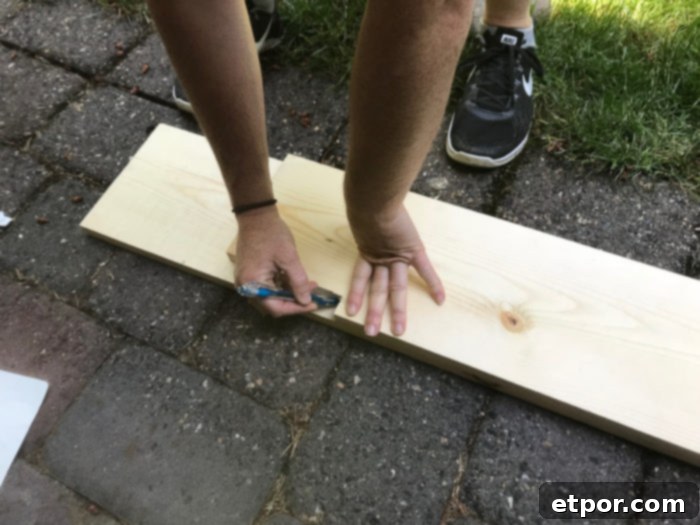
- Determine Desired Length: Begin by carefully measuring the width of your fireplace opening and deciding how far you want your mantel to extend beyond it on each side. A common aesthetic choice is to extend it 6-12 inches on either side, but this is entirely up to your preference and the scale of your room. Mark this total desired length.
- Cut Your Main Boards: Using your miter saw or circular saw, cut your three 1×10 boards (or chosen dimensions) to the exact length determined in the previous step. Remember the golden rule: “measure twice, cut once” – this precision is critical for a professional finish.
- Account for Fireplace Irregularities (if needed): Some fireplaces may have existing trim or brickwork that protrudes slightly. If your fireplace has such features, you may need to cut small notches into the back edge of your mantel’s top and bottom pieces to ensure a flush fit against the wall. This can be done carefully with a jigsaw or even by hand with a coping saw.
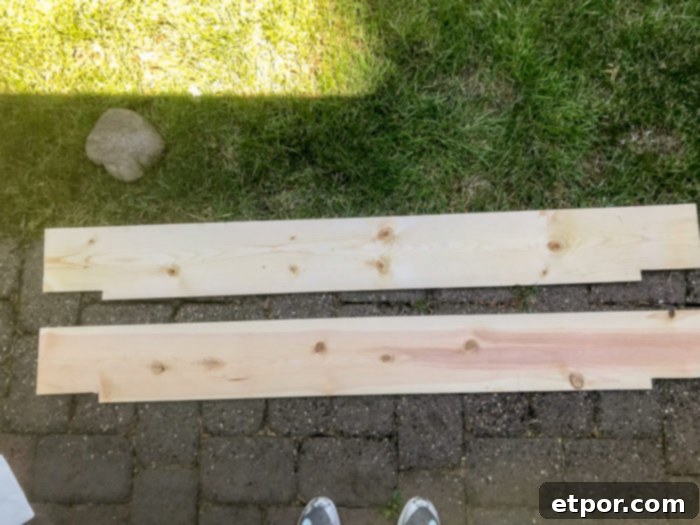
Step 2: Securely Joining the Mantel Boards
Now that your boards are cut, it’s time to begin assembling the main structure of your custom fireplace mantel. This step involves creating the foundational ‘L’ shape that will form the front and bottom of your mantel.
- Prepare for Assembly: Lay one of your cut boards flat on a stable workbench or floor. This will typically be your bottom mantel piece. Take the second cut board, which will be the front face of your mantel, and align it perpendicularly along the long edge of the bottom piece.
- Ensure Flush Alignment: Carefully line up the ends of both boards, ensuring they are perfectly flush. Use a speed square to check for a true 90-degree angle. This meticulous alignment is crucial for a clean, professional appearance.
- Apply Wood Glue: Before fastening, apply a generous but even bead of wood glue along the edge of the front board where it will meet the bottom board. Wood glue provides significantly more strength and durability to the joint than nails alone, preventing separation over time.
- Nail into Place: Once the glue is applied and the boards are perfectly aligned, use your nail gun (or finishing nails and hammer) to secure the front board to the bottom board. Drive nails every 6-8 inches along the joint, ensuring they penetrate both pieces of wood. Wipe away any excess glue that squeezes out immediately with a damp cloth, as dried glue can prevent stain from absorbing evenly.
Step 3: Crafting and Attaching the End Pieces
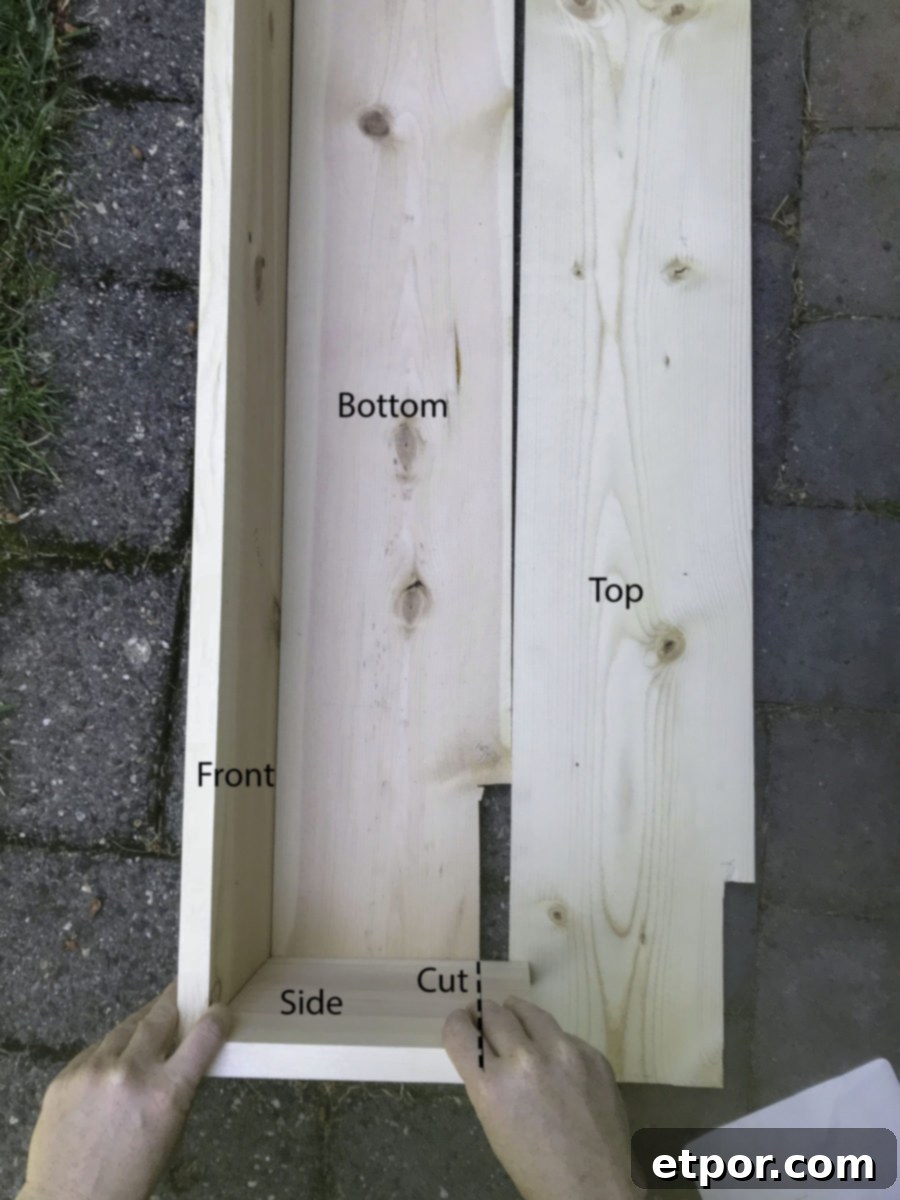
This step requires careful measurement and cutting to create the side caps for your fireplace mantel, ensuring a neatly finished look and added structural integrity. The goal is to create end pieces that fit snugly inside the assembled ‘L’ shape.
- Measure Internal Width: With the front and bottom pieces joined, measure the exact internal width of the mantel opening at both ends. This measurement is critical for your end pieces to fit perfectly. It’s often the thickness of your chosen wood (e.g., if using 1×10, the actual thickness is closer to 0.75 inches).
- Cut End Pieces: Using some scrap material from your 1x10s (or a new piece if needed), cut two pieces of wood to the exact width you just measured. The height of these end pieces should match the height of your front mantel board.
- Ensure Perfect Fit: A perfectly straight cut and fit here is essential. These end pieces will not only cap off the sides but also provide crucial support for the top mantel board, ensuring it lays nice and flush. Test the fit of each end piece before fastening. If needed, a light sanding can help achieve a snug fit.
- Attach End Pieces: Apply wood glue to the edges of the end pieces that will contact the front and bottom mantel boards. Then, using your nail gun, secure them in place from the front and bottom.
Step 4: Securing the Top Mantel Piece
With the main box structure of your DIY fireplace mantel complete, it’s time to add the final piece of wood that creates the actual mantel shelf.
- Position the Top Board: Take your last 1×10 board (the top piece of your mantel) and carefully align it on top of the assembled structure. Ensure that it overhangs evenly on the front and sides, or aligns perfectly if you prefer a flush look. The end pieces you just installed will provide crucial support for this step, keeping the top board stable.
- Apply Wood Glue: Before nailing, apply wood glue along the top edges of the front board and the two end pieces. This will create a robust bond, preventing any future movement or separation.
- Secure with Nails: Once the top piece is perfectly positioned, use your nail gun to fasten it securely. Drive nails along the front edge, into the front board, and along the side edges, into the end pieces. Space the nails approximately every 8-10 inches. For added strength, you can also drive a few nails down through the top piece into the interior structure. Again, wipe away any excess glue immediately.
Step 5: Performing a Dry Fit for Perfect Alignment
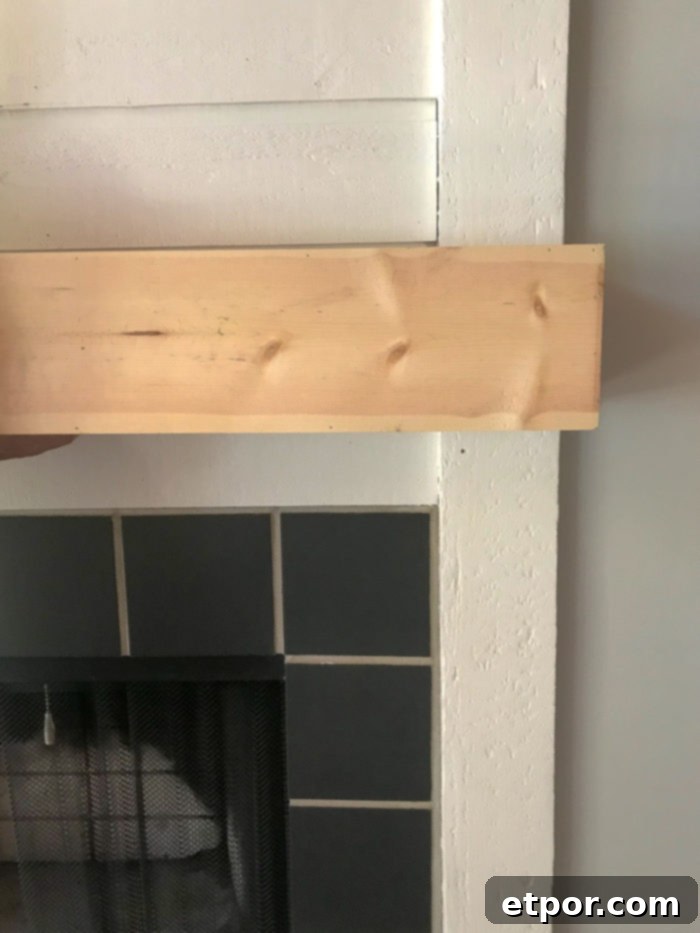
Before you commit to sanding and staining your beautiful new fireplace mantel, it’s absolutely crucial to perform a “dry fit.” This step allows you to test the mantel’s fit on your fireplace without making any permanent changes to its finish, giving you an opportunity to make necessary adjustments.
- Carefully Position the Mantel: With a helper, gently lift your assembled mantel and place it onto your fireplace. Position it exactly where you intend for it to be permanently installed.
- Check for Fit and Level: Observe how the mantel sits against the wall and over the fireplace opening. Look for any gaps, unevenness, or areas where it doesn’t sit flush. Use a level to ensure the mantel is perfectly horizontal.
- Identify and Mark Adjustments: If you notice any issues – perhaps a section of the wall isn’t perfectly flat, or your initial measurements were slightly off – carefully mark these areas on the back or bottom of the mantel. This could involve needing to sand down a high spot, add a shim, or make a slight trim.
- Make Necessary Corrections: Remove the mantel and make any adjustments. It’s much easier to fix these issues now than after the staining process. This dry fit step is a vital part of building a truly custom fireplace mantel that looks like it was always meant to be there.
Step 6: Sanding and Staining Your Custom Mantel
With the structure of your DIY fireplace mantel complete and its fit confirmed, it’s time to bring out the beauty of the wood through sanding and staining.
- Prepare for Finishing: Ensure your mantel is free of any glue residue (which can prevent stain absorption) and dust. Use wood filler to patch any nail holes or small gaps, allowing it to dry completely before sanding.
- Initial Sanding: Begin by giving the entire mantel a thorough sanding with 150-180 grit sandpaper. This step smooths out any rough edges, removes pencil marks, and prepares the wood surface for an even stain application. Work with the grain of the wood for the best results. A random orbital sander can make this process quicker and more efficient.
- Refine the Surface: For an even smoother finish, consider moving to a finer grit sandpaper (e.g., 220 grit) after the initial sanding. This will further refine the wood and allow the stain to penetrate more uniformly, resulting in a richer color.
- Choose Your Stain: Select a wood stain color that complements your home’s existing decor. Whether you prefer a rich dark walnut, a light oak, or a rustic gray, test the stain on a scrap piece of the same wood to ensure you like the color before applying it to your mantel.
- Apply the Stain: Following the manufacturer’s instructions, apply the stain evenly with a brush or cloth. Allow it to penetrate for the recommended time, then wipe off any excess. You may apply multiple coats to achieve a deeper color. Allow the stain to dry completely according to product guidelines, which can take several hours or even a full day.
- Achieve a Rustic Look (Optional): If you’re aiming for a rustic fireplace mantel or the coveted reclaimed wood aesthetic, you can “distress” the wood before staining. This involves gently banging it with a hammer, dragging chains across it, or adding a few strategic nail holes to create an aged, worn appearance. Apply your chosen stain after distressing to highlight these unique textures.
- Apply a Protective Topcoat (Recommended): Once the stain is fully dry, apply a clear protective topcoat (like polyurethane, lacquer, or a wax finish). This will protect your mantel from scratches, moisture, and UV damage, ensuring its beauty lasts for years. Follow the product instructions for application and drying times.
Step 7 (Optional): Concealing the Mantel Seams for a Flawless Look
While the internal structure of your custom fireplace mantel is solid, you might notice the visible end grain or seams where the side pieces meet the front and top boards. If you desire a truly seamless, solid wood appearance, this optional step can elevate your mantel’s finish.
To achieve this, you could use a thin wood veneer overlay. This involves cutting pieces of veneer to precisely match the dimensions of your mantel’s ends and applying them with wood glue. Once the veneer is firmly adhered, you would then sand and stain it along with the rest of the mantel. This technique creates the illusion of a single, solid piece of timber, enhancing the high-end look of your custom mantel shelf. While I personally skipped this step due to time constraints, it’s a fantastic option for those seeking ultimate perfection in their DIY fireplace mantel.
Step 8: Installing Your DIY Fireplace Mantel
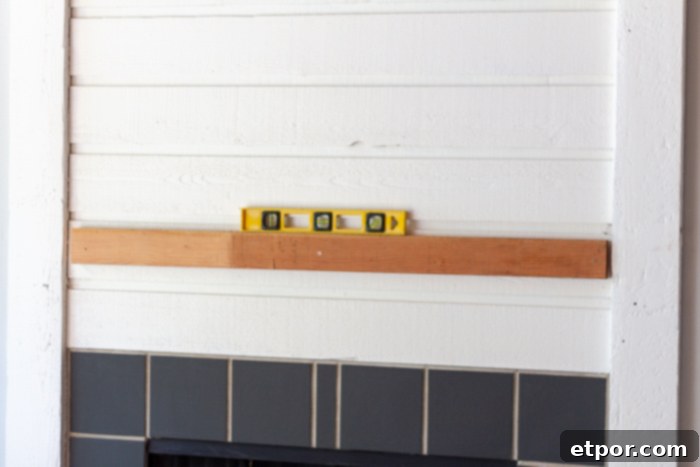
This final step is about securely mounting your beautifully crafted DIY fireplace mantel to the wall. Using a hidden 2×4 cleat provides strong support and a clean, floating look.
- Prepare the Mounting Cleat: As noted in the supplies, you’ll need a 2×4 board cut slightly shorter than the overall length of your finished mantel. This cleat will act as the hidden support system.
- Locate Wall Studs: Using a reliable stud finder, carefully locate the wall studs above your fireplace where the mantel will be installed. Mark the center of each stud. Mounting your 2×4 cleat into studs is critical for a secure and load-bearing installation.
- Determine Mantel Height: Decide on the desired height for your mantel. Remember that the top of your mantel will sit approximately an inch *above* the top edge of your 2×4 cleat (depending on the thickness of your mantel’s top board). Mark a level line across the wall where the *top* of your 2×4 cleat will sit, ensuring it’s perfectly level using a long level.
- Attach the 2×4 Cleat: Hold the 2×4 cleat along your marked level line. Using your drill and long wood screws (ensure they are long enough to penetrate the 2×4 and firmly anchor into the studs), screw the 2×4 cleat into the wall studs. Drive at least two screws into each stud for maximum stability. Make sure the cleat is securely fastened and perfectly level.
- Mount the Mantel: With a helper, carefully lift your finished mantel and slide it over the installed 2×4 cleat. The hollow back of your mantel should fit snugly around the cleat, allowing the mantel to rest firmly on top of it.
- Secure the Mantel to the Cleat: From the top surface of your mantel, drill pilot holes and then drive screws down through the top board and into the 2×4 cleat. Use at least 3-4 screws spaced evenly along the length of the mantel. These screws will prevent the mantel from shifting or lifting off the cleat.
- Optional: Additional Bottom Support: For extra peace of mind, especially if you plan to place heavy items on your mantel, you can also drive a few screws from the bottom of the mantel directly into the wall, ideally into studs if accessible. While the 2×4 cleat provides excellent support, this can add an extra layer of stability. Cover any exposed screw heads with wood filler and touch up with stain if needed. Ta daaa! Your custom fireplace mantel is now complete and securely installed.
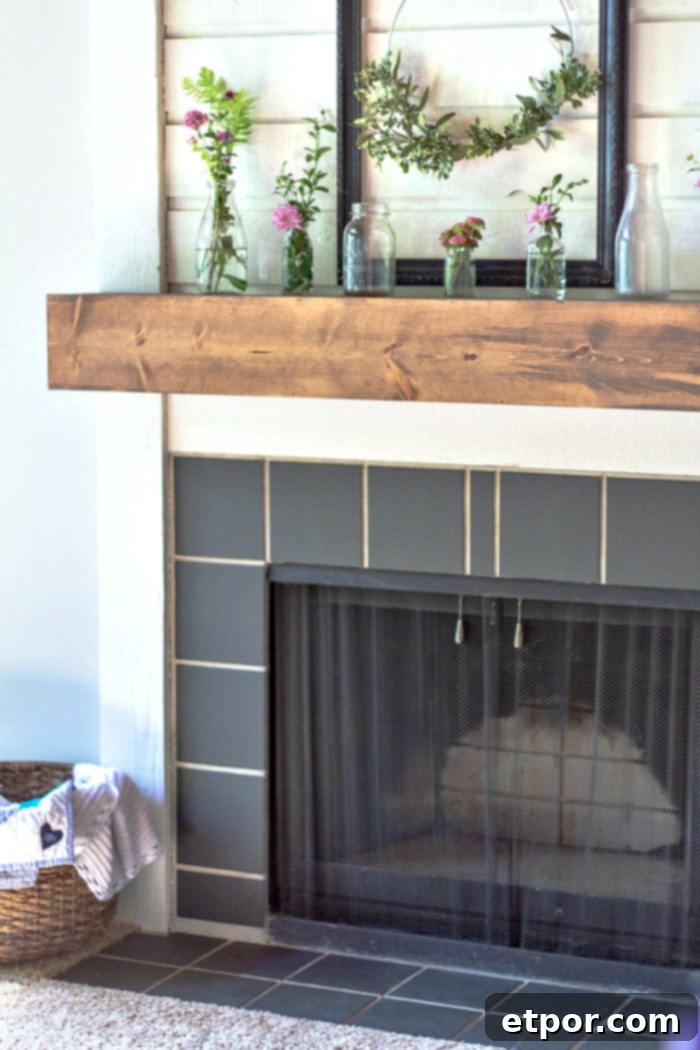
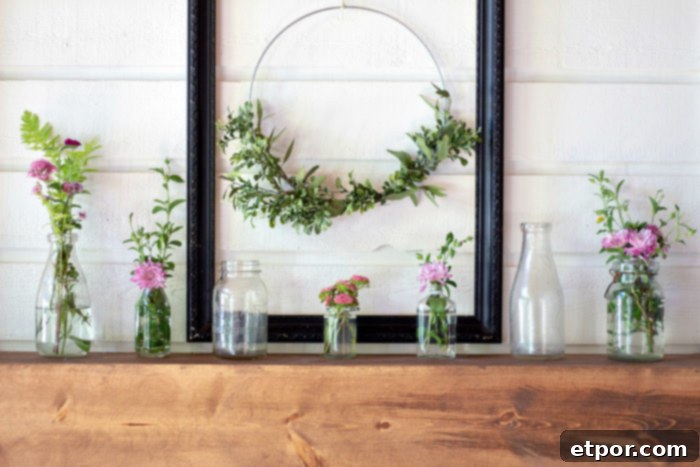
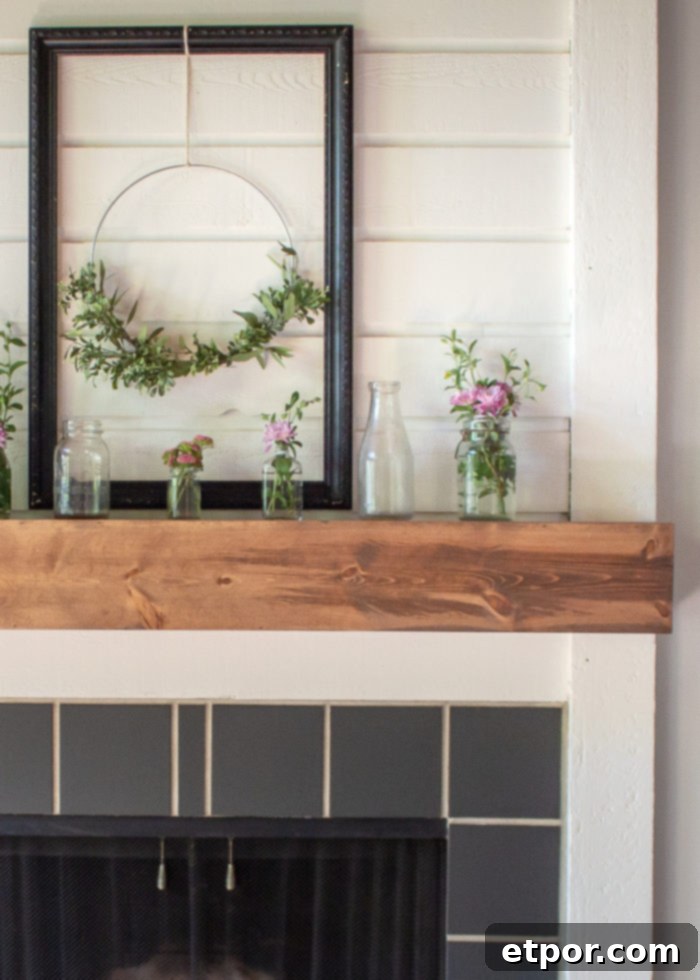
Decorate and Enjoy Your New Fireplace Mantel: The most exciting part comes next – styling your new custom mantel! I initially adorned mine with a curated collection of antique glass bottles and a charming DIY minimal wreath. However, the beauty of a mantel is its versatility; it’s a dynamic space that can evolve with the seasons, holidays, and your personal style. Feel free to experiment with artwork, photographs, candles, plants, or cherished mementos to make it uniquely yours.
The addition of this DIY fireplace mantel has profoundly changed the character of our living room, transforming it into a warmer, more inviting space. It truly anchors the room and offers a focal point that feels perfectly suited to our home’s updated aesthetic. The satisfaction of building something with your own hands is immense, and seeing the positive impact on your living environment is incredibly rewarding. Now, if only we could find the time and energy to finish painting the rest of the room – perhaps next weekend!
Are you ready to take on the challenge and build your own impressive DIY fireplace mantel? We believe you absolutely can!