Unlock Your Green Thumb: The Ultimate DIY Gardening Calendar and Resource Guide for Beginners
Embarking on a gardening journey is an incredibly rewarding experience, especially when it’s your very first “real” garden! The excitement of cultivating your own food, watching tiny seeds sprout into thriving plants, and eventually harvesting nature’s bounty is unparalleled. We were incredibly fortunate to acquire a home that already boasted a fantastic, established garden. It came complete with sturdy raised beds, three mature apple trees, a thriving fig tree, robust blueberry bushes, and an abundance of strawberries. This head start has been a dream, giving us a magnificent foundation to build upon. Now, the delightful challenge lies in carefully selecting, planting, and nurturing the additional fruits and vegetables we’ve chosen to grow this season.
Plan Your Dream Garden: A Strategic Approach
Successful gardening begins long before you even touch a seed. Careful planning is the cornerstone of a bountiful harvest. The first crucial step is to decide what you genuinely want to grow. Think about your favorite fruits and vegetables – what do you and your family enjoy eating most? This personal preference will be a great motivator. Once you have a wish list, research is key. You’ll need to determine which of these plants thrive in your specific climate and soil conditions. Factors like your USDA Hardiness Zone, average last frost date, and typical summer temperatures will all influence plant selection. For invaluable regional insights and time-tested gardening wisdom, the Farmer’s Almanac has consistently proven to be an indispensable resource in my planning process.
Equally important is assessing the space you have available. Do you have a large yard, or are you working with a small balcony? Understanding your limitations and potential will help you make realistic choices. If you’re utilizing raised beds, as we are, consider their dimensions and how many plants can comfortably fit without overcrowding. For seeds, I highly recommend investing in high-quality, non-GMO seeds. This ensures you’re starting with strong genetic material and avoiding genetically modified organisms. I personally source my non-GMO seeds from Baker’s Creek, a reputable supplier known for their diverse and heirloom varieties.
Cultivating Success: Understanding Your Garden Space
Before any digging begins, take the time to truly get to know your garden plot. Observe the sunlight patterns throughout the day. Most vegetables and fruits require at least 6-8 hours of direct sunlight daily. Map out which areas receive full sun, partial sun, or shade. This will dictate where certain plants will flourish. Next, consider your soil. Is it sandy, clay, or loamy? A simple soil test can reveal its composition and nutrient levels, allowing you to amend it appropriately with compost or other organic matter to create the ideal growing environment. Good drainage is also vital; waterlogged roots are a common killer of young plants.
Think about water access. Is there a water spigot nearby, or will you need to run long hoses or set up a rain barrel? Planning your irrigation system, whether it’s simple hand-watering or a drip system, will save you a lot of effort down the line. Finally, consider protection from pests and wildlife. Will you need fencing to keep out deer or rabbits? Are there common insect pests in your area that you need to prepare for? Proactive measures can prevent heartbreak later in the season.
The Power of a DIY Gardening Calendar
One of the most valuable tools for any gardener, especially a beginner, is a personalized gardening calendar. This isn’t just a pretty document; it’s a roadmap to success, helping you stay organized, prevent missed planting windows, and anticipate future tasks. Without a calendar, it’s easy to get overwhelmed by all the different timing requirements for various plants – when to start seeds indoors, when to transplant seedlings, when to direct sow, and when to expect harvests. A DIY calendar brings clarity and control to what can otherwise seem like a chaotic process, ensuring your precious seeds and seedlings get the best possible start and continue to thrive throughout the growing season.
Crafting Your Personalized Planting Schedule
To create your own effective gardening calendar, start by pinpointing the specific seed starting dates for your geographical region. This information is critical and can vary significantly even within a short distance due to microclimates and USDA zones. A reliable source for this data is often found on sites like the Farmer’s Almanac planting dates guide, where you can typically input your zip code for tailored results. Once you have this foundational information, gather all the seed packets for the plants you plan to grow. Each packet contains vital instructions regarding optimal planting times, whether seeds should be started indoors or directly sown outdoors, germination times, and days to maturity.
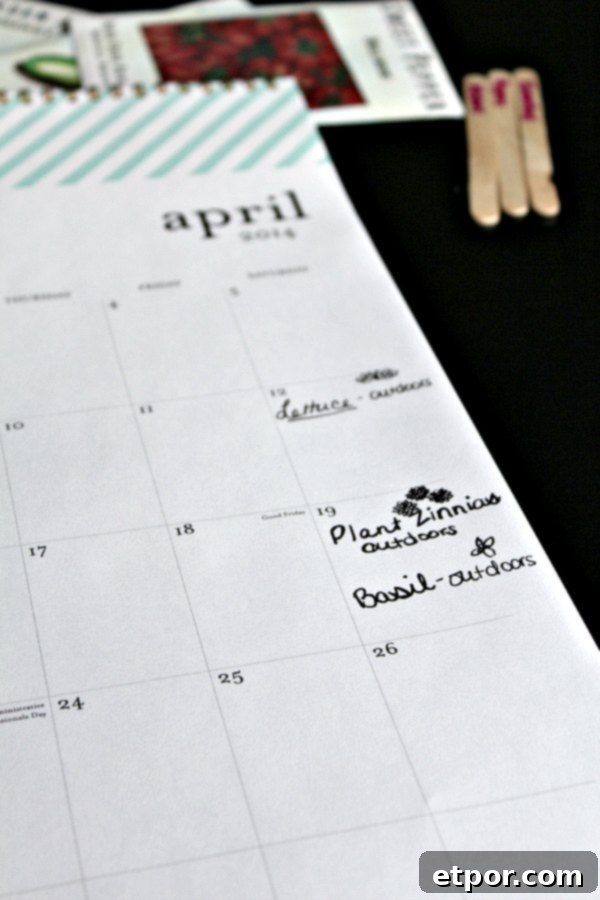
As I gathered this information for my own garden, I meticulously wrote down the recommended dates for each specific seed. Then, using a physical calendar (a simple wall calendar or a dedicated gardening planner works perfectly), I began transferring these dates. This involved factoring in whether seeds needed to be started indoors several weeks before the last frost, or if they could be directly sown after the danger of frost had passed. I also considered my own personal schedule, adjusting dates slightly to accommodate busy weekends or travel plans. This personalization is key; your calendar should work for *you*. On the calendar, I marked not just the “start seed” date, but also tentative transplanting dates and even projected harvest windows. This holistic approach makes the calendar a truly comprehensive tool.
Essential Information for Your Calendar
Beyond just planting dates, a truly effective gardening calendar can incorporate a wealth of other useful information. Consider adding notes about:
- **Last Frost Date & First Frost Date:** These are critical benchmarks for your region.
- **Soil Preparation:** Reminders for when to amend your soil with compost or fertilizer.
- **Fertilizing Schedule:** When to feed your growing plants to ensure optimal nutrient intake.
- **Pest & Disease Checks:** Regular intervals for inspecting your plants for common issues.
- **Harvest Windows:** Estimated dates for when you can expect to enjoy your bounty.
- **Crop Rotation Notes:** If you plan for future seasons, note where different plant families were grown to aid in future rotation.
- **Watering Reminders:** Especially during dry spells or for plants with specific hydration needs.
- **Tool Maintenance:** A quick reminder to clean and sharpen tools at the end of the season.
Whether you opt for a beautifully illustrated physical calendar, a simple spreadsheet, or a digital app, the goal is the same: to create an organized, easy-to-follow guide that empowers you to manage your garden with confidence and joy. My completed calendar, for instance, is not only functional but also visually appealing, motivating me to stay on track. It tells me exactly what seeds need my attention next, eliminating guesswork and stress. What wonderful varieties are you excited to cultivate in your garden this year?
Beyond the Calendar: Nurturing Your Garden to Thrive
While a gardening calendar is an indispensable organizational tool, truly successful gardening involves understanding and implementing ongoing care throughout the growing season. Here are some fundamental aspects to master as a beginner:
Healthy Soil: The Foundation of Success
Your soil is the lifeblood of your garden. Healthy soil teems with beneficial microorganisms and provides essential nutrients for your plants. Regular amendments with organic matter, such as compost, well-rotted manure, or leaf mold, can dramatically improve soil structure, water retention, and fertility. Avoid chemical fertilizers where possible, opting for organic alternatives that feed the soil, not just the plant. Mulching around your plants with straw, wood chips, or shredded leaves also helps to retain soil moisture, suppress weeds, and regulate soil temperature.
Watering Wisely: Keeping Your Plants Hydrated
Proper watering is critical, but it’s often misunderstood. The key is to water deeply and infrequently, rather than lightly and often. Deep watering encourages roots to grow deeper, making plants more resilient to dry spells. Aim to water the soil directly at the base of the plant, avoiding wetting the foliage, which can encourage fungal diseases. The best time to water is usually early morning, reducing evaporation and allowing plants to absorb moisture before the heat of the day. Always check soil moisture before watering; stick your finger a couple of inches into the soil – if it feels dry, it’s time to water.
Managing Pests and Diseases Naturally
Every garden will encounter pests and diseases, but organic gardening offers sustainable solutions. Prevention is the best defense: choose resistant varieties, ensure good air circulation between plants, and maintain healthy soil. Introduce beneficial insects like ladybugs and lacewings, which prey on common pests. Companion planting, where certain plants deter pests from others, can also be highly effective. For outbreaks, consider organic pest control methods like neem oil, insecticidal soap, or hand-picking larger pests. Promptly remove any diseased plant parts to prevent spread.
Essential Tools for Every Beginner Gardener
You don’t need a shed full of equipment to start gardening, but a few key tools will make the job much easier:
- **Hand Trowel:** For planting seedlings and small digging tasks.
- **Hand Cultivator/Weeder:** To loosen soil and remove weeds.
- **Gloves:** Protect your hands from thorns, dirt, and blisters.
- **Watering Can or Hose with a Gentle Sprayer:** For precise watering.
- **Pruning Shears:** For deadheading, trimming, and harvesting.
- **Garden Fork or Shovel:** For turning soil and larger digging jobs.
- **Wheelbarrow or Garden Cart:** Invaluable for moving soil, compost, or harvested produce.
Investing in good quality tools will ensure they last and make your gardening tasks more enjoyable.
Comprehensive Gardening Resources for Beginners
Learning to garden is an ongoing process, and thankfully, there’s a wealth of information available to help you every step of the way. Beyond your DIY calendar, here are some excellent resources and topics to explore:
- **Spring Planting Dates by Region:** A vital tool for timing your planting just right.
- **Seed Starting Guides:** Look for resources like “14 Tips to Start Seeds: Organic Gardening” to learn best practices for giving your seeds the best start, whether indoors under grow lights or directly in the garden bed.
- **Vegetable Garden Planning for Beginners:** Comprehensive guides covering everything from site selection to crop rotation.
- **Fruit Gardening Basics:** Specific advice for cultivating berries, tree fruits, and other perennial edibles.
- **Local Extension Offices:** These government-funded programs often provide free or low-cost advice, workshops, and soil testing services tailored to your specific region.
- **Community Gardens and Gardening Clubs:** Connecting with experienced gardeners in your area can provide invaluable hands-on tips and foster a sense of community.
- **Online Forums and Social Media Groups:** Platforms dedicated to gardening allow you to ask questions, share experiences, and learn from a global community of enthusiasts.
- **Gardening Books and Magazines:** Classic resources that offer in-depth knowledge on various aspects of gardening, from organic practices to specific plant care.
Start Your Gardening Adventure Today!
Gardening is a journey of discovery, patience, and immense satisfaction. By taking the time to plan with a DIY gardening calendar, understanding your specific environment, and utilizing the wealth of resources available, you’re setting yourself up for incredible success. The joy of harvesting your first ripe tomato or a handful of fresh herbs you’ve grown yourself is truly unforgettable. Don’t be afraid to experiment, learn from your experiences, and most importantly, enjoy the process. Every gardener, no matter how experienced, learns something new with each season. So, roll up your sleeves, consult your new calendar, and let your green thumb flourish! What exciting plants are you eager to cultivate in your garden this year?