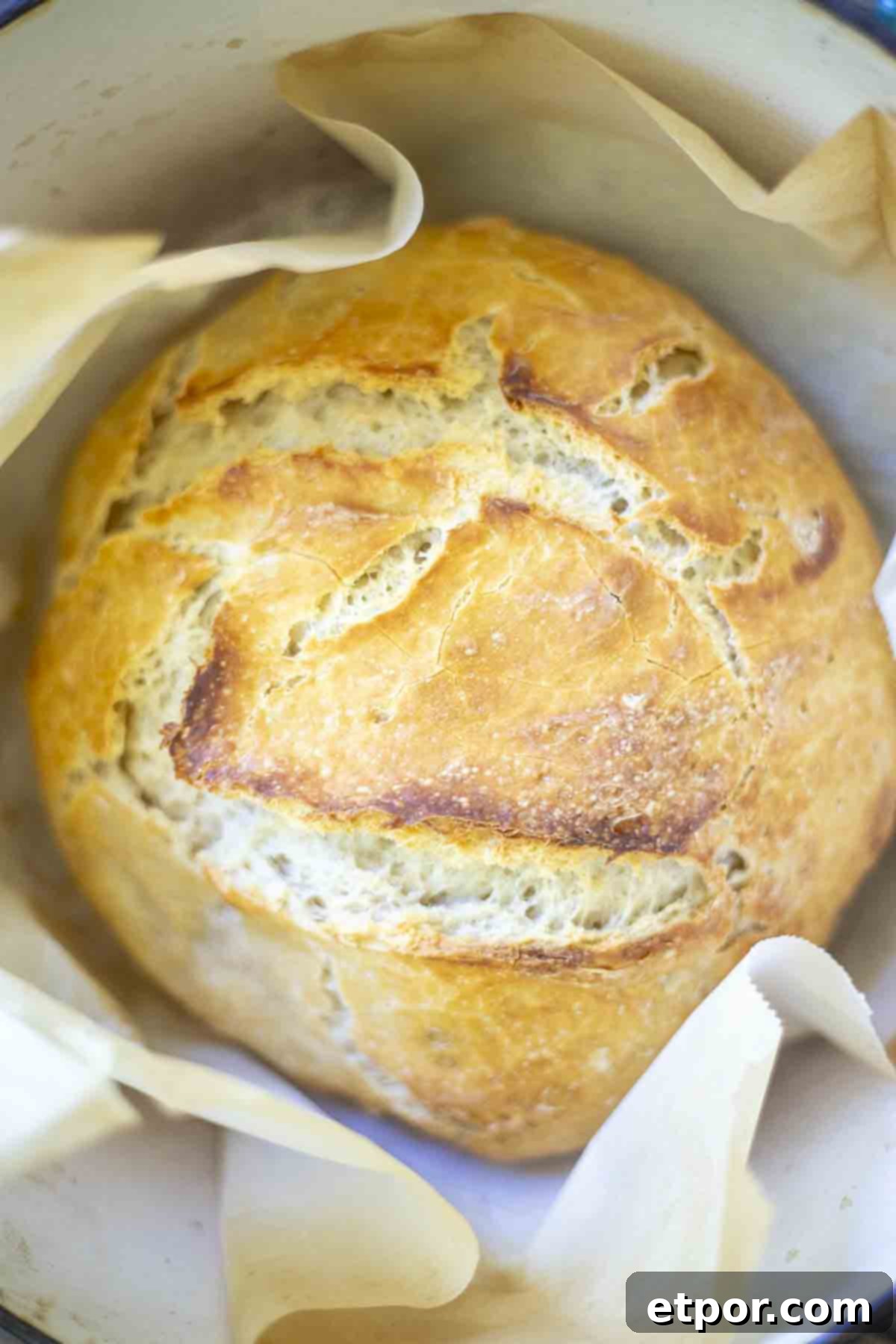
Effortless No-Knead Sourdough Discard Bread: Your Easiest Homemade Loaf
Embark on a delightful baking journey with this incredibly simple sourdough discard bread recipe. It stands out as one of the most accessible and flavorful ways to utilize your sourdough discard, transforming it into a magnificent, crusty loaf without the usual fuss. Forget about complicated techniques, endless kneading, or the pressure of a hyper-active starter; this recipe is designed for ease and guaranteed success. You’ll simply mix the ingredients, allow the dough to develop its magic over several hours, and then bake it to golden perfection. Get ready to enjoy the rich, tangy flavors of homemade sourdough with minimal effort.
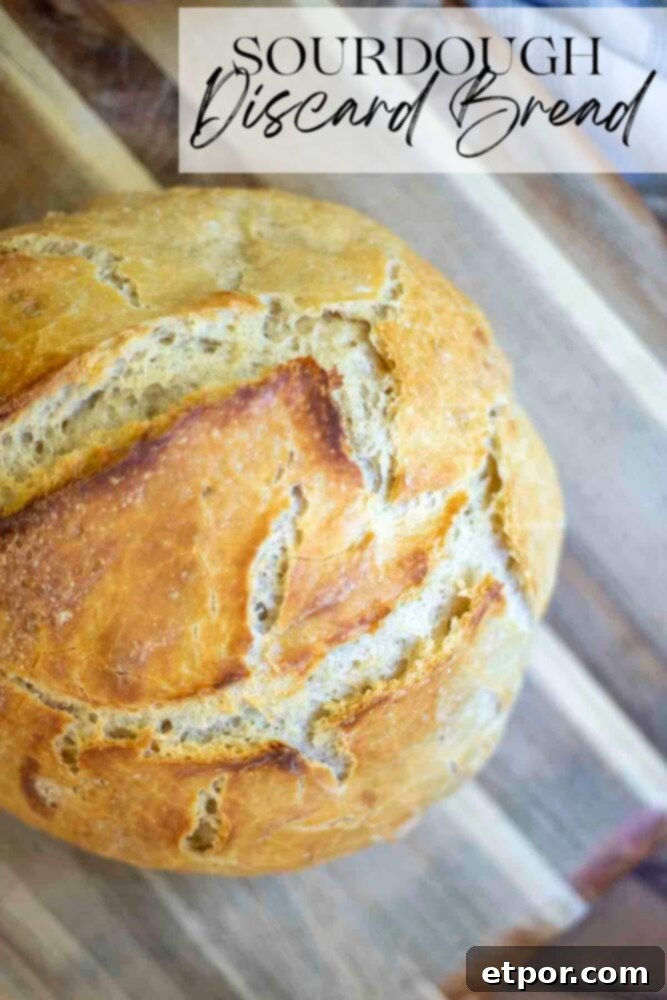
For many home bakers, traditional homemade sourdough bread can feel like a formidable challenge. It often requires specific conditions, a highly active and bubbly sourdough starter, and a commitment to intricate steps like stretching and folding. If you’re like me – a busy individual who loves the idea of homemade bread but prefers a more hands-off approach – then this recipe is your ideal solution. I’ve always admired the simplicity of artisan no-knead bread recipes, and I wondered if that same effortless method could be applied to sourdough. That curiosity led to the creation of this very recipe: a simple sourdough discard bread that delivers fantastic results with the least amount of work.
My sourdough starter often falls into neglect, sometimes going unfed for longer than ideal. Yet, my passion for fermented grains and delicious, homemade bread remains strong. This recipe is a testament to that enduring love, proving that you don’t need to be a perfect “sourdough parent” to bake incredible bread. It’s truly one of the easiest and most effective ways to use your sourdough discard, making it accessible for anyone, regardless of their baking experience. There’s no need for fancy equipment, not even a stand mixer. The process is straightforward: activate the yeast, combine all ingredients in a bowl, mix until just combined, and let time do the rest.
The beauty of this recipe lies in its simplicity. There’s absolutely no kneading involved, and you can skip the repetitive stretching and folding. After a quick mix, you’ll simply leave the dough on your countertop to proof for an extended period, anywhere from 2 to 24 hours. This flexibility in proofing time makes it incredibly adaptable to your schedule. After the initial proof, a stint in the fridge can further develop flavor and make the dough easier to handle, before it’s ready for baking. This easy sourdough discard bread is destined to become a staple in your home, a family favorite that you’ll want to make again and again.
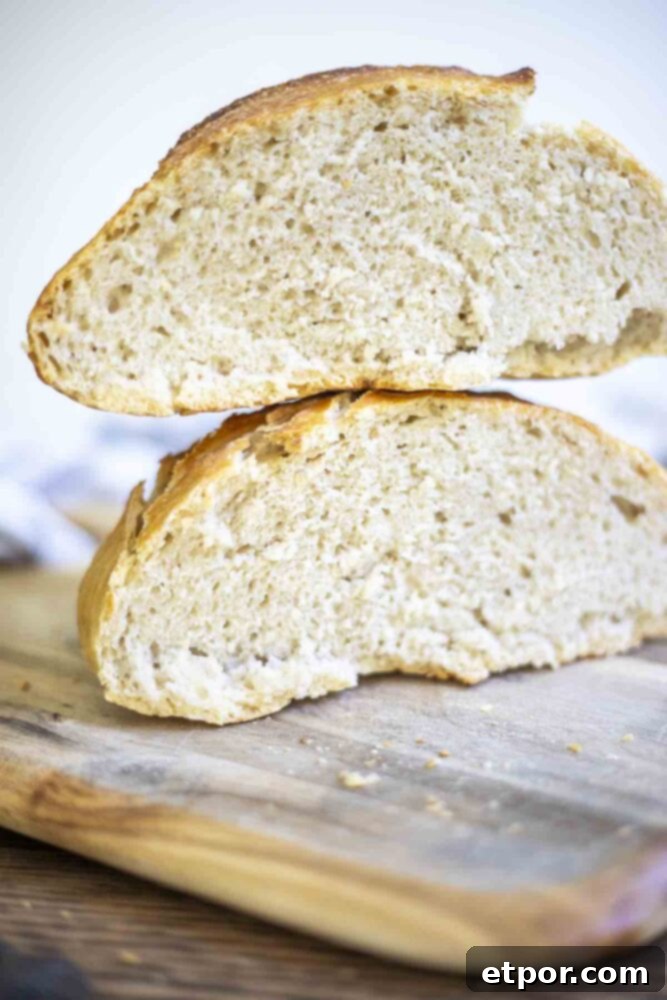
Why You Will Love This Easy Sourdough Discard Bread Recipe
This recipe isn’t just easy; it offers a multitude of reasons why it will quickly become your new favorite way to bake bread:
- Authentic Sourdough Flavor without the Hassle: You get all the wonderful taste and texture of traditional sourdough bread, including that coveted chewy crumb and amazing oven spring, but without the intricate, time-consuming steps.
- Enhanced Digestibility and Bioavailability: The sourdough starter, even in its discard form, contributes to the fermentation of the dough. This process helps break down complex carbohydrates and gluten, potentially making the bread easier to digest and its nutrients more readily absorbed by your body. It’s a healthier bread option without compromising on flavor.
- Uses Unfed or Discarded Starter: Unlike many sourdough recipes that demand a very active, freshly fed starter, this recipe thrives on discard. This means you don’t have to plan ahead to feed your starter; simply use what you’d normally discard, saving you time and reducing food waste.
- Incredibly Flexible Schedule: The dough can proof for anywhere from 2 to 24 hours at room temperature, or even longer with a cold proof in the fridge. This flexibility allows you to fit bread baking into your busiest days. Start it in the morning for an evening bake, or begin at night for fresh bread the next day.
- The Easiest Sourdough Baking: If you’ve been intimidated by sourdough, this recipe is your gateway. It strips away the complexities, offering a straightforward path to delicious, artisanal-quality bread at home.
- Reduce Sourdough Waste: This is a fantastic solution for utilizing the excess starter that accumulates from regular feedings. Instead of throwing it away, transform it into a delectable loaf of bread. Many bakers find themselves with a surplus of discard, and this recipe provides a truly rewarding way to use it up.
- Homemade Bread with Minimal Effort: Achieve the satisfaction of baking your own homemade bread with significantly less effort than traditional methods. It’s perfect for those who want wholesome, delicious bread on the table without spending hours in the kitchen.
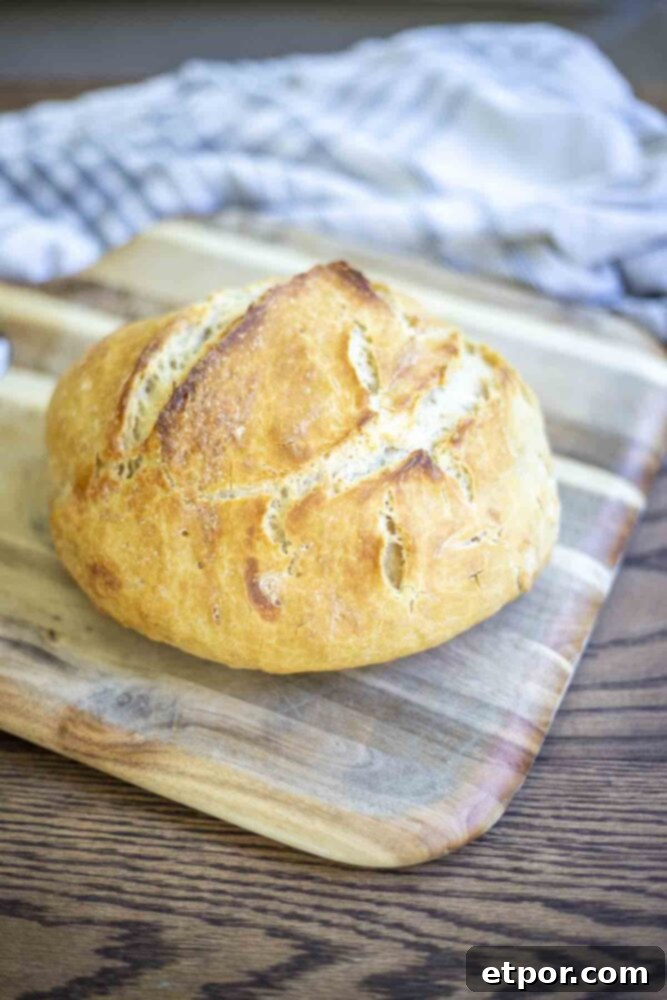
Essential Tips for Baking Perfect Sourdough Discard Bread
Achieving a beautiful, crusty loaf of sourdough discard bread is simple with a few key considerations:
- Bake in a Hot Dutch Oven: For that signature artisan-style bread with a wonderfully crisp, golden crust and an excellent oven spring, baking in a preheated Dutch oven is highly recommended. The enclosed environment traps steam, which is crucial for preventing the crust from setting too quickly, allowing the bread to expand beautifully.
- Mind the Water Temperature for Yeast: When activating your active dry yeast, ensure the water is warm, not hot. Water that is too hot will kill the yeast, preventing your dough from rising. Aim for around 90-100°F (32-38°C) – comfortable to the touch but not scalding.
- Dealing with Over-Proofed Dough: If your dough appears overly loose and wet, and seems to have expanded too much (a sign of over-proofing), don’t despair! You can often salvage it by placing it in the refrigerator for a few hours before baking. The cold will slow down the yeast activity and help firm up the dough, making it more manageable.
- Doubling the Recipe: While you can double all ingredients and mix them in one very large bowl, for optimal results and more consistent texture, it’s often better to make two separate batches in two different bowls. This ensures better mixing and allows for more even proofing, especially if you plan to bake two loaves.
Frequently Asked Questions About Sourdough Discard
What can I do with my sourdough discard?
Sourdough discard is incredibly versatile! Beyond this delicious bread, you can transform it into a myriad of delightful treats. Think light and fluffy pancakes or waffles, chewy chocolate chip cookies, moist quick breads like banana bread, or flaky biscuits. The possibilities are vast; almost anything you can imagine baking, you can probably give it a sourdough twist to add depth of flavor and fermented goodness.
Can you feed sourdough discard?
Technically, yes, you can feed sourdough discard. Feeding it flour and water will essentially reactivate it, turning it back into an active sourdough starter. However, most bakers typically don’t do this unless they specifically want to create a second, separate starter. It’s generally more practical to maintain one active starter for your regular baking needs and save the discard specifically for recipes designed to use it, like this bread, where its leavening power is less critical than an active starter’s.
How long can you use sourdough discard?
When stored in the refrigerator, sourdough discard can remain viable and safe to use for up to two weeks, sometimes even a bit longer. The cooler temperatures slow down the fermentation process significantly. Always look for signs of mold or unusual odors; if anything seems off, it’s best to discard it.
What is “oven spring”?
Oven spring refers to the rapid and final burst of expansion that bread dough undergoes during the initial phase of baking, just before the crust fully sets. This sudden rise is caused by the rapid expansion of gases (carbon dioxide and steam) within the dough due to the intense heat of the oven. A good oven spring is highly desirable in bread baking, contributing to a lofty loaf with a beautiful crumb structure and an open texture.
Can I use discarded sourdough starter to make more starter?
Absolutely! If you’re looking to share your sourdough passion with a friend or simply want to cultivate a new starter, discard is a perfect starting point. Just feed a portion of your discard with fresh flour and water, and within a few days, it will become an active, bubbly starter ready for gifting or baking. It’s a great way to propagate your sourdough without wasting any.
Why score bread?
Scoring bread (making cuts on the surface of the dough before baking) serves two primary purposes. Firstly, it allows the baker to control where the bread expands during oven spring. Without scoring, the crust might tear unevenly and unpredictably. Secondly, scoring offers an artistic outlet, allowing you to create beautiful, distinctive designs on your loaf. While not strictly necessary (you can let the bread expand naturally), scoring ensures a more aesthetically pleasing loaf and a controlled rise.
How long does sourdough bread last?
Freshly baked sourdough bread, when stored properly, can maintain its quality for about 5-7 days at room temperature. For optimal freshness, keep it in an airtight container, a bread box, or wrapped in a clean linen towel. To extend its shelf life even further, sourdough bread freezes exceptionally well. Wrap it tightly in plastic wrap and then aluminum foil, or place it in a freezer-safe bag, and it can last for up to 6 months. Simply thaw at room temperature when you’re ready to enjoy it again.
Essential Tools for Baking Sourdough Discard Bread
You don’t need a lot of specialized equipment for this recipe, making it even more accessible for home bakers. Here are the basic tools you’ll find helpful:
- Large Mixing Bowl: Essential for combining your ingredients and allowing the dough to proof. Choose one with a lid or be prepared to cover it with plastic wrap.
- Measuring Cups and Spoons: For accurate measurement of all your ingredients.
- Dutch Oven: This is highly recommended for achieving that perfect crust and optimal oven spring, giving your bread an artisanal quality. If you don’t have one, a heavy-bottomed pot with a tight-fitting lid or even a loaf pan can work, though the crust may vary. You can find excellent Dutch ovens on Amazon.
- Parchment Paper: Makes transferring the dough into a hot Dutch oven much safer and easier, and prevents sticking.
- Sharp Knife or Lame: For scoring the dough before baking, allowing for controlled expansion and decorative patterns.
- Wire Rack: Crucial for cooling the bread completely after baking, preventing a soggy bottom and allowing the crust to remain crisp.
Key Ingredients for Your Sourdough Discard Bread
This recipe calls for simple, wholesome ingredients you likely already have in your pantry:
- Sourdough Discard: The star of the show! This recipe is designed specifically for unfed or discarded starter, meaning you don’t need to worry about its activity level. If you happen to have active sourdough starter on hand, it will work perfectly fine too.
- All-Purpose Flour: Provides the structure for your loaf. You can experiment by substituting up to half of the all-purpose flour with whole wheat flour for a nuttier flavor and added nutritional benefits.
- Warm Water: Essential for activating the yeast. Ensure it’s warm (around 90-100°F or 32-38°C) but not hot, as excessively hot water will kill the yeast.
- Salt: A non-negotiable ingredient! Salt is vital for flavor development in bread. Skipping it will result in a bland loaf. Furthermore, salt actually enhances and brings out the characteristic tangy, sour notes of the sourdough, creating a more complex and enjoyable flavor profile.
- Active Dry Yeast: This is what makes this a “no-fail” sourdough discard bread recipe. Unlike traditional sourdough, which relies solely on the wild yeast in the starter for leavening, the addition of commercial active dry yeast ensures a consistent and reliable rise. Make sure to use active dry yeast, not rapid rise or instant yeast, for the best results and proofing timeline.
Step-by-Step Guide: How To Make Sourdough Discard Bread
Making this delicious sourdough discard bread is a straightforward process. Follow these simple steps for a perfect loaf:
- Activate the Yeast: Begin by warming 1 cup of water to approximately 90°F (32°C). It should feel pleasantly warm to the touch, not hot. Add 2 teaspoons of active dry yeast to the warm water, stir gently, and let it sit for about 5 minutes. During this time, the yeast should become foamy and bubbly, indicating it’s active and ready to work its magic. Be careful not to use water that is too hot, as this can kill the yeast and prevent your bread from rising.
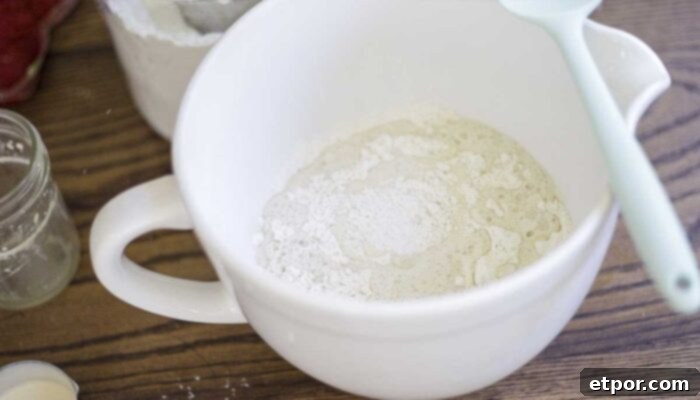
- Combine Ingredients: In a large mixing bowl, combine 3 cups of all-purpose flour and 1/2 tablespoon of salt. Add 1/2 cup of sourdough discard along with the activated water and yeast mixture to the bowl.
-

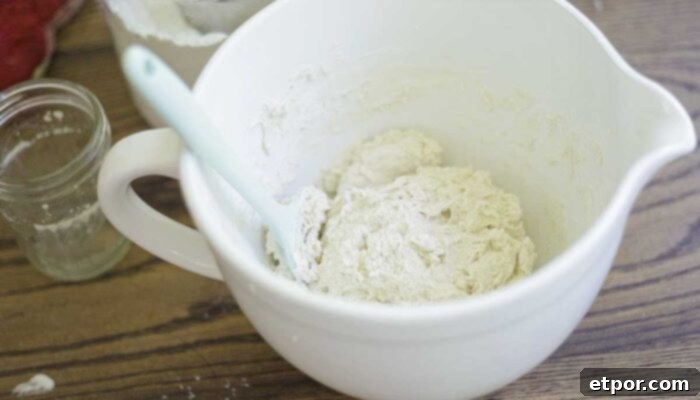
Mix the Dough: Using a wooden spoon, a silicon spatula, or even your hands, stir all the ingredients together until they form a loose, shaggy ball of dough. The dough will initially be quite dry and might not seem completely uniform, which is perfectly normal for a no-knead bread. Depending on the hydration level of your sourdough starter and the ambient humidity, you might need to adjust the water slightly. Start with 1 cup of water, and if the dough seems too dry to come together, slowly add up to an additional 1/4 cup of warm water, a tablespoon at a time, until a cohesive dough forms. Avoid overmixing; a shaggy texture is ideal. It will become stickier and more hydrated as it proofs.
-
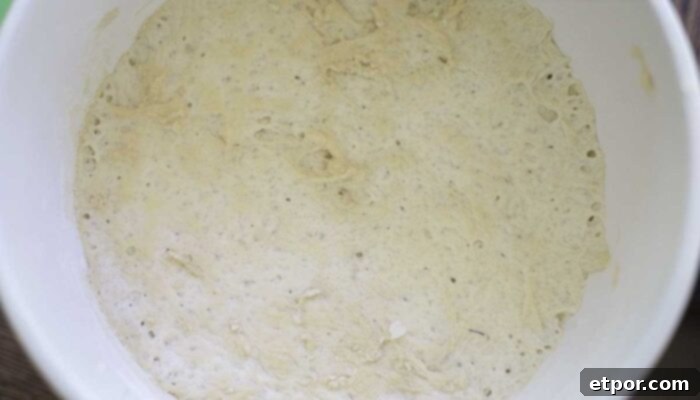
First Proof (Bulk Fermentation): Cover the bowl tightly with an airtight lid or plastic wrap. Place the covered bowl at room temperature for an extended period, anywhere from 2 to 24 hours. The longer the proofing time, the more fermented and tangy your bread will be. This long, slow fermentation is key to developing complex flavors.
Optional Cold Proof: To further develop flavor and manage your baking schedule, consider placing the dough in the refrigerator after it has sat out at room temperature for about 12 hours. This cold proof can extend the fermentation time and reduce the risk of over-proofing if you can’t bake immediately. - Preheat Oven and Dutch Oven: Approximately one hour before you plan to bake, preheat your oven to 450°F (232°C). Place your empty Dutch oven with its lid inside the preheating oven for the full hour. This ensures the Dutch oven is scorching hot, which is vital for achieving a fantastic crust and oven spring.
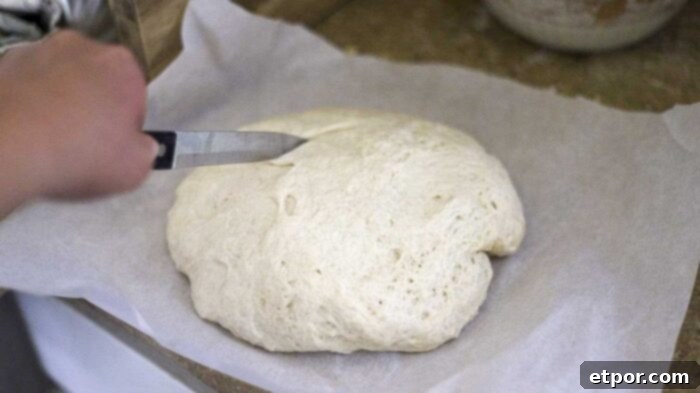
- Shape and Second Proof: While the oven and Dutch oven are preheating, carefully remove your dough from the bowl and gently “plop” it onto a piece of parchment paper. Use your hands to lightly shape the dough into a round or oval loaf. Avoid excessive handling. Cover the shaped dough loosely with a clean tea towel and allow it to rest at room temperature for one hour. This is known as the second proof, or final proof, allowing the dough to relax and expand slightly before baking.
-
Score the Dough: Once the hour of the second proof is complete, use a very sharp knife or a bread lame to score the top of your dough. This allows for controlled expansion during baking and creates beautiful designs. For a more dramatic visual effect, you can lightly dust the top of the dough with a thin layer of flour before scoring.
-
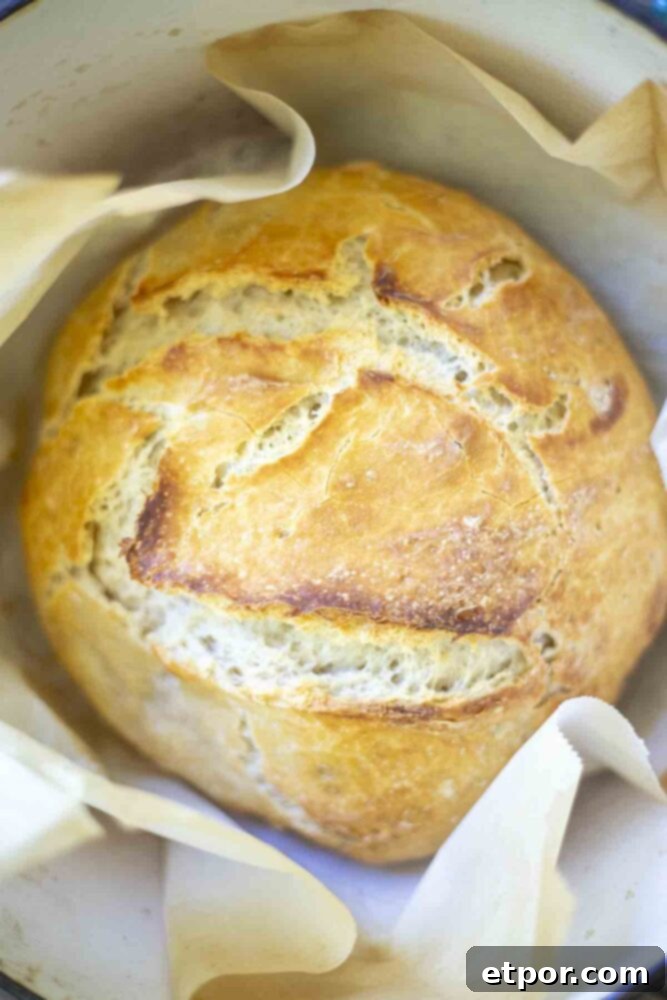
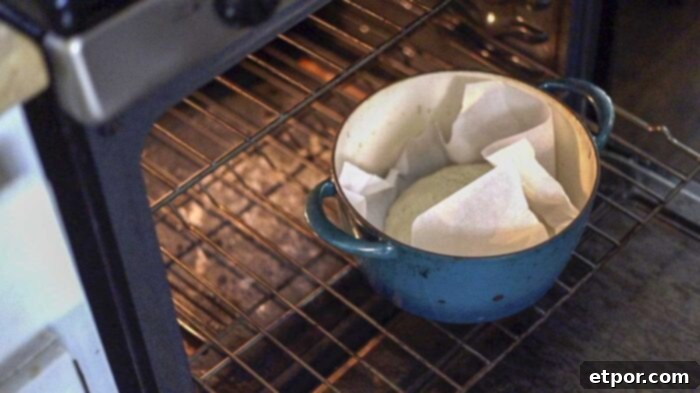
Bake Covered: Carefully remove the preheated Dutch oven from the oven. Using the parchment paper as a sling, gently lower the scored dough into the hot Dutch oven. Cover the Dutch oven with its lid and return it to the hot oven. Bake for 25 minutes with the lid on. The trapped steam will help create that signature crisp crust.
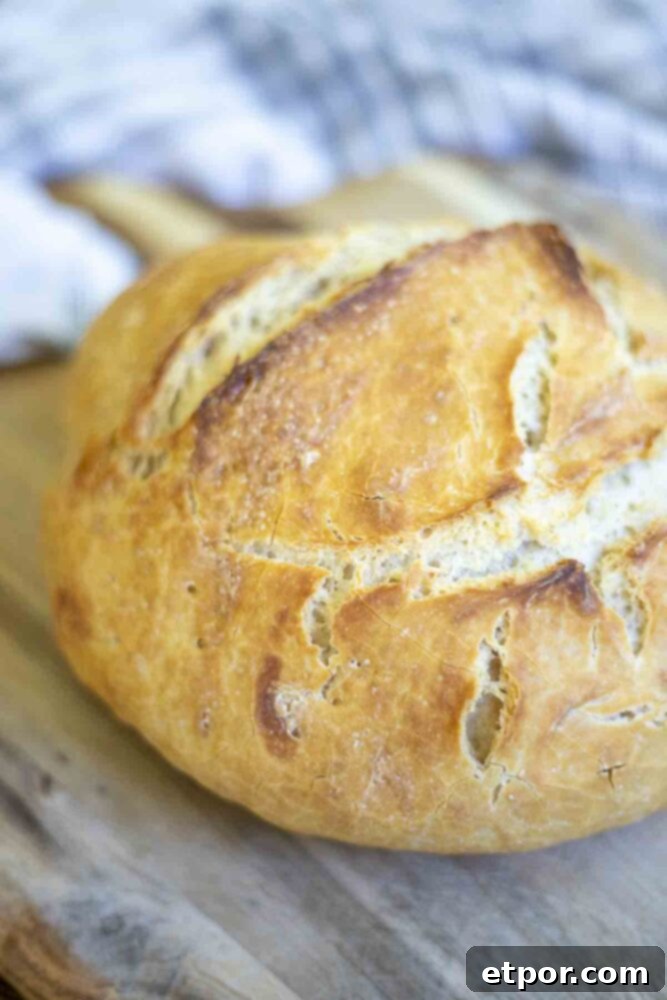
- Bake Uncovered: After 25 minutes, carefully remove the lid from the Dutch oven. Continue baking for an additional 25-30 minutes, or until the crust reaches a deep golden brown and sounds hollow when tapped. This final uncovered baking period allows the crust to fully brown and crisp up.
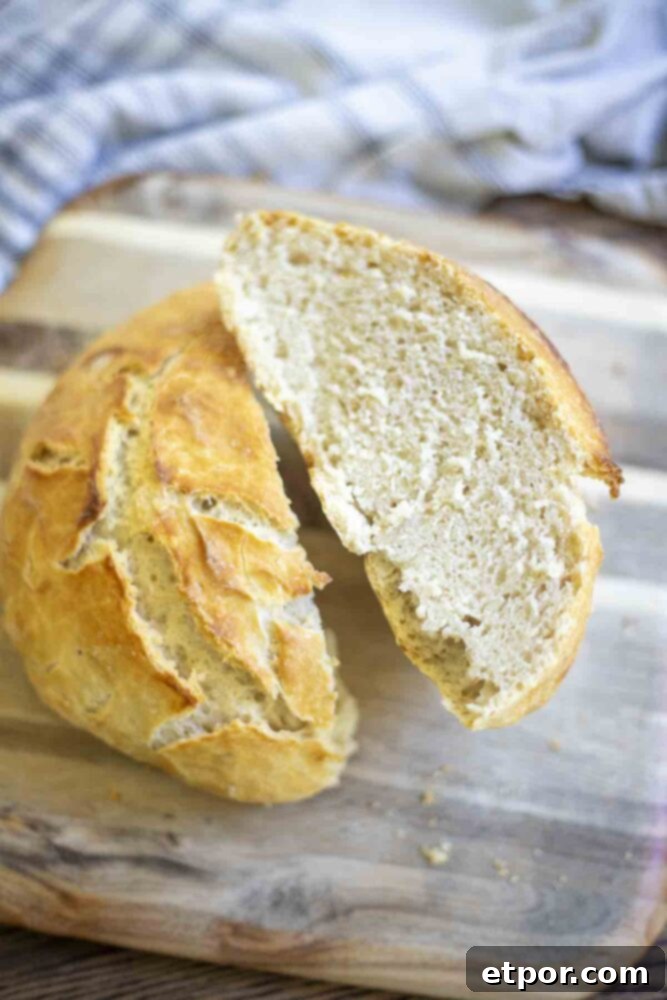
- Cool Completely: Once baked, remove the loaf from the Dutch oven and transfer it to a wire rack. It is crucial to allow the bread to cool completely before slicing, ideally for at least 1-2 hours. Slicing warm bread can compromise its texture and make it gummy. Patience is key for the best results!
Example Baking Schedule: Sourdough Discard Bread for the Busy Baker
One of the greatest advantages of this no-knead sourdough discard bread recipe is its incredible flexibility. Here’s an example schedule to illustrate how easily it fits into a busy lifestyle:
- 12:00 PM (Day 1 – Lunchtime): You remember your sourdough starter needs attention, or perhaps you just finished feeding it and have discard. This is the perfect moment to start your bread. Combine all the ingredients – sourdough discard, warm water, yeast, flour, and salt – in a large bowl. Give it a quick stir until it forms a shaggy dough, cover it securely, and then, simply forget about it for several hours.
- 8:00 PM (Day 1 – Evening): After about 8 hours at room temperature, your dough will have started to expand and develop. At this point, you have a choice: you can either gently transfer the dough into a floured banneton basket (or another bowl lined with a floured tea towel) and place it in the fridge for a long, cold proof overnight. This deepens the flavor. Or, if you prefer to bake the next morning, you can leave it on the counter for a total of 12-16 hours before refrigerating.
- 3:30 PM (Day 2 – Afternoon Bake): The next day, when you’re ready to bake, begin by preheating your oven to 450°F (232°C) with your Dutch oven inside. While the oven and Dutch oven come to temperature (which takes about an hour), take your chilled dough from the fridge, gently turn it out onto a piece of parchment paper, and quickly shape it into your desired loaf. Cover it with a tea towel and allow it to rest at room temperature for this final, hour-long proof.
- 4:30 PM (Day 2 – Baking Time): After the dough has rested, it’s time for the oven. Score your loaf with a sharp knife or lame, then carefully place the dough (on the parchment paper) into the preheated Dutch oven. Cover and bake for 25 minutes, then uncover and bake for another 25-30 minutes until beautifully golden brown.
- 5:20 PM (Day 2 – Cooling Time): Remove the perfectly baked sourdough discard bread from the oven. Resist the urge to slice into it immediately! Place it on a wire rack and allow it to cool completely for at least an hour or two. This crucial cooling period ensures the internal structure sets and prevents a gummy texture.
I sincerely hope you enjoy my absolute favorite homemade sourdough discard bread recipe! It’s truly a game-changer for accessible, delicious baking.
How to store homemade sourdough bread:
To keep your delicious sourdough discard bread at its best, store it in an airtight container, a bread box, or simply wrapped in a clean kitchen towel at room temperature for up to 7 days. If you find it starting to go stale, don’t throw it away! Stale sourdough is perfect for making homemade croutons for salads or turning into a decadent French toast. For longer storage, slice the cooled bread and freeze the slices in a freezer-safe bag for up to 6 months. This way, you can enjoy fresh-tasting sourdough whenever the craving strikes.
Find More Of Our Favorite Sourdough Discard Recipes:
Don’t let your sourdough discard go to waste! Explore these other fantastic recipes that make excellent use of your unfed starter, adding a unique tang and depth to everyday favorites:
- Sourdough Oatmeal Breakfast Cookies: A wholesome and delicious start to your day.
- Quick Sourdough Discard Pancakes: Fluffy pancakes with a subtle sourdough tang.
- Sourdough Discard Chocolate Chip Bread: A delightful sweet bread that everyone will love.
- Easy Sourdough Discard Banana Muffins: Moist and flavorful muffins perfect for breakfast or a snack.
- Sourdough Apple Scones With Cinnamon Glaze: A wonderfully flaky and spiced treat.
If you try this easy sourdough discard bread recipe and absolutely love it, please consider coming back to leave a comment and give it a 5-star rating! Your feedback is incredibly valuable. You can also tag me on Instagram @ablossominglife – I’d love to see your beautiful homemade loaves!
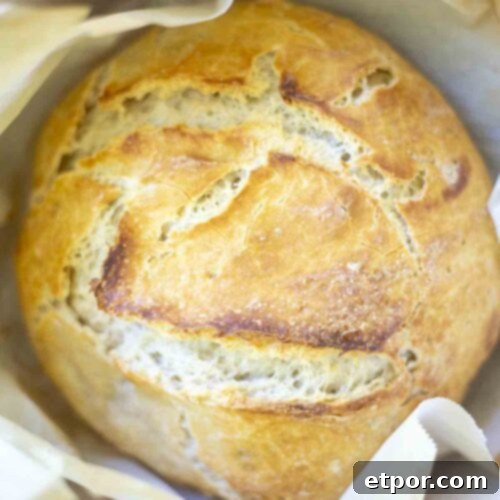
Sourdough Discard Bread
Print
Pin
Rate
SaveSaved!
Save This Recipe
We’ll get it sent to your inbox! Plus, get new recipes from us every week.
Equipment
-
Dutch Oven
Ingredients
- 3 cups all-purpose flour
- 1 cup + warm water
- 1/2 cup sourdough discard
- 1/2 tbs salt
- 2 tsp active dry yeast
Instructions
-
Warm water to about 90 degrees and add yeast. Stir and allow to sit for about 5 minutes until it gets bubbly.
-
In a large mixing bowl, add flour, salt, sourdough discard, and the water yeast mixture.
-
Stir with a wooden spoon or silicon spatula (or heck use your hands) until it forms a loose ball. The dough will be very “shaggy dough”. Depending on the hydration of your starter will depend on how much water you will need to add. I suggest starting at one cup and then slowly adding up to 1/4 cup extra until the dough forms.
-
Cover with an airtight lid or plastic wrap and place at room temperature for 2- 12 hours.
-
Optional step: to reduce the risk of over proofing the dough, place it in the fridge after it has sat out at room temperature for about 12 hours.
-
Preheat oven to 450 and place a dutch oven with a lid in the oven to preheat for an hour.
-
As it preheating, take your dough and plop it onto a piece of parchment paper. Use your hands to shape the dough. Cover it with a tea towel and allow it to rise again for one hour, also known as the second proof.
-
When the hour is up, use a sharp knife or lame to score the dough.
-
Place the dough and parchment paper into the hot dutch oven, cover it with a lid and place into the hot oven for 25 minutes.
-
After the 25 minutes, remove the lid and finish baking for about 25-30 minutes or until the crust is deep golden brown.
-
Allow to cool completely on a wire rack before slicing.
Notes
- To get that artisan style bread with that amazing crust, you will need to bake it in a hot dutch oven.
- Make sure the water is warm and not hot, you do not want to kill the yeast.
- If the dough seems too loose and wet, like it may have over proofed, stick it in the fridge for a few hours before baking.
- If you want to double this recipe you can do it all in one bowl, or for better results, I suggest making it in two different bowls.