Mastering Simple Meal Planning: Your Ultimate Guide to Saving Time, Money, and Stress
Table of Contents
Meal planning often evokes images of daunting spreadsheets, endless recipe searches, and rigid culinary schedules. However, what if we told you it doesn’t have to be complicated? Embracing a simple approach to meal planning can revolutionize your kitchen, your budget, and your overall family life. What once felt like a chore can quickly become a cherished weekly ritual, offering incredible benefits that extend far beyond just deciding what’s for dinner.
The Transformative Power of Meal Planning
For many, meal planning begins with good intentions, only to fizzle out after a week or two. Yet, the persistent return to this practice highlights its undeniable value. By adopting a straightforward, no-fuss method, families can unlock significant advantages. This isn’t just about food; it’s about reclaiming your time, reducing financial strain, and bringing more harmony to your home. My personal journey with simple meal planning has been a game-changer, transforming mealtime chaos into calm, and enabling impressive savings on our grocery bill.
Why Simple Meal Planning is Essential
The impact of a well-executed, yet simple, meal plan is multifaceted. It’s a tool that empowers you to take control of your kitchen, leading to healthier eating habits and a more organized lifestyle. Let’s delve into the core benefits that make this practice indispensable for modern households.
Significant Grocery Savings
One of the most immediate and tangible benefits of meal planning is the positive effect it has on your wallet. By planning meals in advance, you become a more intentional shopper. This means fewer impulse buys, less reliance on expensive takeout or restaurant meals, and a significant reduction in food waste. When you know exactly what you need for the week, you can stick to your shopping list, take advantage of sales, and avoid those costly last-minute dashes to the store for missing ingredients. It’s not uncommon to see grocery budgets shrink by hundreds of dollars each month, proving that a little planning goes a long way.
Eliminating Decision Fatigue
The dreaded “what’s for dinner?” question can be a major source of stress at the end of a long day. Without a plan, you might find yourself staring blankly into the refrigerator, leading to frustration, uninspired meals, or the easy (but expensive) option of ordering in. Meal planning eliminates this daily mental burden. With a clear plan laid out, you remove the guesswork and the stress, freeing up mental energy for other important tasks. It transforms meal preparation from a hurried decision into a smooth, anticipated process.
Fostering Family Participation
Beyond saving money and stress, a visible meal plan empowers every member of the household. If you’re running late, or if another family member is in charge of dinner, they can simply glance at the plan to know exactly what needs to be cooked. This shared understanding reduces questions and encourages everyone to pitch in, making mealtime a collaborative effort rather than a solo burden. It fosters independence and helps teach valuable life skills to children and partners alike.
Your Step-by-Step Guide to Simple Meal Planning
Creating a simple meal plan doesn’t require a culinary degree or hours of dedicated time. It’s about developing smart habits and leveraging strategies that streamline the process. Here are actionable tips to help you craft a weekly meal plan that’s both effective and effortless.
Cultivate a Stash of Go-To Recipes
You don’t need to reinvent the wheel every week. The beauty of simple meal planning lies in its efficiency. Start by compiling a collection of family-favorite recipes – those tried-and-true dishes everyone loves and that you can prepare with ease. Organize these recipes in a binder, a digital folder, or a simple notebook for quick access. Consider creating a 2-3 week rotation cycle for your meals. This approach ensures variety without the stress of constantly searching for new ideas. Cycling through familiar favorites not only saves time but also builds confidence in your cooking routine, making grocery shopping and meal prep a breeze.
Embrace Theme Nights
Theme nights are a brilliant way to simplify meal selection. Just like having “Pizza Friday” when growing up, or “Taco Tuesday” in many homes today, designating a theme for each night of the week drastically narrows down your recipe choices. This ingenious method eliminates decision fatigue and adds an element of fun to your weekly menu. Consider themes like “Meatless Monday,” “Pasta Wednesday,” “Asian Flavors Thursday,” or “Soup & Sandwich Sunday.” With a theme in place, finding a recipe becomes a simple matter of choosing from a specific category, rather than an overwhelming search through countless options.
Strategically Plan Leftover Nights
One of the easiest ways to lighten your cooking load and minimize food waste is to consciously incorporate leftover nights into your meal plan. Instead of viewing leftovers as an afterthought, plan for them proactively. If you cook five main meals a week, designate one or two of the remaining nights for enjoying the delicious remnants. This could mean a simple reheat, or creatively repurposing ingredients into a new dish, like turning leftover roasted chicken into a quick quesadilla or adding extra veggies to a pasta dish. Leftover nights are perfect for busy evenings, social gatherings, or simply when you need a break from cooking from scratch.
Shop Your Pantry First
Before you even begin brainstorming new recipes, take inventory of what you already have in your pantry, refrigerator, and freezer. This crucial step not only prevents unnecessary purchases but also inspires meal ideas based on ingredients that might otherwise go unused. Discovering a forgotten bag of lentils, a can of diced tomatoes, or some frozen chicken breasts can instantly spark a recipe idea, allowing you to build your meal plan around existing stock. This mindful approach reduces food waste, cuts down on your grocery bill, and ensures that your ingredients are always put to good use.
Prioritize Simple, Easy Meals
Especially on busy weeknights or workdays, simplicity is key. Your meal plan should focus on recipes that are quick to prepare and require minimal fuss. Think about versatile ingredients that can be used across multiple meals. For example, cooking a whole chicken or a large batch of ground beef at the beginning of the week allows you to quickly assemble various dishes. A meal like “lemon chicken pasta with roasted vegetables and goat cheese” might sound elaborate, but it can be as simple as combining pre-cooked chicken with leftover roasted veggies, pasta, and a sprinkle of cheese. These types of meals can be ready in 20-30 minutes, proving that delicious and nutritious doesn’t have to mean complicated.
Focus Primarily on Dinners
While it’s possible to plan every single meal, doing so can quickly become overwhelming and unsustainable for many. For most families, breakfast and lunch often follow a fairly consistent pattern. Breakfast might be oatmeal, toast with eggs, or a simple fruit smoothie. Lunches can often consist of leftovers from dinner, or easy staples like sandwiches and salads. By focusing your meal planning efforts primarily on dinners, you significantly reduce the planning load, making the entire process much more manageable and less daunting. This allows you to reap the core benefits of meal planning without feeling burdened by excessive detail.
Make Your Meal Plan Visible and Accessible
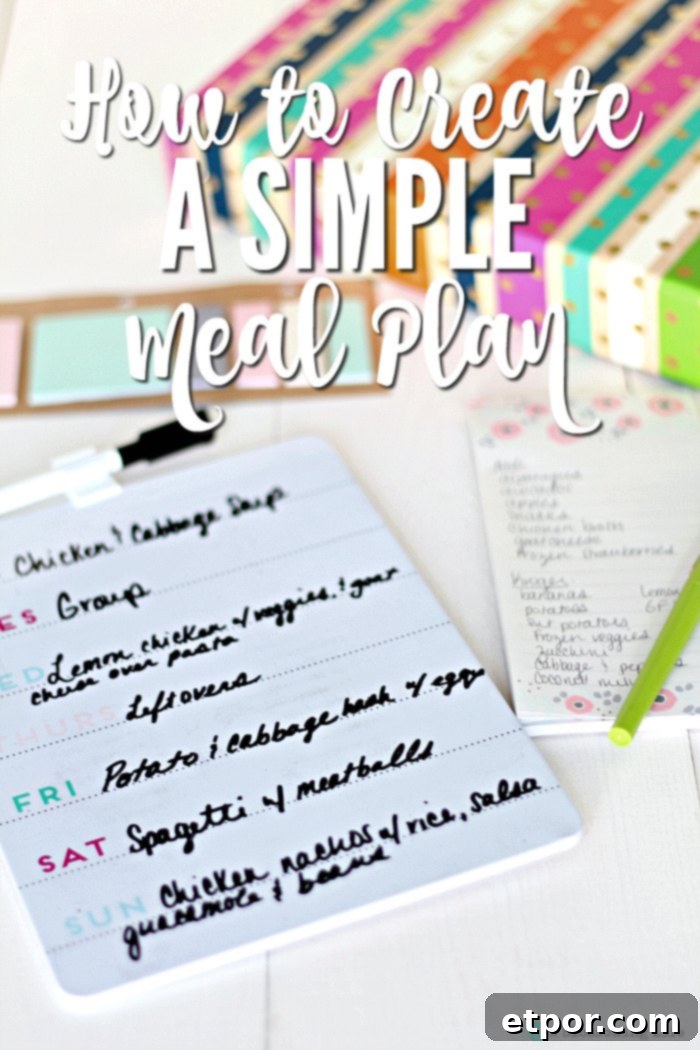
Once you’ve crafted your meal plan, make it visible to everyone in the household. A simple whiteboard on the refrigerator, a magnet board, or even a printed sheet in a prominent location ensures that “what’s for dinner?” becomes a question of the past. This transparency empowers family members to know what to expect, and it’s incredibly helpful if someone else needs to start dinner. The visual reminder also keeps you accountable and makes sticking to the plan much easier, transforming mealtime from a source of daily questioning into a smoothly operating system.
Maximize Savings with Sales and Coupons
For those looking to save extra money, integrate sales ads, store apps, and coupons into your meal planning process. Before you finalize your weekly menu, take a few minutes to browse the current circulars from your local grocery stores. What items are on sale? Are there any valuable digital coupons available? Basing your meal choices around discounted ingredients is an incredibly effective way to reduce your grocery bill. Not only does this strategy save money, but it can also inspire new recipe ideas, pushing you to try ingredients or dishes you might not have considered otherwise.
Always Have a Backup Plan
Life happens, and sometimes even the best-laid meal plans go awry. Whether it’s an unexpected late night, a sudden craving, or simply a lack of motivation to cook, having a backup plan is essential. This doesn’t mean resorting to expensive takeout. Instead, keep one or two “emergency meals” in your freezer or pantry that require minimal effort. Think homemade lasagna, a pre-made chicken pot pie, a frozen pizza you can dress up, or ingredients for a quick pantry pasta. These options ensure that you can still enjoy a homemade meal without derailing your budget or your healthy eating goals when plans change.
Conclusion: Embrace the Ease of Simple Meal Planning
Meal planning, when approached with simplicity in mind, is an incredibly powerful tool. It’s more than just organizing meals; it’s a pathway to significant financial savings, reduced daily stress, and a more harmonious home environment. By incorporating these practical tips into your routine, you can transform mealtime from a dreaded chore into an enjoyable and efficient part of your week. Start small, be consistent, and watch as the benefits unfold. Your future self (and your bank account) will thank you.
Do you currently meal plan? What strategies have worked best for your family?